Abstract
Field investigations were conducted during Kharif 2022 and 2023, it aims to evaluate the efficacy of insecticides and biopesticides against okra shoot and fruit borer. Earias vittella on okra variety Prabhani Kranti at the Student’s Instructional Farm (SIF), Chandra Shekhar Azad University of Agriculture and Technology, Kanpur, Uttar Pradesh, India. Pre-treatment (1 Day Before Spraying) observations indicated uniform pest incidence with non-significant variation among treatments. In the pooled analysis, all insecticidal treatments significantly reduced shoot and fruit infestation compared to the untreated control. Among the insecticides, Chlorantraniliprole 18.5% SC (0.3 ml/L) was most effective, consistently recording the lowest shoot damage (overall mean 1.35% and 0.96% with 79.82–82.40% Overall Reduction Over Control) and fruit damage on both number basis (1.33% and 1.50% with 77.29–79.92% ROC) and weight basis (1.01% and 1.14% with 83.08–84.96% overall ROC) after first and second sprays, respectively. Spinosad 45% SC (0.2 ml/L) and Thiamethoxam 25% WG (0.2 g/L) followed closely and remained at par with Chlorantraniliprole across both sprays, while Imidacloprid 17.8% SL and Fipronil 5% SC exhibited moderate efficacy. Among biopesticides, Bacillus thuringiensis var. kurstaki emerged superior, reducing shoot damage (3.79% and 3.15%) and fruit damage (3.88–4.52% by number; 3.01–3.45% by weight) with moderate ROC values (33–55%) and was at par with Beauveria bassiana. Other biopesticides such as Azadirachtin 1500 ppm, Metarhizium anisopliae, and Lecanicillium lecanii showed comparatively lower suppression with overall ROC mostly below 40%. Untreated plots consistently recorded the highest shoot and fruit damage across years. Overall, Chlorantraniliprole, Spinosad, and Thiamethoxam were the most effective insecticides, while Bacillus thuringiensis was the best-performing biopesticide under field conditions.
Abstract from the paper’s OpenAlex record, shown for indexing and research. Copyright remains with the authors or the publisher. Read at the source ↗
The text the model read, with the source record’s inline markup (italics, sub- and superscripts) rendered and its character entities decoded; quote offsets refer to the raw text.
Claims 15
Claim · model-written summary
All insecticidal treatments reduced okra shoot and fruit infestation relative to untreated control.
- Taxon
- okra
 Abelmoschus esculentust0
- Treatment
- all insecticidal treatmentse0
- Interactor
- Earias vittella
 Earias vittellat0pest
- Outcome
- shoot and fruit infestatione0
- Direction
- reducede0
- Comparator
- untreated controle0
Organisms pictured · Representative pictures of the matched species, not figures from the paper.


Verbatim
e0“all insecticidal treatments significantly reduced shoot and fruit infestation compared to the untreated control”
t0“Okra Shoot and Fruit Borer, Earias vittella”
Claim · model-written summary
Chlorantraniliprole gave the lowest shoot damage after the first and second sprays.
- Taxon
- okraAbelmoschus esculentust0
- Treatment
- Chlorantraniliprole 18.5% SC (0.3 ml/L)e0
- Interactor
- Earias vittellaEarias vittellat0pest
- Outcome
- shoot damagee0
- Direction
- loweste0
- Value
- 1.35% and 0.96%e0
- Comparator
- Controle0
Organisms pictured · Representative pictures of the matched species, not figures from the paper.
Verbatim
e0“Chlorantraniliprole 18.5% SC (0.3 ml/L) was most effective, consistently recording the lowest shoot damage (overall mean 1.35% and 0.96% with 79.82–82.40% Overall Reduction Over Control)”
t0“Okra Shoot and Fruit Borer, Earias vittella”
Claim · model-written summary
Chlorantraniliprole gave low fruit damage by number after both sprays.
- Taxon
- okraAbelmoschus esculentust0
- Treatment
- Chlorantraniliprole 18.5% SC (0.3 ml/L)e0
- Interactor
- Earias vittellaEarias vittellat0pest
- Outcome
- fruit damage on both number basise0
- Value
- 1.33% and 1.50%e0
Not reportedComparatorDirection
Organisms pictured · Representative pictures of the matched species, not figures from the paper.
Verbatim
e0“Chlorantraniliprole 18.5% SC (0.3 ml/L) was most effective, consistently recording the lowest shoot damage (overall mean 1.35% and 0.96% with 79.82–82.40% Overall Reduction Over Control) and fruit damage on both number basis (1.33% and 1.50% with 77.29–79.92% ROC) and weight basis (1.01% and 1.14% with 83.08–84.96% overall ROC)”
t0“Okra Shoot and Fruit Borer, Earias vittella”
Claim · model-written summary
Chlorantraniliprole gave low fruit damage by weight after both sprays.
- Taxon
- okraAbelmoschus esculentust0
- Treatment
- Chlorantraniliprole 18.5% SC (0.3 ml/L)e0
- Interactor
- Earias vittellaEarias vittellat0pest
- Outcome
- weight basise0
- Value
- 1.01% and 1.14%e0
Not reportedComparatorDirection
Organisms pictured · Representative pictures of the matched species, not figures from the paper.
Verbatim
e0“Chlorantraniliprole 18.5% SC (0.3 ml/L) was most effective, consistently recording the lowest shoot damage (overall mean 1.35% and 0.96% with 79.82–82.40% Overall Reduction Over Control) and fruit damage on both number basis (1.33% and 1.50% with 77.29–79.92% ROC) and weight basis (1.01% and 1.14% with 83.08–84.96% overall ROC)”
t0“Okra Shoot and Fruit Borer, Earias vittella”
Claim · model-written summary
Spinosad performed similarly to chlorantraniliprole across both sprays.
- Taxon
- okraAbelmoschus esculentust0
- Treatment
- Spinosad 45% SC (0.2 ml/L)e0
- Interactor
- Earias vittellaEarias vittellat0pest
- Outcome
- at pare0
- Direction
- at pare0
- Comparator
- Chlorantraniliprolee0
Organisms pictured · Representative pictures of the matched species, not figures from the paper.
Verbatim
e0“Spinosad 45% SC (0.2 ml/L) and Thiamethoxam 25% WG (0.2 g/L) followed closely and remained at par with Chlorantraniliprole across both sprays”
t0“Okra Shoot and Fruit Borer, Earias vittella”
Claim · model-written summary
Thiamethoxam performed similarly to chlorantraniliprole across both sprays.
- Taxon
- okraAbelmoschus esculentust0
- Treatment
- Thiamethoxam 25% WG (0.2 g/L)e0
- Interactor
- Earias vittellaEarias vittellat0pest
- Outcome
- at pare0
- Direction
- at pare0
- Comparator
- Chlorantraniliprolee0
Organisms pictured · Representative pictures of the matched species, not figures from the paper.
Verbatim
e0“Spinosad 45% SC (0.2 ml/L) and Thiamethoxam 25% WG (0.2 g/L) followed closely and remained at par with Chlorantraniliprole across both sprays”
t0“Okra Shoot and Fruit Borer, Earias vittella”
Claim · model-written summary
Imidacloprid showed moderate efficacy.
- Taxon
- okraAbelmoschus esculentust0
- Treatment
- Imidacloprid 17.8% SLe0
- Interactor
- Earias vittellaEarias vittellat0pest
- Outcome
- moderate efficacye0
- Direction
- moderatee0
Not reportedComparator
Organisms pictured · Representative pictures of the matched species, not figures from the paper.
Verbatim
e0“Imidacloprid 17.8% SL and Fipronil 5% SC exhibited moderate efficacy”
t0“Okra Shoot and Fruit Borer, Earias vittella”
Claim · model-written summary
Fipronil showed moderate efficacy.
- Taxon
- okraAbelmoschus esculentust0
- Treatment
- Fipronil 5% SCe0
- Interactor
- Earias vittellaEarias vittellat0pest
- Outcome
- moderate efficacye0
- Direction
- moderatee0
Not reportedComparator
Organisms pictured · Representative pictures of the matched species, not figures from the paper.
Verbatim
e0“Imidacloprid 17.8% SL and Fipronil 5% SC exhibited moderate efficacy”
t0“Okra Shoot and Fruit Borer, Earias vittella”
Claim · model-written summary
Bacillus thuringiensis var. kurstaki reduced shoot damage after the two sprays.
- Taxon
- okraAbelmoschus esculentust0
- Treatment
- Bacillus thuringiensis var. kurstakie0
- Interactor
- Earias vittellaEarias vittellat0pest
- Second interactor
- Bacillus thuringiensis var. kurstakiBacillus thuringiensis serovar kurstakie0biocontrol_agent
- Outcome
- shoot damagee0
- Direction
- reducinge0
- Value
- 3.79% and 3.15%e0
Not reportedComparator
Organisms pictured · Representative pictures of the matched species, not figures from the paper.
Verbatim
e0“Bacillus thuringiensis var. kurstaki emerged superior, reducing shoot damage (3.79% and 3.15%)”
t0“Okra Shoot and Fruit Borer, Earias vittella”
Claim · model-written summary
Bacillus thuringiensis var. kurstaki reduced fruit damage by number.
- Taxon
- okraAbelmoschus esculentust0
- Treatment
- Bacillus thuringiensis var. kurstakie0
- Interactor
- Earias vittellaEarias vittellat0pest
- Outcome
- fruit damagee0
- Value
- 3.88–4.52%e0
Not reportedComparatorDirection
Organisms pictured · Representative pictures of the matched species, not figures from the paper.
Verbatim
e0“Bacillus thuringiensis var. kurstaki emerged superior, reducing shoot damage (3.79% and 3.15%) and fruit damage (3.88–4.52% by number; 3.01–3.45% by weight) with moderate ROC values (33–55%) and was at par with Beauveria bassiana”
t0“Okra Shoot and Fruit Borer, Earias vittella”
Claim · model-written summary
Bacillus thuringiensis var. kurstaki reduced fruit damage by weight.
- Taxon
- okraAbelmoschus esculentust0
- Treatment
- Bacillus thuringiensis var. kurstakie0
- Interactor
- Earias vittellaEarias vittellat0pest
- Outcome
- fruit damagee0
- Value
- 3.01–3.45%e0
Not reportedComparatorDirection
Organisms pictured · Representative pictures of the matched species, not figures from the paper.
Verbatim
e0“Bacillus thuringiensis var. kurstaki emerged superior, reducing shoot damage (3.79% and 3.15%) and fruit damage (3.88–4.52% by number; 3.01–3.45% by weight) with moderate ROC values (33–55%) and was at par with Beauveria bassiana”
t0“Okra Shoot and Fruit Borer, Earias vittella”
Claim · model-written summary
Bacillus thuringiensis performed similarly to Beauveria bassiana.
- Taxon
- okraAbelmoschus esculentust0
- Treatment
- Bacillus thuringiensis var. kurstakie0
- Interactor
- Earias vittellaEarias vittellat0pest
- Outcome
- at pare0
- Direction
- at pare0
- Comparator
- Beauveria bassianae0
Organisms pictured · Representative pictures of the matched species, not figures from the paper.
Verbatim
e0“Bacillus thuringiensis var. kurstaki emerged superior, reducing shoot damage (3.79% and 3.15%) and fruit damage (3.88–4.52% by number; 3.01–3.45% by weight) with moderate ROC values (33–55%) and was at par with Beauveria bassiana”
t0“Okra Shoot and Fruit Borer, Earias vittella”
Claim · model-written summary
Azadirachtin had relatively lower suppression.
- Taxon
- okraAbelmoschus esculentust0
- Treatment
- Azadirachtin 1500 ppme0
- Interactor
- Earias vittellaEarias vittellat0pest
- Outcome
- suppressione0
- Direction
- lowere0
- Value
- below 40%e0
Not reportedComparator
Organisms pictured · Representative pictures of the matched species, not figures from the paper.
Verbatim
e0“Azadirachtin 1500 ppm, Metarhizium anisopliae, and Lecanicillium lecanii showed comparatively lower suppression with overall ROC mostly below 40%”
t0“Okra Shoot and Fruit Borer, Earias vittella”
Claim · model-written summary
Metarhizium anisopliae had relatively lower suppression.
- Taxon
- okraAbelmoschus esculentust0
- Treatment
- Metarhizium anisopliaee0
- Interactor
- Earias vittellaEarias vittellat0pest
- Second interactor
- Metarhizium anisopliae
 Metarhizium anisopliaee0biocontrol_agent
- Outcome
- suppressione0
- Direction
- lowere0
- Value
- below 40%e0
Not reportedComparator
Organisms pictured · Representative pictures of the matched species, not figures from the paper.

Verbatim
e0“Azadirachtin 1500 ppm, Metarhizium anisopliae, and Lecanicillium lecanii showed comparatively lower suppression with overall ROC mostly below 40%”
t0“Okra Shoot and Fruit Borer, Earias vittella”
Claim · model-written summary
Lecanicillium lecanii had relatively lower suppression.
- Taxon
- okraAbelmoschus esculentust0
- Treatment
- Lecanicillium lecaniie0
- Interactor
- Earias vittellaEarias vittellat0pest
- Second interactor
- Lecanicillium lecanii
 Akanthomyces lecaniie0biocontrol_agent
- Outcome
- suppressione0
- Direction
- lowere0
- Value
- below 40%e0
Not reportedComparator
Organisms pictured · Representative pictures of the matched species, not figures from the paper.
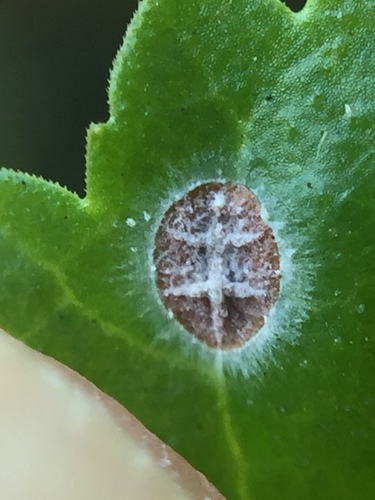
Verbatim
e0“Azadirachtin 1500 ppm, Metarhizium anisopliae, and Lecanicillium lecanii showed comparatively lower suppression with overall ROC mostly below 40%”
t0“Okra Shoot and Fruit Borer, Earias vittella”
The same questions in other papers
Bacillus thuringiensis serovar kurstaki · Earias vittella · Abelmoschus esculentus (okra)Results agree
1 paper in the same direction as this paper
- positive
Metarhizium anisopliae · Earias vittella · Abelmoschus esculentus (okra)Results agree
2 papers in the same direction as this paper
- positive
- positive
thiamethoxam · Earias vittella · Abelmoschus esculentus (okra)Results agree
4 papers in the same direction as this paper
- positive
- positive
- positive
1 paper more in this group
See all 5 papers →azadirachtin · Earias vittella · Abelmoschus esculentus (okra)Results agree
5 papers in the same direction as this paper
- positive
- positive
- positive
2 papers more in this group
See all 6 papers →fipronil · Earias vittella · Abelmoschus esculentus (okra)Results agree
7 papers in the same direction as this paper
- positive
- positive
- positive
4 papers more in this group
See all 8 papers →imidacloprid · Earias vittella · Abelmoschus esculentus (okra)Results agree
11 papers in the same direction as this paper
- positive
- positive
- positive
8 papers more in this group
See all 12 papers →chlorantraniliprole · Earias vittella · Abelmoschus esculentus (okra)Results agree
14 papers in the same direction as this paper
- positive
- positive
- positive
11 papers more in this group
See all 15 papers →spinosad · Earias vittella · Abelmoschus esculentus (okra)Results agree
19 papers in the same direction as this paper
- positive
- positive
- positive
16 papers more in this group
See all 20 papers →8 of 9 groups shown: named compounds and organisms first, then groups whose results differ (checked claim by claim), then those with positive and negative results, then the smaller groups.
Claims are grouped by organism, treatment and what was measured or targeted. A paper counts as positive when any of its claims in the group is positive.