Abstract
The flea beetle (Chaetocnema tibialis Illig.) is an economically important pest of young sugarbeets in the spring. Efficiency of insecticide treatment of sugar beet seed in the control of natural population of the pest was studied in 1999 and 2000 in two locations (Kraljevci and Rimski Sancevi). The study included the following insecticides: Cruiser 350 FS, Gaucho 600 FS, Prestige 290 FS, Furadan ST 35. A granulated insecticide Counter G-5 was applied in bands during sugar beet planting. Following conclusion may be drawn on the basis of the obtained results. 1. Seed treatment reduced the percentage of damaged plants from 85.5% to 96.2%. The number of holes on leaves decreased accordingly, as compared with the control. 2. Under conditions of high population of flea beetles, undamaged plants were registered only in the treatments with Cruiser 350 FS and Gaucho 600 FS. Heavily damaged plants, with more than 50 holes per plant, were registered in the treatment with Counter G-5 (85.0%). The percentages of heavily damaged plants following seed treatment with insecticides ranged from 4.1% (Gaucho 600 FS) to 35.2% (Furadan ST 35). 3. Intensity of plant damage was proportionately reflected on plant mass. Measured 45 days after planting, plant mass from seed treated with Gaucho 600 FS and Cruiser 350 FS was about 80% higher than the mass of control plants. The treatment with Counter G-5 increased plant mass by only 2.3% compared with the control. 4. Seed treatment with insecticides increased the yield of roots, sugar content and the yield of crystal sugar. The respective increases in relation to the control were 5.9-15.2%, 1.0-6.2% and 11.9-21.6%. The preparations Cruiser 350 FS, Gaucho 600 FS and Furadan ST 35 were distinguished for their efficiency. 5. Seed treatment with systemic insecticides provides maximum protection of young sugar beets in the spring, providing that the pest population size is moderate. A wider introduction of this pest control method would make sugar beet protection more cost effective and ecologically more acceptable.
Abstract from the paper’s OpenAlex record, shown for indexing and research. Copyright remains with the authors or the publisher. Read at the source ↗
The text the model read, with the source record’s inline markup (italics, sub- and superscripts) rendered and its character entities decoded; quote offsets refer to the raw text.
Claims 15
Claim · model-written summary
Insecticide seed treatment reduced the percentage of damaged sugar beet plants by 85.5% to 96.2%.
- Taxon
- sugar beet
 Beta vulgaris subsp. vulgarist0
- Treatment
- Seed treatmente0
- Interactor
- Chaetocnema tibialis Illig.
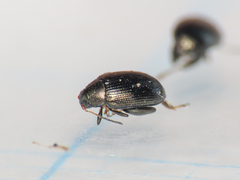 Chaetocnema tibialist0pest
- Outcome
- percentage of damaged plantse0
- Direction
- reducede0
- Value
- 85.5% to 96.2%e0
Not reportedComparator
Organisms pictured · Representative pictures of the matched species, not figures from the paper.

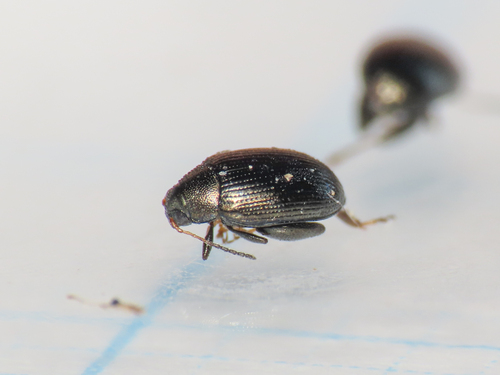
Verbatim
e0“Seed treatment reduced the percentage of damaged plants from 85.5% to 96.2%.”
t0“Flea Beetle (Chaetocnema tibialis Illig.) by insecticide treatment of sugar beet seed”
Claim · model-written summary
Seed treatment decreased holes on leaves relative to control.
- Taxon
- sugar beetBeta vulgaris subsp. vulgarist0
- Treatment
- insecticide treatmentt0
- Interactor
- Chaetocnema tibialis Illig.Chaetocnema tibialist0pest
- Outcome
- number of holes on leavese0
- Direction
- decreasede0
- Comparator
- controle0
Organisms pictured · Representative pictures of the matched species, not figures from the paper.
Verbatim
e0“The number of holes on leaves decreased accordingly, as compared with the control.”
t0“Flea Beetle (Chaetocnema tibialis Illig.) by insecticide treatment of sugar beet seed”
Claim · model-written summary
Only Cruiser 350 FS and Gaucho 600 FS treatments had undamaged plants at high flea beetle populations.
- Taxon
- sugar beetBeta vulgaris subsp. vulgarist0
- Treatment
- Cruiser 350 FS and Gaucho 600 FSe0
- Outcome
- undamaged plantse0
Organisms pictured · Representative pictures of the matched species, not figures from the paper.
Verbatim
e0“Under conditions of high population of flea beetles, undamaged plants were registered only in the treatments with Cruiser 350 FS and Gaucho 600 FS.”
t0“sugar beet seed”
Claim · model-written summary
Counter G-5 had 85.0% heavily damaged plants.
- Taxon
- sugar beetBeta vulgaris subsp. vulgarist0
- Treatment
- Counter G-5e0
- Interactor
- Flea Beetlet0pest
- Outcome
- Heavily damaged plantse0
- Value
- 85.0%e0
- Qualifier
- more than 50 holes per plante0
Organisms pictured · Representative pictures of the matched species, not figures from the paper.
Verbatim
e0“Heavily damaged plants, with more than 50 holes per plant, were registered in the treatment with Counter G-5 (85.0%).”
t0“Flea Beetle (Chaetocnema tibialis Illig.) by insecticide treatment of sugar beet seed”
Claim · model-written summary
Gaucho 600 FS had 4.1% heavily damaged plants.
- Taxon
- sugar beetBeta vulgaris subsp. vulgarist0
- Treatment
- Gaucho 600 FSe0
- Interactor
- Flea Beetlet0pest
- Outcome
- heavily damaged plantse0
- Value
- 4.1%e0
Organisms pictured · Representative pictures of the matched species, not figures from the paper.
Verbatim
e0“The percentages of heavily damaged plants following seed treatment with insecticides ranged from 4.1% (Gaucho 600 FS) to 35.2% (Furadan ST 35).”
t0“Flea Beetle (Chaetocnema tibialis Illig.) by insecticide treatment of sugar beet seed”
Claim · model-written summary
Furadan ST 35 had 35.2% heavily damaged plants.
- Taxon
- sugar beetBeta vulgaris subsp. vulgarist0
- Treatment
- Furadan ST 35e0
- Interactor
- Flea Beetlet0pest
- Outcome
- heavily damaged plantse0
- Value
- 35.2%e0
Organisms pictured · Representative pictures of the matched species, not figures from the paper.
Verbatim
e0“The percentages of heavily damaged plants following seed treatment with insecticides ranged from 4.1% (Gaucho 600 FS) to 35.2% (Furadan ST 35).”
t0“Flea Beetle (Chaetocnema tibialis Illig.) by insecticide treatment of sugar beet seed”
Claim · model-written summary
Plant damage intensity was proportional to plant mass.
- Taxon
- sugar beetBeta vulgaris subsp. vulgarist0
- Interactor
- Flea Beetlet0pest
- Outcome
- plant masse0
Not reportedDirection
Organisms pictured · Representative pictures of the matched species, not figures from the paper.
Verbatim
e0“Intensity of plant damage was proportionately reflected on plant mass.”
t0“Flea Beetle (Chaetocnema tibialis Illig.) by insecticide treatment of sugar beet seed”
Claim · model-written summary
Gaucho 600 FS seed treatment increased plant mass about 80% relative to control at 45 days.
- Taxon
- sugar beetBeta vulgaris subsp. vulgarist0
- Treatment
- Gaucho 600 FSe0
- Outcome
- plant masse0
- Direction
- highere0
- Value
- about 80%e0
- Qualifier
- 45 days after plantinge0
- Comparator
- control plantse0
Organisms pictured · Representative pictures of the matched species, not figures from the paper.
Verbatim
e0“Measured 45 days after planting, plant mass from seed treated with Gaucho 600 FS and Cruiser 350 FS was about 80% higher than the mass of control plants.”
t0“sugar beet seed”
Claim · model-written summary
Cruiser 350 FS seed treatment increased plant mass about 80% relative to control at 45 days.
- Taxon
- sugar beetBeta vulgaris subsp. vulgarist0
- Treatment
- Cruiser 350 FSe0
- Outcome
- plant masse0
- Direction
- highere0
- Value
- about 80%e0
- Comparator
- control plantse0
Organisms pictured · Representative pictures of the matched species, not figures from the paper.
Verbatim
e0“Measured 45 days after planting, plant mass from seed treated with Gaucho 600 FS and Cruiser 350 FS was about 80% higher than the mass of control plants.”
t0“sugar beet seed”
Claim · model-written summary
Counter G-5 increased plant mass by 2.3% over control.
- Taxon
- sugar beetBeta vulgaris subsp. vulgarist0
- Treatment
- Counter G-5e0
- Outcome
- plant masse0
- Direction
- increasede0
- Value
- 2.3%e0
- Comparator
- controle0
Organisms pictured · Representative pictures of the matched species, not figures from the paper.
Verbatim
e0“The treatment with Counter G-5 increased plant mass by only 2.3% compared with the control.”
t0“sugar beet seed”
Claim · model-written summary
Insecticide seed treatment increased root yield by 5.9-15.2% relative to control.
- Taxon
- sugar beetBeta vulgaris subsp. vulgarist0
- Treatment
- Seed treatment with insecticidese0
- Outcome
- yield of rootse0
- Direction
- increasede0
- Value
- 5.9-15.2%e0
- Comparator
- controle0
Organisms pictured · Representative pictures of the matched species, not figures from the paper.
Verbatim
e0“Seed treatment with insecticides increased the yield of roots, sugar content and the yield of crystal sugar. The respective increases in relation to the control were 5.9-15.2%, 1.0-6.2% and 11.9-21.6%.”
t0“sugar beet seed”
Claim · model-written summary
Insecticide seed treatment increased sugar content by 1.0-6.2%.
- Taxon
- sugar beetBeta vulgaris subsp. vulgarist0
- Treatment
- Seed treatment with insecticidese0
- Outcome
- sugar contente0
- Direction
- increasede0
- Value
- 1.0-6.2%e0
- Comparator
- controle0
Organisms pictured · Representative pictures of the matched species, not figures from the paper.
Verbatim
e0“Seed treatment with insecticides increased the yield of roots, sugar content and the yield of crystal sugar. The respective increases in relation to the control were 5.9-15.2%, 1.0-6.2% and 11.9-21.6%.”
t0“sugar beet seed”
Claim · model-written summary
Insecticide seed treatment increased crystal sugar yield by 11.9-21.6%.
- Taxon
- sugar beetBeta vulgaris subsp. vulgarist0
- Treatment
- Seed treatment with insecticidese0
- Outcome
- yield of crystal sugare0
- Direction
- increasede0
- Value
- 11.9-21.6%e0
- Comparator
- controle0
Organisms pictured · Representative pictures of the matched species, not figures from the paper.
Verbatim
e0“Seed treatment with insecticides increased the yield of roots, sugar content and the yield of crystal sugar. The respective increases in relation to the control were 5.9-15.2%, 1.0-6.2% and 11.9-21.6%.”
t0“sugar beet seed”
Claim · model-written summary
Cruiser 350 FS, Gaucho 600 FS and Furadan ST 35 were distinguished for efficiency.
- Taxon
- sugar beetBeta vulgaris subsp. vulgarist0
- Outcome
- efficiencye0
Organisms pictured · Representative pictures of the matched species, not figures from the paper.
Verbatim
e0“The preparations Cruiser 350 FS, Gaucho 600 FS and Furadan ST 35 were distinguished for their efficiency.”
t0“sugar beet seed”
Claim · model-written summary
The authors recommend systemic insecticide seed treatment for maximum young beet protection when pest populations are moderate.
- Taxon
- sugar beetsBeta vulgaris subsp. vulgarise0
- Outcome
- maximum protectione0
- Qualifier
- pest population size is moderatee0
Organisms pictured · Representative pictures of the matched species, not figures from the paper.
Verbatim
e0“Seed treatment with systemic insecticides provides maximum protection of young sugar beets in the spring, providing that the pest population size is moderate.”
The same questions in other papers
seed treatment · quality: sugar starch · Beta vulgaris (beet)Results differ
9 papers in the same direction as this paper · 2 in the opposite direction
- no effect
- no effect
- positive
8 papers more in this group
See all 12 papers →seed treatment · yield · Beta vulgaris (beet)Results differ
16 papers in the same direction as this paper · 2 in the opposite direction
- no effect
- no effect
- positive
15 papers more in this group
See all 19 papers →insecticide · yield · Beta vulgaris (beet)Positive and negative results
7 papers in the same direction as this paper · 3 in the opposite direction · 2 reporting no difference from an alternative
- no effect
- no effect
- no effect
9 papers more in this group
See all 13 papers →insecticide · quality: sugar starch · Beta vulgaris (beet)Results agree
4 papers in the same direction as this paper
- positive
- positive
- positive
1 paper more in this group
See all 5 papers →Claims are grouped by organism, treatment and what was measured or targeted. A paper counts as positive when any of its claims in the group is positive.