Abstract
The experiment was conducted at the farmer's okra field in Randomized Block Design with 8 treatments replicated thrice. The bio-efficacy of different novel insecticides against white fly revealed that among the treatments, seed treatment of imidacloprid 5 g/kg seed + neem Azal @ 5000 ppm spray + indoxacarb 75 g a.i/ha spray + Bacillus thuringiensis (Biolep) @1 kg/ha spray was significantly most effective treatment and reduced whitefly count by 63.01 -52.13 and 52.45 -42.34% at one and seven days after first and second spraying, respectively. However, imidacloprid 5 g/kg seed + neem Azal @ 5000 ppm + indoxacarb 75 g a.i/ha + Bt @ 1 kg/ha combination was not so much effective treatment after 3rd spray as that was after 1st and 2nd spray of the insecticides and biopesticides.
Abstract from the paper’s OpenAlex record, shown for indexing and research. Copyright remains with the authors or the publisher. Read at the source ↗
The text the model read, with the source record’s inline markup (italics, sub- and superscripts) rendered and its character entities decoded; quote offsets refer to the raw text.
Claims 2
Claim · model-written summary
The combined seed and spray treatment was most effective and reduced whitefly counts after the first and second spray.
- Taxon
- okra
 Abelmoschus esculentust0
- Treatment
- seed treatment of imidacloprid 5 g/kg seed + neem Azal @ 5000 ppm spray + indoxacarb 75 g a.i/ha spray + Bacillus thuringiensis (Biolep) @1 kg/ha spraye0
- Interactor
- whiteflyt0pest
- Second interactor
- Bacillus thuringiensis
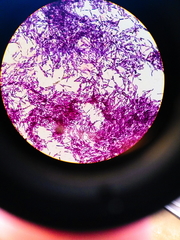 Bacillus thuringiensise0biocontrol_agent
- Outcome
- whitefly counte0
- Direction
- reducede0
- Value
- 63.01 -52.13 and 52.45 -42.34%e0
Not reportedComparator
Organisms pictured · Representative pictures of the matched species, not figures from the paper.

Verbatim
t0“whitefly on okra”
e0“seed treatment of imidacloprid 5 g/kg seed + neem Azal @ 5000 ppm spray + indoxacarb 75 g a.i/ha spray + Bacillus thuringiensis (Biolep) @1 kg/ha spray was significantly most effective treatment and reduced whitefly count by 63.01 -52.13 and 52.45 -42.34% at one and seven days after first and second spraying, respectively”
Claim · model-written summary
The combination was less effective after the third spray than after the first and second sprays.
- Taxon
- okraAbelmoschus esculentust0
- Treatment
- imidacloprid 5 g/kg seed + neem Azal @ 5000 ppm + indoxacarb 75 g a.i/ha + Bt @ 1 kg/ha combinatione0
- Interactor
- whiteflyt0pest
- Outcome
- not so much effective treatmente0
- Direction
- not so much effectivee0
- Comparator
- after 1st and 2nd spraye0
Organisms pictured · Representative pictures of the matched species, not figures from the paper.
Verbatim
t0“whitefly on okra”
e0“imidacloprid 5 g/kg seed + neem Azal @ 5000 ppm + indoxacarb 75 g a.i/ha + Bt @ 1 kg/ha combination was not so much effective treatment after 3rd spray as that was after 1st and 2nd spray”
The same questions in other papers
indoxacarb · pest · Abelmoschus esculentus (okra)Positive and negative results
4 papers in the same direction as this paper · 1 in the opposite direction
- negative
- positive
- positive
2 papers more in this group
See all 6 papers →imidacloprid · pest · Abelmoschus esculentus (okra)Positive and negative results
24 papers in the same direction as this paper · 1 in the opposite direction
- negative
- positive
- positive
22 papers more in this group
See all 26 papers →Bacillus thuringiensis · pest · Abelmoschus esculentus (okra)Results agree
2 papers in the same direction as this paper
- positive
- positive
seed treatment · pest · Abelmoschus esculentus (okra)Positive and negative results
9 papers in the same direction as this paper · 3 in the opposite direction
- negative
- negative
- negative
9 papers more in this group
See all 13 papers →application · pest · Abelmoschus esculentus (okra)Positive and negative results
21 papers in the same direction as this paper · 4 in the opposite direction
- no effect
- negative
- negative
22 papers more in this group
See all 26 papers →botanical · pest · Abelmoschus esculentus (okra)Positive and negative results
50 papers in the same direction as this paper · 4 in the opposite direction
- no effect
- no effect
- negative
51 papers more in this group
See all 55 papers →Claims are grouped by organism, treatment and what was measured or targeted. A paper counts as positive when any of its claims in the group is positive.