Abstract
Rice blast, caused by Magnaporthe oryzae, is a major biotic stress that severely limits rice productivity worldwide. Although tricyclazole is widely used to manage blast, its prolonged use poses environmental and pathogen resistance risks. To address these concerns, the present study assessed the efficacy and safety of tricyclazole-loaded chitosan nanoparticles (CNPT), synthesized via the ionic gelation method, as a sustainable foliar application for managing blast disease in paddy (Oryza sativa L. var. MTU-1001). Two foliar applications of CNPT (at 30 and 50 days after transplanting) at 750 ppm proved most effective, significantly improving agronomic traits and suppressing disease under field conditions. Phytotoxicity screening under greenhouse and field conditions confirmed CNPT's safety up to 1000 ppm, with no visible symptoms of chlorosis or necrosis. CNPT treatment notably enhanced plant height (120.38 cm), tiller number (15.50 tillers/hill), leaf surface area (303.49 cm²/hill), panicle length (29.88 cm), and 1000-grain weight (39.55 g), while reducing chaffiness to 2.84%. Disease assessments revealed a marked reduction in blast severity, with the Percent Disease Index (PDI) reduced from 23.67% in untreated plots to 7.44% in CNPT-treated ones. Moreover, the Area Under Disease Progress Curve (AUDPC), which represents the cumulative disease intensity over time, was significantly lowered from 1205.25 to 372.00. These findings demonstrate that CNPT provides controlled release, improved plant health, and effective blast suppression, offering a promising, eco-friendly alternative for integrated disease management in rice cultivation.
Abstract from the paper’s OpenAlex record, shown for indexing and research. Copyright remains with the authors or the publisher. Read at the source ↗
The text the model read, with the source record’s inline markup (italics, sub- and superscripts) rendered and its character entities decoded; quote offsets refer to the raw text.
Claims 11
Claim · model-written summary
Two CNPT applications at 750 ppm significantly improved agronomic traits.
- Taxon
- Rice
 Oryza sativat0
- Treatment
- Two foliar applications of CNPT (at 30 and 50 days after transplanting) at 750 ppme0
- Outcome
- agronomic traitse0
- Direction
- improvinge0
- Setting
- field conditionse0
Not reportedComparator
Organisms pictured · Representative pictures of the matched species, not figures from the paper.

Verbatim
e0“Two foliar applications of CNPT (at 30 and 50 days after transplanting) at 750 ppm proved most effective, significantly improving agronomic traits and suppressing disease under field conditions”
t0“Rice”
Claim · model-written summary
Two CNPT applications at 750 ppm significantly suppressed blast disease.
- Taxon
- RiceOryza sativat0
- Treatment
- Two foliar applications of CNPT (at 30 and 50 days after transplanting) at 750 ppme0
- Interactor
- Magnaporthe oryzae
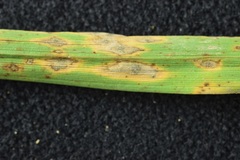 Pyricularia oryzaee1pathogen
- Outcome
- diseasee0
- Direction
- suppressinge0
- Setting
- field conditionse0
Not reportedComparator
Organisms pictured · Representative pictures of the matched species, not figures from the paper.
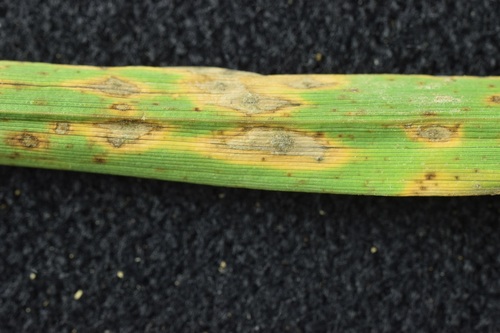
Verbatim
e0“Two foliar applications of CNPT (at 30 and 50 days after transplanting) at 750 ppm proved most effective, significantly improving agronomic traits and suppressing disease under field conditions”
t0“Rice”
e1“Rice blast, caused by Magnaporthe oryzae”
Claim · model-written summary
CNPT caused no visible chlorosis or necrosis up to 1000 ppm.
- Taxon
- RiceOryza sativat0
- Treatment
- CNPTe0
- Outcome
- chlorosis or necrosise0
- Direction
- no visible symptomse0
- Value
- 1000 ppme0
- Setting
- greenhouse and field conditionse0
Not reportedComparator
Organisms pictured · Representative pictures of the matched species, not figures from the paper.
Verbatim
e0“Phytotoxicity screening under greenhouse and field conditions confirmed CNPT's safety up to 1000 ppm, with no visible symptoms of chlorosis or necrosis”
t0“Rice”
Claim · model-written summary
CNPT enhanced plant height.
- Taxon
- RiceOryza sativat0
- Treatment
- CNPT treatmente0
- Outcome
- plant heighte0
- Direction
- enhancede0
- Value
- 120.38 cme0
Not reportedComparator
Organisms pictured · Representative pictures of the matched species, not figures from the paper.
Verbatim
e0“CNPT treatment notably enhanced plant height (120.38 cm), tiller number (15.50 tillers/hill), leaf surface area (303.49 cm²/hill), panicle length (29.88 cm), and 1000-grain weight (39.55 g)”
t0“Rice”
Claim · model-written summary
CNPT enhanced tiller number.
- Taxon
- RiceOryza sativat0
- Treatment
- CNPT treatmente0
- Outcome
- tiller numbere0
- Direction
- enhancede0
- Value
- 15.50 tillers/hille0
Not reportedComparator
Organisms pictured · Representative pictures of the matched species, not figures from the paper.
Verbatim
e0“CNPT treatment notably enhanced plant height (120.38 cm), tiller number (15.50 tillers/hill), leaf surface area (303.49 cm²/hill), panicle length (29.88 cm), and 1000-grain weight (39.55 g)”
t0“Rice”
Claim · model-written summary
CNPT enhanced leaf surface area.
- Taxon
- RiceOryza sativat0
- Treatment
- CNPT treatmente0
- Outcome
- leaf surface areae0
- Direction
- enhancede0
- Value
- 303.49 cm²/hille0
Not reportedComparator
Organisms pictured · Representative pictures of the matched species, not figures from the paper.
Verbatim
e0“CNPT treatment notably enhanced plant height (120.38 cm), tiller number (15.50 tillers/hill), leaf surface area (303.49 cm²/hill), panicle length (29.88 cm), and 1000-grain weight (39.55 g)”
t0“Rice”
Claim · model-written summary
CNPT enhanced panicle length.
- Taxon
- RiceOryza sativat0
- Treatment
- CNPT treatmente0
- Outcome
- panicle lengthe0
- Direction
- enhancede0
- Value
- 29.88 cme0
Not reportedComparator
Organisms pictured · Representative pictures of the matched species, not figures from the paper.
Verbatim
e0“CNPT treatment notably enhanced plant height (120.38 cm), tiller number (15.50 tillers/hill), leaf surface area (303.49 cm²/hill), panicle length (29.88 cm), and 1000-grain weight (39.55 g)”
t0“Rice”
Claim · model-written summary
CNPT enhanced 1000-grain weight.
- Taxon
- RiceOryza sativat0
- Treatment
- CNPT treatmente0
- Outcome
- 1000-grain weighte0
- Direction
- enhancede0
- Value
- 39.55 ge0
Not reportedComparator
Organisms pictured · Representative pictures of the matched species, not figures from the paper.
Verbatim
e0“CNPT treatment notably enhanced plant height (120.38 cm), tiller number (15.50 tillers/hill), leaf surface area (303.49 cm²/hill), panicle length (29.88 cm), and 1000-grain weight (39.55 g)”
t0“Rice”
Claim · model-written summary
CNPT reduced chaffiness to 2.84%.
Not reportedComparator
Organisms pictured · Representative pictures of the matched species, not figures from the paper.
Verbatim
e0“while reducing chaffiness to 2.84%”
t0“Rice”
e2“Two foliar applications of CNPT (at 30 and 50 days after transplanting) at 750 ppm proved most effective, significantly improving agronomic traits and suppressing disease under field conditions”
Claim · model-written summary
CNPT lowered blast PDI from 23.67% to 7.44%.
- Taxon
- RiceOryza sativat0
- Treatment
- CNPT-treatede0
- Interactor
- Magnaporthe oryzaePyricularia oryzaee1pathogen
- Outcome
- Percent Disease Index (PDI)e0
- Direction
- reducede0
- Value
- 7.44%e0
- Qualifier
- 23.67%e0
- Comparator
- untreated plotse0
Organisms pictured · Representative pictures of the matched species, not figures from the paper.
Verbatim
e0“Percent Disease Index (PDI) reduced from 23.67% in untreated plots to 7.44% in CNPT-treated ones”
t0“Rice”
e1“Rice blast, caused by Magnaporthe oryzae”
Claim · model-written summary
CNPT lowered AUDPC from 1205.25 to 372.00.
- Taxon
- RiceOryza sativat0
- Treatment
- CNPTe2
- Interactor
- Magnaporthe oryzaePyricularia oryzaee1pathogen
- Outcome
- Area Under Disease Progress Curve (AUDPC)e0
- Direction
- lowerede0
- Value
- 372.00e0
- Qualifier
- 1205.25e0
Not reportedComparator
Organisms pictured · Representative pictures of the matched species, not figures from the paper.
Verbatim
e0“Area Under Disease Progress Curve (AUDPC), which represents the cumulative disease intensity over time, was significantly lowered from 1205.25 to 372.00”
t0“Rice”
e1“Rice blast, caused by Magnaporthe oryzae”
e2“Two foliar applications of CNPT (at 30 and 50 days after transplanting) at 750 ppm proved most effective, significantly improving agronomic traits and suppressing disease under field conditions”
The same questions in other papers
chitosan · growth · Oryza sativa (rice)Results differ
16 papers in the same direction as this paper · 3 in the opposite direction
- no effect
- negative
- no effect
16 papers more in this group
See all 20 papers →chitosan · physiology: pigments · Oryza sativa (rice)Positive and negative results
1 paper in the same direction as this paper · 3 in the opposite direction
- positive
- positive
- positive
1 paper more in this group
See all 5 papers →chitosan · Pyricularia oryzae · Oryza sativa (rice)Results agree
4 papers in the same direction as this paper
- positive
- positive
- positive
1 paper more in this group
See all 5 papers →chitosan · yield · Oryza sativa (rice)Results agree
8 papers in the same direction as this paper
- positive
- positive
- positive
5 papers more in this group
See all 9 papers →application · Pyricularia oryzae · Oryza sativa (rice)Positive and negative results
20 papers in the same direction as this paper · 1 in the opposite direction
- negative
- positive
- positive
18 papers more in this group
See all 22 papers →nanoparticle · physiology: pigments · Oryza sativa (rice)Positive and negative results
1 paper in the same direction as this paper · 31 in the opposite direction
- positive
- positive
- positive
29 papers more in this group
See all 33 papers →nanoparticle · growth · Oryza sativa (rice)Positive and negative results
131 papers in the same direction as this paper · 11 in the opposite direction · 1 reporting no difference from an alternative
- negative
- negative
- no effect
140 papers more in this group
See all 144 papers →nanoparticle · yield · Oryza sativa (rice)Positive and negative results
188 papers in the same direction as this paper · 11 in the opposite direction · 2 reporting no difference from an alternative
- negative
- no effect
- negative
198 papers more in this group
See all 202 papers →8 of 10 groups shown: named compounds and organisms first, then groups whose results differ (checked claim by claim), then those with positive and negative results, then the smaller groups.
Claims are grouped by organism, treatment and what was measured or targeted. A paper counts as positive when any of its claims in the group is positive.