Abstract
Spot blotch caused by Bipolaris sorokiniana has a worldwide distribution, however, it is most hostile when temperatures and relative humidity are high and soil fertility is poor. The disease causes a substantial loss in yield, particularly in India’s North Eastern Plains Zone. Field investigations were carried out from December to April for two consecutive crop seasons, 2021–2022 and 2022–2023 for the evaluation of fungitoxicants, botanicals, bio-agents, and micronutrients against spot blotch of wheat (Triticum aestivum L.) under the field conditions. The wheat genotypes were inoculated with an aqueous solution of the pathogen Bipolaris sorokiniana, which contained approximately 105 conidia ml-1. Two inoculations were made: one at the booting phase and another fifteen days later. Seven micronutrients-calcium chloride, zinc sulphate+lime, ferrous sulphate+lime, boron, sulfur, molybdenum, and manganese sulphate+lime-four botanicals-leaf extracts of tulsi, neem, mentha, and garlic clove extract-four bioagents-Trichoderma harzianum SV-7, T. harzianum SV-28, T. harzianum IRRI-1, Pseudomonas fluorescens-and six fungitoxicants-azoxystrobin, difenoconazole, propiconazole, tebuconazole, azoxystrobin+tebuconazole, and carbendazim+mancozeb-were assessed against spot blotch of wheat in artificially inoculated field conditions. Furthermore, 32 wheat genotypes were evaluated for resistance to spot blotch in addition to the above experiments. During two consecutive crop seasons, the study found that fungitoxicants (propiconazole and tebuconazole), botanicals (garlic clove extract), micronutrients (zinc sulphate and boron), and bioagents (Trichoderma harzianum-IRRI-1) were effective in decreasing the disease index and increasing grain yield.
Abstract from the paper’s OpenAlex record; open copy licensed cc-by-nc-sa. Read at the source ↗
The text the model read, with the source record’s inline markup (italics, sub- and superscripts) rendered and its character entities decoded; quote offsets refer to the raw text.
Claims 12
Claim · model-written summary
Propiconazole decreased spot blotch disease index.
- Taxon
- wheat
 Triticum aestivume1
- Treatment
- propiconazolee0
- Interactor
- Bipolaris sorokiniana
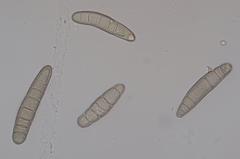 Bipolaris sorokinianae2pathogen
- Outcome
- disease indexe0
- Direction
- decreasinge0
Not reportedComparator
Organisms pictured · Representative pictures of the matched species, not figures from the paper.

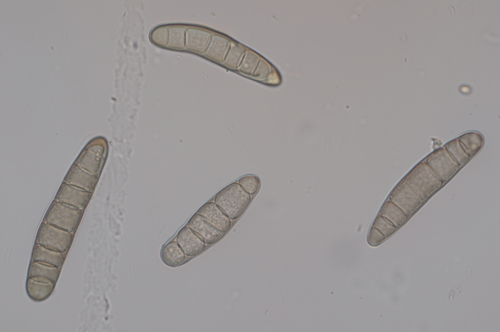
Verbatim
e0“fungitoxicants (propiconazole and tebuconazole), botanicals (garlic clove extract), micronutrients (zinc sulphate and boron), and bioagents (Trichoderma harzianum-IRRI-1) were effective in decreasing the disease index and increasing grain yield”
e1“spot blotch of wheat (Triticum aestivum L.)”
e2“Spot blotch caused by Bipolaris sorokiniana”
Claim · model-written summary
Tebuconazole decreased spot blotch disease index.
- Taxon
- wheatTriticum aestivume1
- Treatment
- tebuconazolee0
- Interactor
- Bipolaris sorokinianaBipolaris sorokinianae2pathogen
- Outcome
- disease indexe0
- Direction
- decreasinge0
Not reportedComparator
Organisms pictured · Representative pictures of the matched species, not figures from the paper.
Verbatim
e0“fungitoxicants (propiconazole and tebuconazole), botanicals (garlic clove extract), micronutrients (zinc sulphate and boron), and bioagents (Trichoderma harzianum-IRRI-1) were effective in decreasing the disease index and increasing grain yield”
e1“spot blotch of wheat (Triticum aestivum L.)”
e2“Spot blotch caused by Bipolaris sorokiniana”
Claim · model-written summary
Garlic clove extract decreased spot blotch disease index.
- Taxon
- wheatTriticum aestivume1
- Treatment
- garlic clove extracte0
- Interactor
- Bipolaris sorokinianaBipolaris sorokinianae2pathogen
- Outcome
- disease indexe0
- Direction
- decreasinge0
Not reportedComparator
Organisms pictured · Representative pictures of the matched species, not figures from the paper.
Verbatim
e0“botanicals (garlic clove extract), micronutrients (zinc sulphate and boron), and bioagents (Trichoderma harzianum-IRRI-1) were effective in decreasing the disease index and increasing grain yield”
e1“spot blotch of wheat (Triticum aestivum L.)”
e2“Spot blotch caused by Bipolaris sorokiniana”
Claim · model-written summary
Zinc sulphate decreased spot blotch disease index.
- Taxon
- wheatTriticum aestivume1
- Treatment
- zinc sulphatee0
- Interactor
- Bipolaris sorokinianaBipolaris sorokinianae2pathogen
- Outcome
- disease indexe0
- Direction
- decreasinge0
Not reportedComparator
Organisms pictured · Representative pictures of the matched species, not figures from the paper.
Verbatim
e0“micronutrients (zinc sulphate and boron), and bioagents (Trichoderma harzianum-IRRI-1) were effective in decreasing the disease index and increasing grain yield”
e1“spot blotch of wheat (Triticum aestivum L.)”
e2“Spot blotch caused by Bipolaris sorokiniana”
Claim · model-written summary
Boron decreased spot blotch disease index.
- Taxon
- wheatTriticum aestivume1
- Treatment
- borone0
- Interactor
- Bipolaris sorokinianaBipolaris sorokinianae2pathogen
- Outcome
- disease indexe0
- Direction
- decreasinge0
Not reportedComparator
Organisms pictured · Representative pictures of the matched species, not figures from the paper.
Verbatim
e0“micronutrients (zinc sulphate and boron), and bioagents (Trichoderma harzianum-IRRI-1) were effective in decreasing the disease index and increasing grain yield”
e1“spot blotch of wheat (Triticum aestivum L.)”
e2“Spot blotch caused by Bipolaris sorokiniana”
Claim · model-written summary
Trichoderma harzianum-IRRI-1 decreased spot blotch disease index.
- Taxon
- wheatTriticum aestivume1
- Treatment
- Trichoderma harzianum-IRRI-1e0
- Interactor
- Bipolaris sorokinianaBipolaris sorokinianae2pathogen
- Second interactor
- Trichoderma harzianum-IRRI-1e0biocontrol_agent
- Outcome
- disease indexe0
- Direction
- decreasinge0
Not reportedComparator
Organisms pictured · Representative pictures of the matched species, not figures from the paper.
Verbatim
e0“bioagents (Trichoderma harzianum-IRRI-1) were effective in decreasing the disease index and increasing grain yield”
e1“spot blotch of wheat (Triticum aestivum L.)”
e2“Spot blotch caused by Bipolaris sorokiniana”
Claim · model-written summary
Propiconazole increased wheat grain yield.
- Taxon
- wheatTriticum aestivume1
- Treatment
- propiconazolee0
- Outcome
- grain yielde0
- Direction
- increasinge0
Not reportedComparator
Organisms pictured · Representative pictures of the matched species, not figures from the paper.
Verbatim
e0“fungitoxicants (propiconazole and tebuconazole), botanicals (garlic clove extract), micronutrients (zinc sulphate and boron), and bioagents (Trichoderma harzianum-IRRI-1) were effective in decreasing the disease index and increasing grain yield”
e1“spot blotch of wheat (Triticum aestivum L.)”
Claim · model-written summary
Tebuconazole increased wheat grain yield.
- Taxon
- wheatTriticum aestivume1
- Treatment
- tebuconazolee0
- Outcome
- grain yielde0
- Direction
- increasinge0
Not reportedComparator
Organisms pictured · Representative pictures of the matched species, not figures from the paper.
Verbatim
e0“fungitoxicants (propiconazole and tebuconazole), botanicals (garlic clove extract), micronutrients (zinc sulphate and boron), and bioagents (Trichoderma harzianum-IRRI-1) were effective in decreasing the disease index and increasing grain yield”
e1“spot blotch of wheat (Triticum aestivum L.)”
Claim · model-written summary
Garlic clove extract increased wheat grain yield.
- Taxon
- wheatTriticum aestivume1
- Treatment
- garlic clove extracte0
- Outcome
- grain yielde0
- Direction
- increasinge0
Not reportedComparator
Organisms pictured · Representative pictures of the matched species, not figures from the paper.
Verbatim
e0“botanicals (garlic clove extract), micronutrients (zinc sulphate and boron), and bioagents (Trichoderma harzianum-IRRI-1) were effective in decreasing the disease index and increasing grain yield”
e1“spot blotch of wheat (Triticum aestivum L.)”
Claim · model-written summary
Zinc sulphate increased wheat grain yield.
- Taxon
- wheatTriticum aestivume1
- Treatment
- zinc sulphatee0
- Outcome
- grain yielde0
- Direction
- increasinge0
Not reportedComparator
Organisms pictured · Representative pictures of the matched species, not figures from the paper.
Verbatim
e0“micronutrients (zinc sulphate and boron), and bioagents (Trichoderma harzianum-IRRI-1) were effective in decreasing the disease index and increasing grain yield”
e1“spot blotch of wheat (Triticum aestivum L.)”
Claim · model-written summary
Boron increased wheat grain yield.
- Taxon
- wheatTriticum aestivume1
- Treatment
- borone0
- Outcome
- grain yielde0
- Direction
- increasinge0
Not reportedComparator
Organisms pictured · Representative pictures of the matched species, not figures from the paper.
Verbatim
e0“micronutrients (zinc sulphate and boron), and bioagents (Trichoderma harzianum-IRRI-1) were effective in decreasing the disease index and increasing grain yield”
e1“spot blotch of wheat (Triticum aestivum L.)”
Claim · model-written summary
Trichoderma harzianum-IRRI-1 increased wheat grain yield.
- Taxon
- wheatTriticum aestivume1
- Treatment
- Trichoderma harzianum-IRRI-1e0
- Interactor
- Trichoderma harzianum-IRRI-1e0biocontrol_agent
- Outcome
- grain yielde0
- Direction
- increasinge0
Not reportedComparator
Organisms pictured · Representative pictures of the matched species, not figures from the paper.
Verbatim
e0“bioagents (Trichoderma harzianum-IRRI-1) were effective in decreasing the disease index and increasing grain yield”
e1“spot blotch of wheat (Triticum aestivum L.)”
The same questions in other papers
propiconazole · yield · Triticum aestivum (wheat)Results differ
18 papers in the same direction as this paper · 3 in the opposite direction
- no effect
- negative
- negative
18 papers more in this group
See all 22 papers →boron atom · yield · Triticum aestivum (wheat)Results differ
61 papers in the same direction as this paper · 12 in the opposite direction · 2 reporting no difference from an alternative
- negative
- negative
- no effect
72 papers more in this group
See all 76 papers →zinc sulfate · yield · Triticum aestivum (wheat)Results differ
97 papers in the same direction as this paper · 1 in the opposite direction · 1 reporting no difference from an alternative
- no effect
- no effect
- positive
96 papers more in this group
See all 100 papers →zinc sulfate · Bipolaris sorokiniana · Triticum aestivum (wheat)Positive and negative results
1 in the opposite direction
- negative
tebuconazole · yield · Triticum aestivum (wheat)Positive and negative results
35 papers in the same direction as this paper · 2 in the opposite direction
- no effect
- no effect
- positive
34 papers more in this group
See all 38 papers →tebuconazole · Bipolaris sorokiniana · Triticum aestivum (wheat)Results agree
1 paper in the same direction as this paper
- positive
Trichoderma · Bipolaris sorokiniana · Triticum aestivum (wheat)Results agree
1 paper in the same direction as this paper
- positive
Allium sativum · Bipolaris sorokiniana · Triticum aestivum (wheat)Results agree
2 papers in the same direction as this paper
- positive
- positive
8 of 15 groups shown: named compounds and organisms first, then groups whose results differ (checked claim by claim), then those with positive and negative results, then the smaller groups.
Claims are grouped by organism, treatment and what was measured or targeted. A paper counts as positive when any of its claims in the group is positive.