Abstract
Tomato plays a critical role in meeting domestic and nutritional food requirements, generation of income and creation of employment for both the rural and urban populations in Kenya. However, its production is threatened by the Tomato leafminer (Tuta absoluta). Tomato leaf miner (Tuta absoluta) is an important pest of tomato and can cause significant damage if not managed. Farmers mainly rely on chemical pesticides to manage this pest which has resulted in pest resistance and therefore the need for other alternatives that can be incorporated in an Integrated Pest Management (IPM). Integration of mass trapping in a management program could be one such alternative. Field experiments were set up to determine the effectiveness of various IPM packages for the management of Tuta absoluta in tomatoes compared to the farmer strategy of using chemical pesticide alone. The data collected was on Tuta absoluta incidence and yield. The integration of Mass Trapping, Azadirachtin, Bacillus thuringiensis and Chlorantraniliprole significantly reduced Tuta absoluta infestation under open field grown tomatoes. From this study, it can be concluded that mass trapping plays an important role in Integrated Pest Management (IPM) which could be the best approach for the management of Tuta absoluta in tomato.
Abstract from the paper’s OpenAlex record, shown for indexing and research. Copyright remains with the authors or the publisher. Read at the source ↗
The text the model read, with the source record’s inline markup (italics, sub- and superscripts) rendered and its character entities decoded; quote offsets refer to the raw text.
Claims 2
Claim · model-written summary
A package of mass trapping, azadirachtin, Bacillus thuringiensis and chlorantraniliprole significantly reduced Tuta absoluta infestation in open-field tomatoes.
- Taxon
- tomatoes
 Solanum lycopersicume0
- Treatment
- Mass Trapping, Azadirachtin, Bacillus thuringiensis and Chlorantraniliprolee0
- Interactor
- Tuta absoluta
 Tuta absolutae0pest
- Second interactor
- Bacillus thuringiensis
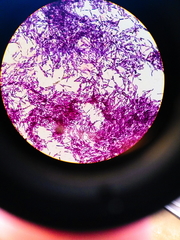 Bacillus thuringiensise0biocontrol_agent
- Outcome
- Tuta absoluta infestatione0
- Direction
- reducede0
- Setting
- open fielde0
Not reportedComparator
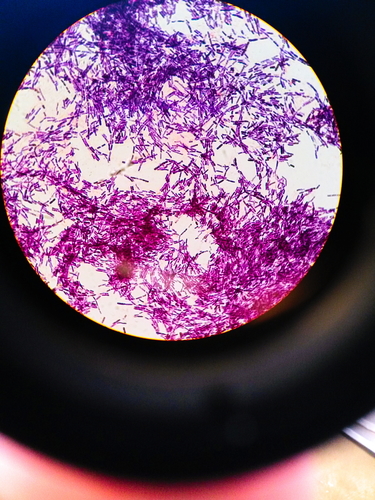
Organisms pictured · Representative pictures of the matched species, not figures from the paper.


Verbatim
e0“The integration of Mass Trapping, Azadirachtin, Bacillus thuringiensis and Chlorantraniliprole significantly reduced Tuta absoluta infestation under open field grown tomatoes.”
t0“Leafminer (Tutaabsoluta) on Tomato”
Claim · model-written summary
The authors conclude that mass trapping has an important role in integrated management of Tuta absoluta in tomato.
- Taxon
- tomatoSolanum lycopersicume0
- Interactor
- Tuta absolutaTuta absolutae0pest
- Outcome
- mass trapping plays an important role in Integrated Pest Management (IPM)e0
Organisms pictured · Representative pictures of the matched species, not figures from the paper.
Verbatim
e0“mass trapping plays an important role in Integrated Pest Management (IPM) which could be the best approach for the management of Tuta absoluta in tomato.”
t0“Leafminer (Tutaabsoluta) on Tomato”
The same questions in other papers
chlorantraniliprole · Tuta absoluta · Solanum lycopersicum (tomato)Positive and negative results
15 papers in the same direction as this paper · 1 in the opposite direction
- no effect
- positive
- positive
13 papers more in this group
See all 17 papers →Bacillus thuringiensis · Tuta absoluta · Solanum lycopersicum (tomato)Results agree
9 papers in the same direction as this paper
- positive
- positive
- positive
6 papers more in this group
See all 10 papers →azadirachtin · Tuta absoluta · Solanum lycopersicum (tomato)Results agree
9 papers in the same direction as this paper
- positive
- positive
- positive
6 papers more in this group
See all 10 papers →trap barrier · Tuta absoluta · Solanum lycopersicum (tomato)Results agree
13 papers in the same direction as this paper
- positive
- positive
- positive
10 papers more in this group
See all 14 papers →Claims are grouped by organism, treatment and what was measured or targeted. A paper counts as positive when any of its claims in the group is positive.