Abstract
An enhanced UV-B radiation (5.0 kJ m−2) was supplied before, during, and after Magnaporthe oryzae infection. The effects of single and compound stress of the UV-B radiation and M. oryzae on the resistance physiology and gene expression of rice leaves were examined. Results revealed that UV-B radiation given before M. oryzae infection (UV-B → M.) significantly increased the pathogenesis-related proteins (PRs) activities of phenylalanine ammonialyase (PAL), lipoxygenase (LOX), chitinase (CHT), and β-1,3-glucanase, the resistance-related substances (flavonoids and total phenols) content, and resistance-related genes (OsPAL and OsCHT) expression, thereby improving the disease resistance of rice leaves. Simultaneous exposure to UV-B radiation and M. oryzae (UV-B/M.) significantly increased the OsLOX2 expression and the PRs activities. Exposure to UV-B radiation after M. oryzae infection (M. → UV-B) decreased the flavonoid content, did not improve the PRs activity, and increased OsLOX2 expression. Compound treatments of UV-B → M., UV-B/M., and M. → UV-B reduced the disease index by 62.3%, 40.2%, and 26.6%, respectively, indicating UV-B radiation inhibited the occurrence of M. oryzae disease, but its inhibitory effect weakened when it was provided after M. oryzae infection. Hence, rice responded to the compound stress of UV-B radiation and M. oryzae through a resistance-related physiological mechanism associated with the sequence of stress occurrence.
Abstract from the paper’s OpenAlex record; open copy licensed cc-by. Read at the source ↗
The text the model read, with the source record’s inline markup (italics, sub- and superscripts) rendered and its character entities decoded; quote offsets refer to the raw text.
Claims 13
Claim · model-written summary
UV-B radiation given before M. oryzae infection significantly increased pathogenesis-related protein activities (PAL, LOX, chitinase, beta-1,3-glucanase) in rice leaves.
- Taxon
- rice
 Oryza sativat0
- Treatment
- UV-B radiation given before M. oryzae infectione0
- Interactor
- Magnaporthe oryzae
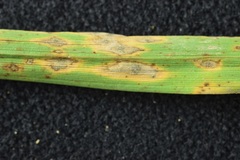 Pyricularia oryzaet1pathogen
- Outcome
- pathogenesis-related proteins (PRs) activitiese1
- Direction
- increasede0
Not reportedComparator
Organisms pictured · Representative pictures of the matched species, not figures from the paper.

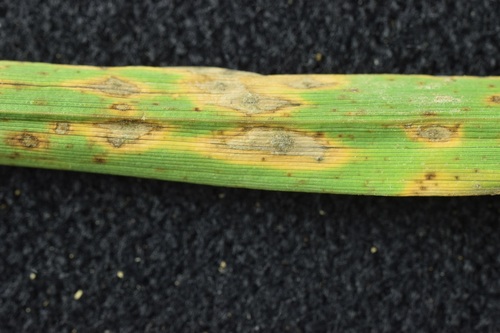
Verbatim
e0“UV-B radiation given before M. oryzae infection (UV-B → M.) significantly increased”
e1“the pathogenesis-related proteins (PRs) activities”
t0“rice”
t1“Magnaporthe oryzae”
Claim · model-written summary
UV-B radiation given before M. oryzae infection significantly increased flavonoid and total phenol contents in rice leaves.
- Taxon
- riceOryza sativat0
- Treatment
- UV-B radiation given before M. oryzae infectione0
- Interactor
- Magnaporthe oryzaePyricularia oryzaet1pathogen
- Outcome
- flavonoids and total phenolse1
- Direction
- increasede0
Not reportedComparator
Organisms pictured · Representative pictures of the matched species, not figures from the paper.
Verbatim
e0“UV-B radiation given before M. oryzae infection (UV-B → M.) significantly increased”
e1“the resistance-related substances (flavonoids and total phenols) content”
t0“rice”
t1“Magnaporthe oryzae”
Claim · model-written summary
UV-B radiation given before M. oryzae infection significantly increased expression of the resistance-related genes OsPAL and OsCHT in rice leaves.
- Taxon
- riceOryza sativat0
- Treatment
- UV-B radiation given before M. oryzae infectione0
- Interactor
- Magnaporthe oryzaePyricularia oryzaet1pathogen
- Gene
- OsPAL and OsCHTe1
- Outcome
- expressione1
- Direction
- increasede0
Not reportedComparator
Organisms pictured · Representative pictures of the matched species, not figures from the paper.
Verbatim
e0“UV-B radiation given before M. oryzae infection (UV-B → M.) significantly increased”
e1“resistance-related genes (OsPAL and OsCHT) expression”
t0“rice”
t1“Magnaporthe oryzae”
Claim · model-written summary
Simultaneous exposure to UV-B radiation and M. oryzae significantly increased OsLOX2 expression in rice leaves.
- Taxon
- riceOryza sativat0
- Treatment
- Simultaneous exposure to UV-B radiation and M. oryzaee0
- Interactor
- Magnaporthe oryzaePyricularia oryzaet1pathogen
- Gene
- OsLOX2e0
- Outcome
- expressione0
- Direction
- increasede0
Not reportedComparator
Organisms pictured · Representative pictures of the matched species, not figures from the paper.
Verbatim
e0“Simultaneous exposure to UV-B radiation and M. oryzae (UV-B/M.) significantly increased the OsLOX2 expression”
t0“rice”
t1“Magnaporthe oryzae”
Claim · model-written summary
Simultaneous exposure to UV-B radiation and M. oryzae significantly increased pathogenesis-related protein activities in rice leaves.
- Taxon
- riceOryza sativat0
- Treatment
- Simultaneous exposure to UV-B radiation and M. oryzaee0
- Interactor
- Magnaporthe oryzaePyricularia oryzaet1pathogen
- Outcome
- PRs activitiese1
- Direction
- increasede0
Not reportedComparator
Organisms pictured · Representative pictures of the matched species, not figures from the paper.
Verbatim
e0“Simultaneous exposure to UV-B radiation and M. oryzae (UV-B/M.) significantly increased”
e1“the PRs activities”
t0“rice”
t1“Magnaporthe oryzae”
Claim · model-written summary
UV-B radiation after M. oryzae infection decreased flavonoid content in rice leaves.
- Taxon
- riceOryza sativat0
- Treatment
- UV-B radiation after M. oryzae infectione0
- Interactor
- Magnaporthe oryzaePyricularia oryzaet1pathogen
- Outcome
- flavonoid contente0
- Direction
- decreasede0
Not reportedComparator
Organisms pictured · Representative pictures of the matched species, not figures from the paper.
Verbatim
e0“Exposure to UV-B radiation after M. oryzae infection (M. → UV-B) decreased the flavonoid content”
t0“rice”
t1“Magnaporthe oryzae”
Claim · model-written summary
UV-B radiation after M. oryzae infection did not improve pathogenesis-related protein activity in rice leaves.
- Taxon
- riceOryza sativat0
- Treatment
- UV-B radiation after M. oryzae infectione0
- Interactor
- Magnaporthe oryzaePyricularia oryzaet1pathogen
- Outcome
- PRs activitye1
- Direction
- did not improvee1
Not reportedComparator
Organisms pictured · Representative pictures of the matched species, not figures from the paper.
Verbatim
e0“Exposure to UV-B radiation after M. oryzae infection (M. → UV-B)”
e1“did not improve the PRs activity”
t0“rice”
t1“Magnaporthe oryzae”
Claim · model-written summary
UV-B radiation after M. oryzae infection increased OsLOX2 expression in rice leaves.
- Taxon
- riceOryza sativat0
- Treatment
- UV-B radiation after M. oryzae infectione0
- Interactor
- Magnaporthe oryzaePyricularia oryzaet1pathogen
- Gene
- OsLOX2e1
- Outcome
- expressione1
- Direction
- increasede1
Not reportedComparator
Organisms pictured · Representative pictures of the matched species, not figures from the paper.
Verbatim
e0“Exposure to UV-B radiation after M. oryzae infection (M. → UV-B)”
e1“and increased OsLOX2 expression”
t0“rice”
t1“Magnaporthe oryzae”
Claim · model-written summary
UV-B radiation before M. oryzae infection reduced the disease index of rice by 62.3%.
- Taxon
- riceOryza sativat0
- Treatment
- UV-B → M.e0
- Interactor
- Magnaporthe oryzaePyricularia oryzaet1pathogen
- Outcome
- disease indexe0
- Direction
- reducede0
- Value
- 62.3%e0
Not reportedComparator
Organisms pictured · Representative pictures of the matched species, not figures from the paper.
Verbatim
e0“Compound treatments of UV-B → M., UV-B/M., and M. → UV-B reduced the disease index by 62.3%, 40.2%, and 26.6%, respectively”
t0“rice”
t1“Magnaporthe oryzae”
Claim · model-written summary
Simultaneous UV-B radiation and M. oryzae reduced the disease index of rice by 40.2%.
- Taxon
- riceOryza sativat0
- Treatment
- UV-B/M.e0
- Interactor
- Magnaporthe oryzaePyricularia oryzaet1pathogen
- Outcome
- disease indexe0
- Direction
- reducede0
- Value
- 40.2%e0
Not reportedComparator
Organisms pictured · Representative pictures of the matched species, not figures from the paper.
Verbatim
e0“Compound treatments of UV-B → M., UV-B/M., and M. → UV-B reduced the disease index by 62.3%, 40.2%, and 26.6%, respectively”
t0“rice”
t1“Magnaporthe oryzae”
Claim · model-written summary
UV-B radiation after M. oryzae infection reduced the disease index of rice by 26.6%.
- Taxon
- riceOryza sativat0
- Treatment
- M. → UV-Be0
- Interactor
- Magnaporthe oryzaePyricularia oryzaet1pathogen
- Outcome
- disease indexe0
- Direction
- reducede0
- Value
- 26.6%e0
Not reportedComparator
Organisms pictured · Representative pictures of the matched species, not figures from the paper.
Verbatim
e0“Compound treatments of UV-B → M., UV-B/M., and M. → UV-B reduced the disease index by 62.3%, 40.2%, and 26.6%, respectively”
t0“rice”
t1“Magnaporthe oryzae”
Claim · model-written summary
UV-B radiation inhibited M. oryzae disease in rice, but the inhibitory effect weakened when UV-B was provided after infection.
- Taxon
- riceOryza sativat0
- Treatment
- UV-B radiatione0
- Interactor
- Magnaporthe oryzaePyricularia oryzaet1pathogen
- Outcome
- occurrence of M. oryzae diseasee0
- Direction
- inhibitede0
- Qualifier
- weakened when it was provided after M. oryzae infectione0
Not reportedComparator
Organisms pictured · Representative pictures of the matched species, not figures from the paper.
Verbatim
e0“UV-B radiation inhibited the occurrence of M. oryzae disease, but its inhibitory effect weakened when it was provided after M. oryzae infection”
t0“rice”
t1“Magnaporthe oryzae”
Claim · model-written summary
Rice responded to the compound stress of UV-B radiation and M. oryzae through a resistance-related physiological mechanism associated with the sequence of stress occurrence.
- Taxon
- riceOryza sativae0
- Treatment
- compound stress of UV-B radiation and M. oryzaee0
- Interactor
- Magnaporthe oryzaePyricularia oryzaet1pathogen
- Outcome
- resistance-related physiological mechanisme0
- Qualifier
- sequence of stress occurrencee0
Organisms pictured · Representative pictures of the matched species, not figures from the paper.
Verbatim
e0“rice responded to the compound stress of UV-B radiation and M. oryzae through a resistance-related physiological mechanism associated with the sequence of stress occurrence”
t1“Magnaporthe oryzae”
The same questions in other papers
Pyricularia oryzae · molecular: expression · Oryza sativa (rice)Positive and negative results
17 papers in the same direction as this paper · 4 in the opposite direction
- positive
- negative
- no effect
18 papers more in this group
See all 22 papers →Pyricularia oryzae · quality: phytochemicals · Oryza sativa (rice)Results agree
1 paper in the same direction as this paper
- positive
uv · quality: phytochemicals · Oryza sativa (rice)Positive and negative results
5 papers in the same direction as this paper · 2 in the opposite direction
- negative
- no effect
- positive
4 papers more in this group
See all 8 papers →uv · molecular: expression · Oryza sativa (rice)Positive and negative results
6 papers in the same direction as this paper · 3 in the opposite direction
- positive
- positive
- no effect
6 papers more in this group
See all 10 papers →infection · quality: phytochemicals · Oryza sativa (rice)Positive and negative results
7 papers in the same direction as this paper · 2 in the opposite direction
- negative
- negative
- positive
6 papers more in this group
See all 10 papers →infection · molecular: expression · Oryza sativa (rice)Positive and negative results
40 papers in the same direction as this paper · 16 in the opposite direction
- positive
- no effect
- negative
53 papers more in this group
See all 57 papers →Claims are grouped by organism, treatment and what was measured or targeted. A paper counts as positive when any of its claims in the group is positive.