Abstract
Tests were conducted in a cotton field in 1994 and 1995 to evaluate the efficacy of Bacillus thuringiensis var. kurstaki Berliner alone and in mixtures with thiodicarb and cyhalothrin against heliothines and to evaluate the survival of predators on cotton. The heliothine population treated in both years was almost entirely Helicoverpa zea (Boddie) (>97%). In both years, B. thuringiensis alone failed to reduce larval populations over the control plots (P > 0.05). Larval densities were similarly reduced in thiodicarb and thiodicarb-B. thuringiensis treatments. Treatments that contained cyhalothrin and/or profenofos provided the best control. Bacillus thuringiensis treatment of plots did not have any delayed effects on H. zea such as reductions in developmental rates or delayed mortality beyond 3 days after application. In addition, heliothine egg mortality in the 1994 collection 3 days after application did not differ significantly among treatments. Predator density in the B. thuringiensis alone treatment was similar to the untreated control. All treatments that contained conventional chemical insecticides, including thiodicarb at the ovicidal rate, reduced predator densities to low numbers. These data indicate that B. thuringiensis did not provide control of H. zea in cotton fields and did not improve control of H. zea when used in mixtures with an ovicide or larvacide. Therefore, caution should be urged in recommending B. thuringiensis when the heliothine species composition is skewed toward H. zea. Furthermore, when B. thuringiensis was used in mixtures with chemical insecticides, there was no conservation of arthropod predators relative to use of traditional chemical insecticide treatments.
Abstract from the paper’s OpenAlex record, shown for indexing and research. Copyright remains with the authors or the publisher. Read at the source ↗
The text the model read, with the source record’s inline markup (italics, sub- and superscripts) rendered and its character entities decoded; quote offsets refer to the raw text.
Claims 14
Claim · model-written summary
Over 97% of treated heliothines were H. zea.
- Taxon
- Cotton
 Gossypium hirsutumt0
- Interactor
- Helicoverpa zea (Boddie)
 Helicoverpa zeae0pest
- Outcome
- Helicoverpa zea (Boddie)e0
- Value
- >97%e0
Organisms pictured · Representative pictures of the matched species, not figures from the paper.


Verbatim
e0“The heliothine population treated in both years was almost entirely Helicoverpa zea (Boddie) (>97%)”
t0“Cotton”
Claim · model-written summary
Bt alone did not significantly reduce larval populations relative to controls.
- Taxon
- CottonGossypium hirsutumt0
- Treatment
- B. thuringiensise0
- Interactor
- B. thuringiensis
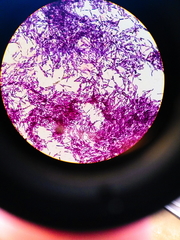 Bacillus thuringiensise0biocontrol_agent
- Outcome
- larval populationse0
- Direction
- failed to reducee0
- Comparator
- control plotse0
Organisms pictured · Representative pictures of the matched species, not figures from the paper.
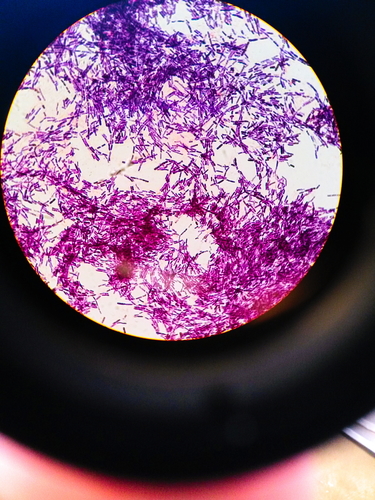
Verbatim
e0“B. thuringiensis alone failed to reduce larval populations over the control plots (P > 0.05)”
t0“Cotton”
Claim · model-written summary
Thiodicarb reduced larval density.
- Taxon
- CottonGossypium hirsutumt0
- Treatment
- thiodicarbe0
- Outcome
- Larval densitiese0
- Direction
- reducede0
Not reportedComparator
Organisms pictured · Representative pictures of the matched species, not figures from the paper.
Verbatim
e0“Larval densities were similarly reduced in thiodicarb and thiodicarb-B. thuringiensis treatments”
t0“Cotton”
Claim · model-written summary
Thiodicarb plus Bt reduced larval density similarly to thiodicarb alone.
- Taxon
- CottonGossypium hirsutumt0
- Treatment
- thiodicarb-B. thuringiensise0
- Interactor
- B. thuringiensisBacillus thuringiensise0biocontrol_agent
- Outcome
- Larval densitiese0
- Direction
- reducede0
- Comparator
- thiodicarbe0
Organisms pictured · Representative pictures of the matched species, not figures from the paper.
Verbatim
e0“Larval densities were similarly reduced in thiodicarb and thiodicarb-B. thuringiensis treatments”
t0“Cotton”
Claim · model-written summary
Cyhalothrin containing treatments provided the best heliothine control.
- Taxon
- CottonGossypium hirsutumt0
- Treatment
- cyhalothrine0
- Outcome
- best controle0
- Direction
- beste0
Not reportedComparator
Organisms pictured · Representative pictures of the matched species, not figures from the paper.
Verbatim
e0“Treatments that contained cyhalothrin and/or profenofos provided the best control”
t0“Cotton”
Claim · model-written summary
Profenofos containing treatments provided the best heliothine control.
- Taxon
- CottonGossypium hirsutumt0
- Treatment
- profenofose0
- Outcome
- best controle0
- Direction
- beste0
Not reportedComparator
Organisms pictured · Representative pictures of the matched species, not figures from the paper.
Verbatim
e0“Treatments that contained cyhalothrin and/or profenofos provided the best control”
t0“Cotton”
Claim · model-written summary
Bt did not reduce H. zea developmental rates after treatment.
- Taxon
- CottonGossypium hirsutumt0
- Treatment
- Bacillus thuringiensise0
- Interactor
- H. zeaHelicoverpa zeae0pest
- Second interactor
- Bacillus thuringiensisBacillus thuringiensise0biocontrol_agent
- Outcome
- developmental ratese0
- Direction
- did not have any delayed effectse0
Not reportedComparator
Organisms pictured · Representative pictures of the matched species, not figures from the paper.
Verbatim
e0“Bacillus thuringiensis treatment of plots did not have any delayed effects on H. zea such as reductions in developmental rates or delayed mortality beyond 3 days after application”
t0“Cotton”
Claim · model-written summary
Bt did not cause delayed H. zea mortality beyond three days.
- Taxon
- CottonGossypium hirsutumt0
- Treatment
- Bacillus thuringiensise0
- Interactor
- H. zeaHelicoverpa zeae0pest
- Second interactor
- Bacillus thuringiensisBacillus thuringiensise0biocontrol_agent
- Outcome
- delayed mortalitye0
- Direction
- did not have any delayed effectse0
- Qualifier
- beyond 3 days after applicatione0
Not reportedComparator
Organisms pictured · Representative pictures of the matched species, not figures from the paper.
Verbatim
e0“Bacillus thuringiensis treatment of plots did not have any delayed effects on H. zea such as reductions in developmental rates or delayed mortality beyond 3 days after application”
t0“Cotton”
Claim · model-written summary
Heliothine egg mortality did not differ significantly among treatments in the 1994 collection.
- Taxon
- CottonGossypium hirsutumt0
- Outcome
- heliothine egg mortalitye0
- Direction
- did not differe0
- Qualifier
- 1994 collection 3 days after applicatione0
Organisms pictured · Representative pictures of the matched species, not figures from the paper.
Verbatim
e0“heliothine egg mortality in the 1994 collection 3 days after application did not differ significantly among treatments”
t0“Cotton”
Claim · model-written summary
Predator density with Bt alone was similar to untreated cotton.
- Taxon
- CottonGossypium hirsutumt0
- Treatment
- B. thuringiensis alonee0
- Outcome
- Predator densitye0
- Direction
- similare0
- Comparator
- untreated controle0
Organisms pictured · Representative pictures of the matched species, not figures from the paper.
Verbatim
e0“Predator density in the B. thuringiensis alone treatment was similar to the untreated control”
t0“Cotton”
Claim · model-written summary
Conventional insecticide treatments reduced predator densities.
- Taxon
- CottonGossypium hirsutumt0
- Treatment
- conventional chemical insecticidese0
- Outcome
- predator densitiese0
- Direction
- reducede0
Not reportedComparator
Organisms pictured · Representative pictures of the matched species, not figures from the paper.
Verbatim
e0“All treatments that contained conventional chemical insecticides, including thiodicarb at the ovicidal rate, reduced predator densities to low numbers”
t0“Cotton”
Claim · model-written summary
Bt mixtures did not improve H. zea control over ovicides or larvicides.
- Taxon
- CottonGossypium hirsutumt0
- Interactor
- H. zeaHelicoverpa zeae0pest
- Outcome
- control of H. zeae0
- Direction
- did not improvee0
- Comparator
- an ovicide or larvacidee0
Not reportedTreatment
Organisms pictured · Representative pictures of the matched species, not figures from the paper.
Verbatim
e0“did not improve control of H. zea when used in mixtures with an ovicide or larvacide”
t0“Cotton”
Claim · model-written summary
Bt mixtures did not conserve predators relative to traditional insecticides.
- Taxon
- CottonGossypium hirsutumt0
- Treatment
- B. thuringiensis was used in mixtures with chemical insecticidese0
- Outcome
- conservation of arthropod predatorse0
- Direction
- no conservatione0
- Comparator
- traditional chemical insecticide treatmentse0
Organisms pictured · Representative pictures of the matched species, not figures from the paper.
Verbatim
e0“when B. thuringiensis was used in mixtures with chemical insecticides, there was no conservation of arthropod predators relative to use of traditional chemical insecticide treatments”
t0“Cotton”
Claim · model-written summary
The authors urge caution in recommending Bt where H. zea dominates.
- Taxon
- CottonGossypium hirsutumt0
- Outcome
- caution should be urged in recommending B. thuringiensise0
- Qualifier
- when the heliothine species composition is skewed toward H. zeae0
Organisms pictured · Representative pictures of the matched species, not figures from the paper.
Verbatim
e0“caution should be urged in recommending B. thuringiensis when the heliothine species composition is skewed toward H. zea”
t0“Cotton”
The same questions in other papers
thiodicarb · pest · Gossypium hirsutum (cotton)Positive and negative results
1 paper in the same direction as this paper · 2 in the opposite direction
- negative
- negative
- positive
Bacillus thuringiensis · Helicoverpa zea · Gossypium hirsutum (cotton)Positive and negative results
4 in the opposite direction
- positive
- positive
- positive
1 paper more in this group
See all 5 papers →Bacillus thuringiensis · pest · Gossypium hirsutum (cotton)Positive and negative results
9 papers in the same direction as this paper · 1 in the opposite direction
- negative
- positive
- positive
7 papers more in this group
See all 11 papers →profenofos · control · Gossypium hirsutum (cotton)Results agree
1 paper in the same direction as this paper
- positive
insecticide · ecology: diversity · Gossypium hirsutum (cotton)Positive and negative results
12 papers in the same direction as this paper · 3 in the opposite direction
- positive
- positive
- positive
12 papers more in this group
See all 16 papers →Claims are grouped by organism, treatment and what was measured or targeted. A paper counts as positive when any of its claims in the group is positive.