Abstract
The impact of Cochliobolus sativus on grain yield of different barley cultivars was studied for 3 seasons in northern Syria by comparing plots with and without artificial inoculation. Distributing oat kernels infested with C. sativus next to barley seed and inoculating seed with C. sativus conidia in a peat carrier resulted in an increase in common root rot symptoms on the subcrown internode. Subcrown internodes were shorter in inoculated than uninoculated plots. The effect of inoculation differed greatly among cultivars and years. Highest losses from the common root rot occurred under dry growing conditions, whereas a significant yield increase was noted on 2 susceptible lines grown under adequate moisture. As common root rot can reduce barley yield in unfavourable environments, the disease should be considered by crop improvement programs aimed at low-rainfall zones in Mediterranean environments.
Abstract from the paper’s OpenAlex record, shown for indexing and research. Copyright remains with the authors or the publisher. Read at the source ↗
The text the model read, with the source record’s inline markup (italics, sub- and superscripts) rendered and its character entities decoded; quote offsets refer to the raw text.
Claims 6
Claim · model-written summary
Inoculation with Cochliobolus sativus increased common root rot symptoms on the subcrown internode of barley.
- Taxon
- barley
 Hordeum vulgaree1
- Treatment
- Distributing oat kernels infested with C. sativus next to barley seed and inoculating seed with C. sativus conidia in a peat carriere2
- Interactor
- Cochliobolus sativus
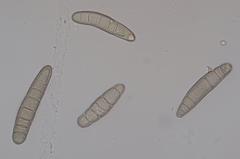 Bipolaris sorokinianae1pathogen
- Outcome
- common root rot symptoms on the subcrown internodee2
- Direction
- increasee2
- Comparator
- without artificial inoculatione1
- Setting
- northern Syriat0
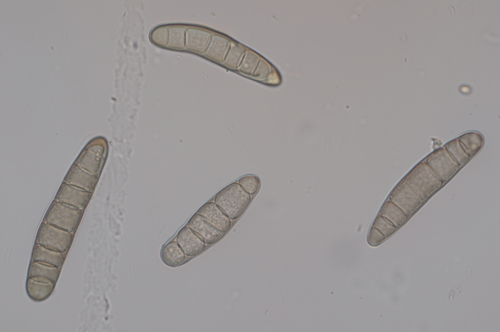
Organisms pictured · Representative pictures of the matched species, not figures from the paper.

Verbatim
e1“The impact of Cochliobolus sativus on grain yield of different barley cultivars was studied for 3 seasons in northern Syria by comparing plots with and without artificial inoculation”
e2“Distributing oat kernels infested with C. sativus next to barley seed and inoculating seed with C. sativus conidia in a peat carrier resulted in an increase in common root rot symptoms on the subcrown internode”
t0“under experimental conditions in northern Syria”
Claim · model-written summary
Subcrown internodes were shorter in inoculated than in uninoculated barley plots.
- Taxon
- barleyHordeum vulgaree1
- Treatment
- artificial inoculatione1
- Interactor
- Cochliobolus sativusBipolaris sorokinianae1pathogen
- Outcome
- Subcrown internodese3
- Direction
- shortere3
- Comparator
- uninoculated plotse3
- Setting
- northern Syriat0
Organisms pictured · Representative pictures of the matched species, not figures from the paper.
Verbatim
e1“The impact of Cochliobolus sativus on grain yield of different barley cultivars was studied for 3 seasons in northern Syria by comparing plots with and without artificial inoculation”
e3“Subcrown internodes were shorter in inoculated than uninoculated plots”
t0“under experimental conditions in northern Syria”
Claim · model-written summary
The effect of inoculation differed greatly among barley cultivars and years.
- Taxon
- barleyHordeum vulgaree1
- Material
- different barley cultivarse1
- Outcome
- effect of inoculatione4
- Qualifier
- differed greatly among cultivars and yearse4
Not reportedDirection
Organisms pictured · Representative pictures of the matched species, not figures from the paper.
Verbatim
e1“The impact of Cochliobolus sativus on grain yield of different barley cultivars was studied for 3 seasons in northern Syria by comparing plots with and without artificial inoculation”
e4“The effect of inoculation differed greatly among cultivars and years”
Claim · model-written summary
The highest losses from common root rot occurred under dry growing conditions in barley.
- Taxon
- barleyHordeum vulgaree1
- Outcome
- losses from the common root rote5
- Direction
- Higheste5
- Setting
- dry growing conditionse5
Organisms pictured · Representative pictures of the matched species, not figures from the paper.
Verbatim
e1“The impact of Cochliobolus sativus on grain yield of different barley cultivars was studied for 3 seasons in northern Syria by comparing plots with and without artificial inoculation”
e5“Highest losses from the common root rot occurred under dry growing conditions”
Claim · model-written summary
Two susceptible barley lines showed a significant yield increase under adequate moisture.
- Taxon
- barleyHordeum vulgaree1
- Material
- 2 susceptible linese6
- Outcome
- yielde6
- Direction
- increasee6
- Setting
- adequate moisturee6
Organisms pictured · Representative pictures of the matched species, not figures from the paper.
Verbatim
e1“The impact of Cochliobolus sativus on grain yield of different barley cultivars was studied for 3 seasons in northern Syria by comparing plots with and without artificial inoculation”
e6“a significant yield increase was noted on 2 susceptible lines grown under adequate moisture”
Claim · model-written summary
Common root rot should be considered by crop improvement programs aimed at low-rainfall zones in Mediterranean environments.
- Taxon
- barleyHordeum vulgaree1
- Outcome
- the disease should be considered by crop improvement programse7
- Setting
- low-rainfall zonese7
Organisms pictured · Representative pictures of the matched species, not figures from the paper.
Verbatim
e1“The impact of Cochliobolus sativus on grain yield of different barley cultivars was studied for 3 seasons in northern Syria by comparing plots with and without artificial inoculation”
e7“the disease should be considered by crop improvement programs aimed at low-rainfall zones in Mediterranean environments”
The same questions in other papers
Bipolaris sorokiniana · disease · Hordeum vulgare (barley)Positive and negative results
2 papers in the same direction as this paper · 1 in the opposite direction
- negative
- positive
- negative
growing medium · disease · Hordeum vulgare (barley)Positive and negative results
2 in the opposite direction
- positive
- positive
inoculation · Bipolaris sorokiniana · Hordeum vulgare (barley)Positive and negative results
3 papers in the same direction as this paper · 2 in the opposite direction
- positive
- no effect
- positive
2 papers more in this group
See all 6 papers →infection · disease · Hordeum vulgare (barley)Positive and negative results
2 papers in the same direction as this paper · 3 in the opposite direction
- positive
- positive
- positive
2 papers more in this group
See all 6 papers →inoculation · disease · Hordeum vulgare (barley)Positive and negative results
22 papers in the same direction as this paper · 24 in the opposite direction
- positive
- positive
- positive
43 papers more in this group
See all 47 papers →Claims are grouped by organism, treatment and what was measured or targeted. A paper counts as positive when any of its claims in the group is positive.