Abstract
Under continuous rice cropping, open field burning has been the primary means of rice residue disposal and of minimizing the carryover inoculum of Sclerotium oryzae, the cause of stem rot of rice. The phase down of open field burning in California has necessitated the development of alternatives to burning. In 1993, a continuous-year experiment was initiated in Colusa County to evaluate the effects of alternative residue management strategies on overwintering sclerotia of S. oryzae, stem rot incidence and severity, and yield. Treatments were arranged in a split-plot design with winter flooding and winter nonflooding as the main plots, and fall incorporation of the straw residue, rolling of the straw to enhance soil contact, baling and removal of residue, and fall burning as the subplots. S. oryzae inoculum and disease severity were significantly lower and yield was significantly higher in 5 out of 6 years in the winter-flooded main plots compared with the winter nonflooded plots. Over the duration of the trial, S. oryzae inoculum was consistently lower in burn subplots when compared with all other subplots. No consistent differences in disease incidence and severity or yield occurred in the subplots, although average yield over the 6 years was highest in burn subplots when compared with all other subplots. The results suggest that winter flooding is the best alternative to burning for stem rot management.
Abstract from the paper’s OpenAlex record, shown for indexing and research. Copyright remains with the authors or the publisher. Read at the source ↗
The text the model read, with the source record’s inline markup (italics, sub- and superscripts) rendered and its character entities decoded; quote offsets refer to the raw text.
Claims 8
Claim · model-written summary
Winter flooding significantly reduced S. oryzae inoculum relative to nonflooding.
- Taxon
- Rice
 Oryza sativat0
- Treatment
- winter-flooded main plotse0
- Interactor
- S. oryzae
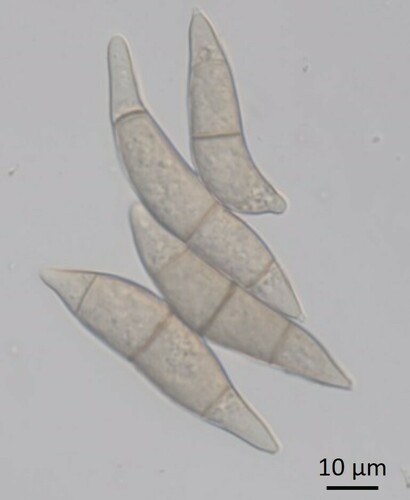
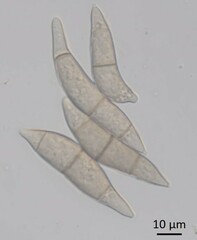 Nakataea oryzaee0pathogen
- Outcome
- S. oryzae inoculume0
- Direction
- lowere0
- Value
- 5 out of 6 yearse0
- Comparator
- winter nonflooded plotse0
Organisms pictured · Representative pictures of the matched species, not figures from the paper.

Verbatim
e0“S. oryzae inoculum and disease severity were significantly lower and yield was significantly higher in 5 out of 6 years in the winter-flooded main plots compared with the winter nonflooded plots”
t0“Yield of Rice in California”
Claim · model-written summary
Winter flooding significantly reduced stem rot severity in five of six years.
- Taxon
- RiceOryza sativat0
- Treatment
- winter-flooded main plotse0
- Interactor
- S. oryzaeNakataea oryzaee0pathogen
- Outcome
- disease severitye0
- Direction
- lowere0
- Value
- 5 out of 6 yearse0
- Comparator
- winter nonflooded plotse0
Organisms pictured · Representative pictures of the matched species, not figures from the paper.
Verbatim
e0“S. oryzae inoculum and disease severity were significantly lower and yield was significantly higher in 5 out of 6 years in the winter-flooded main plots compared with the winter nonflooded plots”
t0“Yield of Rice in California”
Claim · model-written summary
Winter flooding significantly increased rice yield in five of six years.
- Taxon
- RiceOryza sativat0
- Treatment
- winter-flooded main plotse0
- Outcome
- yielde0
- Direction
- highere0
- Value
- 5 out of 6 yearse0
- Comparator
- winter nonflooded plotse0
Organisms pictured · Representative pictures of the matched species, not figures from the paper.
Verbatim
e0“S. oryzae inoculum and disease severity were significantly lower and yield was significantly higher in 5 out of 6 years in the winter-flooded main plots compared with the winter nonflooded plots”
t0“Yield of Rice in California”
Claim · model-written summary
Burn subplots consistently had less S. oryzae inoculum than other subplots.
- Taxon
- RiceOryza sativat0
- Treatment
- burn subplotse0
- Interactor
- S. oryzaeNakataea oryzaee0pathogen
- Outcome
- S. oryzae inoculume0
- Direction
- lowere0
- Comparator
- all other subplotse0
Organisms pictured · Representative pictures of the matched species, not figures from the paper.
Verbatim
e0“S. oryzae inoculum was consistently lower in burn subplots when compared with all other subplots”
t0“Yield of Rice in California”
Claim · model-written summary
Residue management subplots had no consistent differences in disease incidence and severity.
- Taxon
- RiceOryza sativat0
- Treatment
- subplotse0
- Outcome
- disease incidence and severitye0
- Direction
- No consistent differencese0
Not reportedComparator
Organisms pictured · Representative pictures of the matched species, not figures from the paper.
Verbatim
e0“No consistent differences in disease incidence and severity or yield occurred in the subplots”
t0“Yield of Rice in California”
Claim · model-written summary
Residue management subplots had no consistent differences in yield.
- Taxon
- RiceOryza sativat0
- Treatment
- subplotse0
- Outcome
- yielde0
- Direction
- No consistent differencese0
Not reportedComparator
Organisms pictured · Representative pictures of the matched species, not figures from the paper.
Verbatim
e0“No consistent differences in disease incidence and severity or yield occurred in the subplots”
t0“Yield of Rice in California”
Claim · model-written summary
Mean six-year rice yield was highest in burn subplots.
- Taxon
- RiceOryza sativat0
- Treatment
- burn subplotse0
- Outcome
- average yielde0
- Direction
- higheste0
- Qualifier
- over the 6 yearse0
- Comparator
- all other subplotse0
Organisms pictured · Representative pictures of the matched species, not figures from the paper.
Verbatim
e0“average yield over the 6 years was highest in burn subplots when compared with all other subplots”
t0“Yield of Rice in California”
Claim · model-written summary
The authors recommend winter flooding as an alternative to burning for stem rot management.
- Taxon
- RiceOryza sativat0
- Outcome
- winter flooding is the best alternative to burning for stem rot managemente0
Organisms pictured · Representative pictures of the matched species, not figures from the paper.
Verbatim
e0“winter flooding is the best alternative to burning for stem rot management”
t0“Yield of Rice in California”
The same questions in other papers
fire · yield · Oryza sativa (rice)Positive and negative results
12 papers in the same direction as this paper · 6 in the opposite direction
- no effect
- negative
- negative
15 papers more in this group
See all 19 papers →fire · Nakataea oryzae · Oryza sativa (rice)Results agree
2 papers in the same direction as this paper
- positive
- positive
Claims are grouped by organism, treatment and what was measured or targeted. A paper counts as positive when any of its claims in the group is positive.