Abstract
Abstract Different cultural practices viz. burning, sun‐drying of the stubbles, formaldehyde treatment of the soil and flooding were tried to control stem‐rot disease of rice incited by Magnaporthe salvinii (Catt.) Krause and Webster (Sclerotium oryzae Catt.) for six consecutive seasons both summer and winter from 1980–82. The burning of straw and stubbles was the best of all cultural treatments and reduced the severity of the stem‐rot of rice by about 85% over the control (untreated soil). Formaldehyde solution (2%) treatment also reduced the incidence of the disease to an extent of 54% over the control.
Abstract from the paper’s OpenAlex record, shown for indexing and research. Copyright remains with the authors or the publisher. Read at the source ↗
The text the model read, with the source record’s inline markup (italics, sub- and superscripts) rendered and its character entities decoded; quote offsets refer to the raw text.
Claims 2
Claim · model-written summary
Burning straw and stubbles reduced rice stem rot severity by about 85% against untreated soil.
- Taxon
- rice
 Oryza sativae1
- Treatment
- burning of straw and stubblese1
- Interactor
- Magnaporthe salvinii
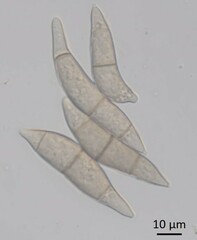 Nakataea oryzaee0pathogen
- Outcome
- severity of the stem‐rot of ricee1
- Direction
- reducede1
- Value
- about 85%e1
- Comparator
- control (untreated soil)e1
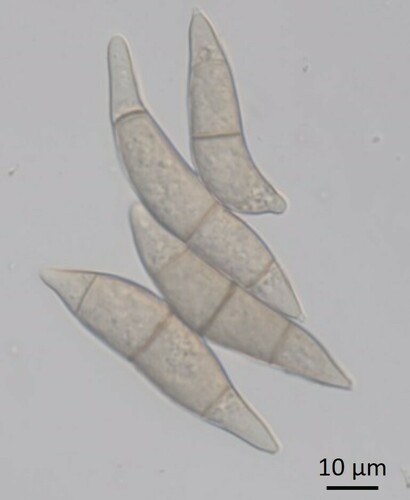
Organisms pictured · Representative pictures of the matched species, not figures from the paper.

Verbatim
e0“stem‐rot disease of rice incited by Magnaporthe salvinii (Catt.) Krause and Webster”
e1“The burning of straw and stubbles was the best of all cultural treatments and reduced the severity of the stem‐rot of rice by about 85% over the control (untreated soil).”
Claim · model-written summary
A 2% formaldehyde solution reduced rice stem rot incidence by 54% against the control.
- Taxon
- riceOryza sativae0
- Treatment
- Formaldehyde solution (2%) treatmente1
- Interactor
- Magnaporthe salviniiNakataea oryzaee0pathogen
- Outcome
- incidence of the diseasee1
- Direction
- reducede1
- Value
- 54%e1
- Comparator
- the controle1
Organisms pictured · Representative pictures of the matched species, not figures from the paper.
Verbatim
e0“stem‐rot disease of rice incited by Magnaporthe salvinii (Catt.) Krause and Webster”
e1“Formaldehyde solution (2%) treatment also reduced the incidence of the disease to an extent of 54% over the control.”
The same questions in other papers
fire · Nakataea oryzae · Oryza sativa (rice)Results agree
2 papers in the same direction as this paper
- positive
- positive
Claims are grouped by organism, treatment and what was measured or targeted. A paper counts as positive when any of its claims in the group is positive.