Abstract
Cumin (Cuminum cyminum L.) is an annual plant with diminutive seed size and low germination and vigour, often leading to weak establishment in the field. Effects of treating cumin seeds with different bioagents, including Pseudomonas fluorescens, Bacillus subtilis, Paenebacillus polymyxa, Bacillus megaterium, Bacillus paramycoides and Pseudomonas aeruginosa and soaking agents (chitosan, carrageenan, aloe vera gel compost and soil extract) on germination, root/shoot length and germination indices of cumin were investigated in the laboratory and field. In the field experiment, treatments with different combinations of bioagents and soaking agents enhanced seed germination and improved plant physiological traits (chlorophyll, root/shoot length), yield and yield attributes compared with the non-bioprimed control. Treatment with chitosan in combination with Bacillus paramycoides and Pseudomonas aeruginosa showed the greatest positive effects, though for most parameters the effects of this treatment were statistically similar to the other biopriming combinations. The biopriming treatments also increased nutrient content, soil enzyme activities (dehydrogenase, urease, acid and alkaline phosphatase), soil nutrient status and bacterial populations. In the laboratory, the combination of the first and second main components explained 83.4% of the overall variance the germination indices. In the field experiment, the first principal component alone accounted for 81.8% and 96.7% of the total variation observed in yield parameters and seed nutrient content, and post-harvest soil properties, respectively. These findings indicated that biopriming cumin seeds with microbial consortia and soaking agents enhanced seed germination, plant growth, soil health and yield of cumin, and may serve as a sustainable approach for improving cumin cultivation.
Abstract from the paper’s OpenAlex record, shown for indexing and research. Copyright remains with the authors or the publisher. Read at the source ↗
The text the model read, with the source record’s inline markup (italics, sub- and superscripts) rendered and its character entities decoded; quote offsets refer to the raw text.
Claims 9
Claim · model-written summary
Biopriming enhanced field seed germination compared with non-bioprimed controls.
- Taxon
- Cumin
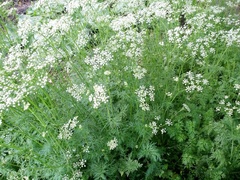 Cuminum cyminumt0
- Treatment
- different combinations of bioagents and soaking agentse0
- Outcome
- seed germinatione0
- Direction
- enhancede0
- Comparator
- non-bioprimed controle1
Organisms pictured · Representative pictures of the matched species, not figures from the paper.
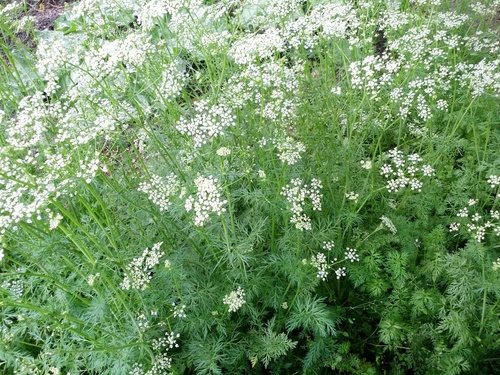
Verbatim
e0“treatments with different combinations of bioagents and soaking agents enhanced seed germination”
t0“Cumin”
e1“In the field experiment, treatments with different combinations of bioagents and soaking agents enhanced seed germination and improved plant physiological traits (chlorophyll, root/shoot length), yield and yield attributes compared with the non-bioprimed control.”
e2“The biopriming treatments also increased nutrient content”
Claim · model-written summary
Biopriming improved chlorophyll and root/shoot length compared with controls.
- Taxon
- CuminCuminum cyminumt0
- Treatment
- bioagents and soaking agentse1
- Outcome
- plant physiological traits (chlorophyll, root/shoot length)e0
- Direction
- improvede0
- Comparator
- non-bioprimed controle1
Organisms pictured · Representative pictures of the matched species, not figures from the paper.
Verbatim
e0“improved plant physiological traits (chlorophyll, root/shoot length)”
t0“Cumin”
e1“In the field experiment, treatments with different combinations of bioagents and soaking agents enhanced seed germination and improved plant physiological traits (chlorophyll, root/shoot length), yield and yield attributes compared with the non-bioprimed control.”
e2“The biopriming treatments also increased nutrient content”
Claim · model-written summary
Biopriming improved yield and yield attributes compared with controls.
- Taxon
- CuminCuminum cyminumt0
- Treatment
- bioagents and soaking agentse1
- Outcome
- yield and yield attributese0
- Comparator
- non-bioprimed controle0
Not reportedDirection
Organisms pictured · Representative pictures of the matched species, not figures from the paper.
Verbatim
e0“yield and yield attributes compared with the non-bioprimed control”
t0“Cumin”
e1“In the field experiment, treatments with different combinations of bioagents and soaking agents enhanced seed germination and improved plant physiological traits (chlorophyll, root/shoot length), yield and yield attributes compared with the non-bioprimed control.”
e2“The biopriming treatments also increased nutrient content”
Claim · model-written summary
Chitosan with Bacillus paramycoides and Pseudomonas aeruginosa had the greatest positive effects, though most parameters were statistically similar to other combinations.
- Taxon
- CuminCuminum cyminumt0
- Treatment
- chitosan in combination with Bacillus paramycoides and Pseudomonas aeruginosae0
- Interactor
- Bacillus paramycoidesBacillus paramycoidese0symbiont
- Second interactor
- Pseudomonas aeruginosa
 Pseudomonas aeruginosae0symbiont
- Outcome
- greatest positive effectse0
- Direction
- greateste0
- Qualifier
- statistically similare0
- Comparator
- other biopriming combinationse0
Organisms pictured · Representative pictures of the matched species, not figures from the paper.

Verbatim
e0“Treatment with chitosan in combination with Bacillus paramycoides and Pseudomonas aeruginosa showed the greatest positive effects, though for most parameters the effects of this treatment were statistically similar to the other biopriming combinations”
t0“Cumin”
e1“In the field experiment, treatments with different combinations of bioagents and soaking agents enhanced seed germination and improved plant physiological traits (chlorophyll, root/shoot length), yield and yield attributes compared with the non-bioprimed control.”
e2“The biopriming treatments also increased nutrient content”
Claim · model-written summary
Biopriming increased nutrient content.
- Taxon
- CuminCuminum cyminumt0
- Treatment
- biopriming treatmentse0
- Outcome
- nutrient contente0
- Direction
- increasede0
Not reportedComparator
Organisms pictured · Representative pictures of the matched species, not figures from the paper.
Verbatim
e0“The biopriming treatments also increased nutrient content”
t0“Cumin”
e1“In the field experiment, treatments with different combinations of bioagents and soaking agents enhanced seed germination and improved plant physiological traits (chlorophyll, root/shoot length), yield and yield attributes compared with the non-bioprimed control.”
e2“The biopriming treatments also increased nutrient content”
Claim · model-written summary
Biopriming increased soil enzyme activities, nutrient status and bacterial populations.
- Taxon
- CuminCuminum cyminumt0
- Treatment
- biopriming treatmentse2
- Outcome
- soil enzyme activities (dehydrogenase, urease, acid and alkaline phosphatase), soil nutrient status and bacterial populationse0
- Direction
- increasede0
Not reportedComparator
Organisms pictured · Representative pictures of the matched species, not figures from the paper.
Verbatim
e0“increased nutrient content, soil enzyme activities (dehydrogenase, urease, acid and alkaline phosphatase), soil nutrient status and bacterial populations”
t0“Cumin”
e1“In the field experiment, treatments with different combinations of bioagents and soaking agents enhanced seed germination and improved plant physiological traits (chlorophyll, root/shoot length), yield and yield attributes compared with the non-bioprimed control.”
e2“The biopriming treatments also increased nutrient content”
Claim · model-written summary
Two main components explained 83.4% of laboratory germination-index variance.
- Taxon
- CuminCuminum cyminumt0
- Outcome
- overall variance the germination indicese0
- Value
- 83.4%e0
- Comparator
- first and second main componentse0
Not reportedDirection
Organisms pictured · Representative pictures of the matched species, not figures from the paper.
Verbatim
e0“the combination of the first and second main components explained 83.4% of the overall variance the germination indices”
t0“Cumin”
e1“In the field experiment, treatments with different combinations of bioagents and soaking agents enhanced seed germination and improved plant physiological traits (chlorophyll, root/shoot length), yield and yield attributes compared with the non-bioprimed control.”
e2“The biopriming treatments also increased nutrient content”
Claim · model-written summary
The first principal component explained 81.8% of field variation in yield parameters and seed nutrient content.
- Taxon
- CuminCuminum cyminumt0
- Outcome
- yield parameters and seed nutrient contente0
- Value
- 81.8%e0
- Comparator
- first principal componente0
Not reportedDirection
Organisms pictured · Representative pictures of the matched species, not figures from the paper.
Verbatim
e0“the first principal component alone accounted for 81.8% and 96.7% of the total variation observed in yield parameters and seed nutrient content, and post-harvest soil properties, respectively”
t0“Cumin”
e1“In the field experiment, treatments with different combinations of bioagents and soaking agents enhanced seed germination and improved plant physiological traits (chlorophyll, root/shoot length), yield and yield attributes compared with the non-bioprimed control.”
e2“The biopriming treatments also increased nutrient content”
Claim · model-written summary
The first principal component explained 96.7% of field variation in post-harvest soil properties.
- Taxon
- CuminCuminum cyminumt0
- Outcome
- post-harvest soil propertiese0
- Value
- 96.7%e0
- Comparator
- first principal componente0
Not reportedDirection
Organisms pictured · Representative pictures of the matched species, not figures from the paper.
Verbatim
e0“the first principal component alone accounted for 81.8% and 96.7% of the total variation observed in yield parameters and seed nutrient content, and post-harvest soil properties, respectively”
t0“Cumin”
e1“In the field experiment, treatments with different combinations of bioagents and soaking agents enhanced seed germination and improved plant physiological traits (chlorophyll, root/shoot length), yield and yield attributes compared with the non-bioprimed control.”
e2“The biopriming treatments also increased nutrient content”
The same questions in other papers
biocontrol · growth · Cuminum cyminum (cumin)Results agree
1 paper in the same direction as this paper
- positive
application · physiology: pigments · Cuminum cyminum (cumin)Results agree
3 papers in the same direction as this paper
- positive
- positive
- positive
application · growth · Cuminum cyminum (cumin)Results agree
5 papers in the same direction as this paper
- positive
- positive
- positive
2 papers more in this group
See all 6 papers →application · yield · Cuminum cyminum (cumin)Results agree
8 papers in the same direction as this paper
- positive
- positive
- positive
5 papers more in this group
See all 9 papers →Claims are grouped by organism, treatment and what was measured or targeted. A paper counts as positive when any of its claims in the group is positive.