Abstract
Field populations of nontarget arthropods in transgenic corn with the MON 810 event expressing the Cry1Ab endotoxin from Bacillus thuringiensis variety kurstaki (Bt) were compared with those in conventional, near isogenic corn. The study was conducted at two locations in Georgia in 2001 and 2002 using visual counts, pitfall traps, and corn ear insect evaluations. Results were analyzed by trial using a repeated-measure analysis of variance (ANOVA) and a combined ANOVA of all trials. The only insect whose numbers were strongly affected by the Bt corn was the corn earworm, Helicoverpa zea (Boddie), a target insect. When averaged over all trials, larvae and adults of sap beetles, Carpophilus spp. (mostly C. lugubris Murray), and larvae of the otitid fly Euxesta stigmatis Loew were less abundant on Bt than non-Bt corn ears. Kernel damage caused by H. zea was less in Bt corn, which presumably made Bt corn ears less attractive to these insects. There were no consistent significant differences in nontarget phytophagous and predaceous arthropods in the visual counts and pitfall traps between Bt and non-Bt corn. One exception was Nabis spp., which was less abundant in Bt than non-Bt corn in the combined analysis. Flea beetles, mostly corn flea beetle, Chaetocnema pulicaria Melsheimer, were more abundant on Bt than non-Bt corn in the combined analysis but presumably were not adversely affected by the Bt corn. With the exception of nabids, these results indicate that transgenic Bt field corn containing the MON 810 event did not have an adverse effect on populations of nontarget phytophagous or predaceous arthropods in the Georgia corn system.
Abstract from the paper’s OpenAlex record, shown for indexing and research. Copyright remains with the authors or the publisher. Read at the source ↗
The text the model read, with the source record’s inline markup (italics, sub- and superscripts) rendered and its character entities decoded; quote offsets refer to the raw text.
Claims 7
Claim · model-written summary
Corn earworm numbers were strongly affected by Bt corn.
- Taxon
- Corn
 Zea mays subsp. mayst0
- Treatment
- Bt corne0
- Interactor
- Helicoverpa zea (Boddie)
 Helicoverpa zeae0pest
- Outcome
- corn earworm, Helicoverpa zea (Boddie)e0
Not reportedComparatorDirection
Organisms pictured · Representative pictures of the matched species, not figures from the paper.


Verbatim
e0“The only insect whose numbers were strongly affected by the Bt corn was the corn earworm, Helicoverpa zea (Boddie), a target insect.”
t0“Corn”
Claim · model-written summary
Sap beetle larvae and adults were less abundant on Bt corn ears than non-Bt ears.
- Taxon
- CornZea mays subsp. mayst0
- Treatment
- Bte0
- Interactor
- Carpophilus spp.
 Carpophiluse0pest
- Outcome
- larvae and adults of sap beetles, Carpophilus spp. (mostly C. lugubris Murray)e0
- Direction
- less abundante0
- Comparator
- non-Bt corn earse0
Organisms pictured · Representative pictures of the matched species, not figures from the paper.

Verbatim
e0“larvae and adults of sap beetles, Carpophilus spp. (mostly C. lugubris Murray), and larvae of the otitid fly Euxesta stigmatis Loew were less abundant on Bt than non-Bt corn ears”
t0“Corn”
Claim · model-written summary
Euxesta stigmatis larvae were less abundant on Bt corn ears.
- Taxon
- CornZea mays subsp. mayst0
- Treatment
- Bte0
- Interactor
- Euxesta stigmatis Loewe0pest
- Outcome
- larvae of the otitid fly Euxesta stigmatis Loewe0
- Direction
- less abundante0
- Comparator
- non-Bt corn earse0
Organisms pictured · Representative pictures of the matched species, not figures from the paper.
Verbatim
e0“larvae of the otitid fly Euxesta stigmatis Loew were less abundant on Bt than non-Bt corn ears”
t0“Corn”
Claim · model-written summary
Helicoverpa zea kernel damage was lower in Bt corn.
- Taxon
- CornZea mays subsp. mayst0
- Treatment
- Bt corne0
- Interactor
- H. zeaHelicoverpa zeae0pest
- Outcome
- Kernel damage caused by H. zeae0
- Direction
- lesse0
Not reportedComparator
Organisms pictured · Representative pictures of the matched species, not figures from the paper.
Verbatim
e0“Kernel damage caused by H. zea was less in Bt corn”
t0“Corn”
Claim · model-written summary
Nontarget phytophagous and predaceous arthropods showed no consistent significant differences in counts between Bt and non-Bt corn.
- Taxon
- CornZea mays subsp. mayst0
- Treatment
- Bte0
- Outcome
- nontarget phytophagous and predaceous arthropodse0
- Direction
- no consistent significant differencese0
- Comparator
- non-Bt corne0
Organisms pictured · Representative pictures of the matched species, not figures from the paper.
Verbatim
e0“There were no consistent significant differences in nontarget phytophagous and predaceous arthropods in the visual counts and pitfall traps between Bt and non-Bt corn.”
t0“Corn”
Claim · model-written summary
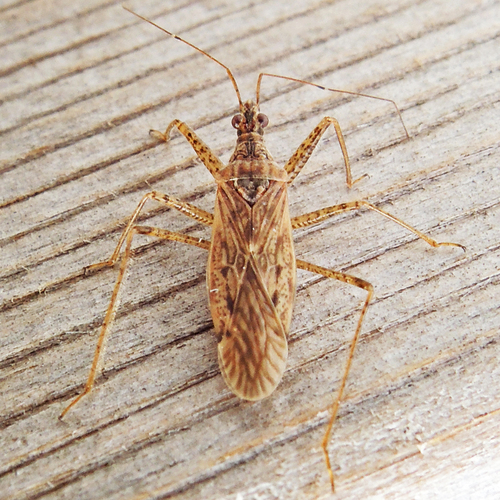
Nabis spp. were less abundant in Bt corn in the combined analysis.
- Taxon
- CornZea mays subsp. mayst0
- Treatment
- Bte0
- Outcome
- Nabis spp.e0
- Direction
- less abundante0
- Comparator
- non-Bt corne0
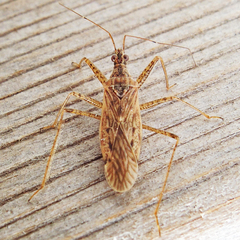 Nabis
Organisms pictured · Representative pictures of the matched species, not figures from the paper.
Verbatim
e0“Nabis spp., which was less abundant in Bt than non-Bt corn in the combined analysis”
t0“Corn”
Claim · model-written summary
Flea beetles were more abundant on Bt than non-Bt corn in the combined analysis.
- Taxon
- CornZea mays subsp. mayst0
- Treatment
- Bte0
- Interactor
- Chaetocnema pulicaria Melsheimer
 Chaetocnema pulicariae0pest
- Outcome
- Flea beetles, mostly corn flea beetle, Chaetocnema pulicaria Melsheimere0
- Direction
- more abundante0
- Comparator
- non-Bt corne0
Organisms pictured · Representative pictures of the matched species, not figures from the paper.

Verbatim
e0“Flea beetles, mostly corn flea beetle, Chaetocnema pulicaria Melsheimer, were more abundant on Bt than non-Bt corn in the combined analysis”
t0“Corn”
The same questions in other papers
Zea mays subsp. mays · Helicoverpa zea · Zea mays (maize)Positive and negative results
10 papers in the same direction as this paper · 3 in the opposite direction · 3 reporting no difference from an alternative
- negative
- negative
- negative
13 papers more in this group
See all 17 papers →transgenic · Helicoverpa zea · Zea mays (maize)Positive and negative results
17 papers in the same direction as this paper · 1 in the opposite direction · 3 reporting no difference from an alternative
- negative
- no effect
- no effect
18 papers more in this group
See all 22 papers →transgenic · pest · Zea mays (maize)Positive and negative results
21 papers in the same direction as this paper · 12 in the opposite direction · 7 reporting no difference from an alternative
- no effect
- no effect
- negative
37 papers more in this group
See all 41 papers →transgenic · Nabis · Zea mays (maize)Results agree
1 paper in the same direction as this paper
- negative
Claims are grouped by organism, treatment and what was measured or targeted. A paper counts as positive when any of its claims in the group is positive.