Abstract
Abstract The effect of electron irradiation of barley seeds of the Vladimir variety on the development of plants, disease incidence and productivity in controlled greenhouse conditions has been studied. It was found that the effectiveness of the effect of seed treatment with low-energy electronic radiation in the dose range of 30–150 kGy on the morphometric parameters of barley largely depends on the accelerating voltage – 130 kV (mode 1) and 160 kV (mode 2). It was noted that irradiation suppressed the formation of chlorophyll a and b and carotenoids in barley leaves at all doses and irradiation regimes and, at the tendency level, reduced the infestation of Bipolaris sorokiniana plants in the tillering and heading phases. It was shown that irradiation of seeds caused an increase in the total tillering of plants (mode 2), but at the same time reduced the productive tillering. Electron irradiation caused an increase in the mass of 1000 grains and did not affect the yield of grain and straw.
Abstract from the paper’s OpenAlex record; open copy licensed cc-by. Read at the source ↗
The text the model read, with the source record’s inline markup (italics, sub- and superscripts) rendered and its character entities decoded; quote offsets refer to the raw text.
Claims 9
Claim · model-written summary
Effects of seed radiation on barley morphometric parameters depended on accelerating voltage.
- Taxon
- barley
 Hordeum vulgaree0
- Treatment
- seed treatment with low-energy electronic radiatione0
- Outcome
- morphometric parameterse0
- Qualifier
- accelerating voltage – 130 kV (mode 1) and 160 kV (mode 2)e0
Not reportedComparatorDirection
Organisms pictured · Representative pictures of the matched species, not figures from the paper.

Verbatim
e0“the effectiveness of the effect of seed treatment with low-energy electronic radiation in the dose range of 30–150 kGy on the morphometric parameters of barley largely depends on the accelerating voltage – 130 kV (mode 1) and 160 kV (mode 2)”
Claim · model-written summary
Irradiation suppressed chlorophyll a and b formation at all doses and regimes.
- Taxon
- barleyHordeum vulgaree0
- Organ / stage
- leavese0
- Treatment
- irradiatione0
- Outcome
- formation of chlorophyll a and be0
- Direction
- suppressede0
- Qualifier
- at all doses and irradiation regimese0
Not reportedComparator
Organisms pictured · Representative pictures of the matched species, not figures from the paper.
Verbatim
e0“irradiation suppressed the formation of chlorophyll a and b and carotenoids in barley leaves at all doses and irradiation regimes”
Claim · model-written summary
Irradiation suppressed carotenoid formation at all doses and regimes.
- Taxon
- barleyHordeum vulgaree0
- Organ / stage
- leavese0
- Treatment
- irradiatione0
- Outcome
- carotenoidse0
- Direction
- suppressede0
Not reportedComparator
Organisms pictured · Representative pictures of the matched species, not figures from the paper.
Verbatim
e0“irradiation suppressed the formation of chlorophyll a and b and carotenoids in barley leaves at all doses and irradiation regimes”
Claim · model-written summary
Irradiation tended to reduce Bipolaris sorokiniana infestation at tillering and heading.
- Taxon
- barleyHordeum vulgaret0
- Organ / stage
- tillering and heading phasese0
- Treatment
- irradiationt0
- Interactor
- Bipolaris sorokiniana
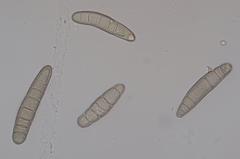 Bipolaris sorokinianae0pathogen
- Outcome
- infestation of Bipolaris sorokiniana plantse0
- Direction
- reducede0
- Qualifier
- at the tendency levele0
Not reportedComparator
Organisms pictured · Representative pictures of the matched species, not figures from the paper.
Verbatim
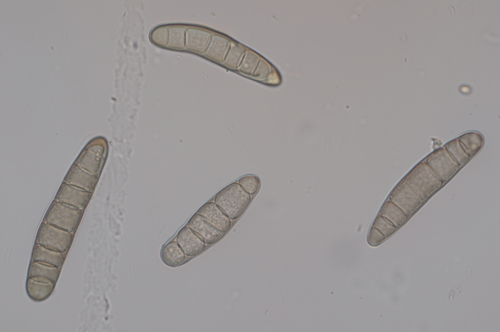
e0“at the tendency level, reduced the infestation of Bipolaris sorokiniana plants in the tillering and heading phases”
t0“irradiation of barley seeds”
Claim · model-written summary
Seed irradiation increased total tillering in mode 2.
- Taxon
- barleyHordeum vulgaret0
- Treatment
- irradiation of seedse0
- Outcome
- total tilleringe0
- Direction
- increasee0
- Qualifier
- mode 2e0
Not reportedComparator
Organisms pictured · Representative pictures of the matched species, not figures from the paper.
Verbatim
e0“irradiation of seeds caused an increase in the total tillering of plants (mode 2)”
t0“barley seeds”
Claim · model-written summary
Seed irradiation reduced productive tillering.
- Taxon
- barleyHordeum vulgaret0
- Treatment
- irradiationt0
- Outcome
- productive tilleringe0
- Direction
- reducede0
Not reportedComparator
Organisms pictured · Representative pictures of the matched species, not figures from the paper.
Verbatim
e0“at the same time reduced the productive tillering”
t0“irradiation of barley seeds”
Claim · model-written summary
Electron irradiation increased 1000-grain mass.
- Taxon
- barleyHordeum vulgaret0
- Treatment
- Electron irradiatione0
- Outcome
- mass of 1000 grainse0
- Direction
- increasee0
Not reportedComparator
Organisms pictured · Representative pictures of the matched species, not figures from the paper.
Verbatim
e0“Electron irradiation caused an increase in the mass of 1000 grains”
t0“barley seeds”
Claim · model-written summary
Electron irradiation did not affect grain yield.
- Taxon
- barleyHordeum vulgaret0
- Treatment
- Electron irradiatione0
- Outcome
- yield of graine0
- Direction
- did not affecte0
Not reportedComparator
Organisms pictured · Representative pictures of the matched species, not figures from the paper.
Verbatim
e0“Electron irradiation caused an increase in the mass of 1000 grains and did not affect the yield of grain and straw.”
t0“barley seeds”
Claim · model-written summary
Electron irradiation did not affect straw yield.
- Taxon
- barleyHordeum vulgaret0
- Treatment
- Electron irradiatione0
- Outcome
- strawe0
- Direction
- did not affecte0
Not reportedComparator
Organisms pictured · Representative pictures of the matched species, not figures from the paper.
Verbatim
e0“Electron irradiation caused an increase in the mass of 1000 grains and did not affect the yield of grain and straw.”
t0“barley seeds”
The same questions in other papers
electron · yield · Hordeum vulgare (barley)Positive and negative results
1 in the opposite direction
- negative
radiation · growth · Hordeum vulgare (barley)Results differ
12 papers in the same direction as this paper · 22 in the opposite direction · 1 reporting no difference from an alternative
- positive
- negative
- negative
32 papers more in this group
See all 36 papers →radiation · physiology: pigments · Hordeum vulgare (barley)Positive and negative results
2 papers in the same direction as this paper · 1 in the opposite direction
- positive
- negative
- no effect
radiation · yield · Hordeum vulgare (barley)Positive and negative results
8 papers in the same direction as this paper · 3 in the opposite direction
- negative
- no effect
- negative
8 papers more in this group
See all 12 papers →radiation · Bipolaris sorokiniana · Hordeum vulgare (barley)Results agree
1 paper in the same direction as this paper
- positive
Claims are grouped by organism, treatment and what was measured or targeted. A paper counts as positive when any of its claims in the group is positive.