Abstract
Salinityeffects on many plants developments in parallel with morphological propertiesand yield of plants. This study carried out greenhouse conditions in 2015-2016.It was aimed to determination of the effects on Agropyron species (Agropyroncristatum, A. desertorum and A. elongatum) of different saltconcentrations (0, 5, 10 and 15 EC dS/m NaCl). In the research was investigatedsuch morphological properties as aboveground plant height, total plant height(shoot and root height), fresh shoot weight, total fresh plant weight (shootand root weight) and seeds per Spica. Increasing salinity dosages wasn’t effecton A. desertorum’s aboveground plant height in this study results. Butincreasing salinity dosages were caused that A. elongatum’s abovegroundplant height was increased by 5.6% while aboveground plant height of A.cristatum was decreased by 4.6%. Seeds per Spica obtained from threeAgropyron species grown until grain filling duration were observed thataccordingly control groups’, seeds per Spica of A. cristatum, A. desertorum andA. elongatum were decreased by increasing salt concentrationsrespectively 62.5 % 61.7% and 42.8 %. Our findings show that A. elongatum wasless impressed by salinity conditions more than other Agropyron species. This results show that A. elongatum wasmore adaptable in salinity conditions in terms of morphological.
Abstract from the paper’s OpenAlex record, shown for indexing and research. Copyright remains with the authors or the publisher. Read at the source ↗
The text the model read, with the source record’s inline markup (italics, sub- and superscripts) rendered and its character entities decoded; quote offsets refer to the raw text.
Claims 7
Claim · model-written summary
A. desertorum aboveground height was unaffected by increasing salinity.
- Taxon
- A. desertorum
 Agropyron desertorume0
- Treatment
- Increasing salinity dosagese0
- Outcome
- aboveground plant heighte0
- Direction
- wasn’t effecte0
Not reportedComparator
Organisms pictured · Representative pictures of the matched species, not figures from the paper.

Verbatim
e0“Increasing salinity dosages wasn’t effecton A. desertorum’s aboveground plant height”
Claim · model-written summary
A. elongatum aboveground height increased 5.6% under increasing salinity.
- Taxon
- A. elongatum
 Thinopyrum elongatume0
- Treatment
- increasing salinity dosagese0
- Outcome
- abovegroundplant heighte0
- Direction
- increasede0
- Value
- 5.6%e0
Not reportedComparator
Organisms pictured · Representative pictures of the matched species, not figures from the paper.

Verbatim
e0“increasing salinity dosages were caused that A. elongatum’s abovegroundplant height was increased by 5.6%”
Claim · model-written summary
A. cristatum aboveground height decreased 4.6% under increasing salinity.
- Taxon
- A.cristatum
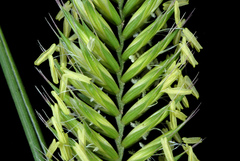 Agropyron cristatume0
- Treatment
- increasing salinity dosagese1
- Outcome
- aboveground plant heighte0
- Direction
- decreasede0
- Value
- 4.6%e0
Not reportedComparator
Organisms pictured · Representative pictures of the matched species, not figures from the paper.

Verbatim
e0“aboveground plant height of A.cristatum was decreased by 4.6%”
e1“increasing salinity dosages were caused”
Claim · model-written summary
A. cristatum seeds per Spica decreased 62.5% with increasing salt versus control.
- Taxon
- A. cristatumAgropyron cristatume0
- Treatment
- increasing salt concentrationse0
- Outcome
- seeds per Spicae0
- Direction
- decreasede0
- Value
- 62.5 %e0
- Comparator
- control groups’e0
Organisms pictured · Representative pictures of the matched species, not figures from the paper.
Verbatim
e0“control groups’, seeds per Spica of A. cristatum, A. desertorum andA. elongatum were decreased by increasing salt concentrationsrespectively 62.5 % 61.7% and 42.8 %”
Claim · model-written summary
A. desertorum seeds per Spica decreased 61.7% with increasing salt versus control.
- Taxon
- A. desertorumAgropyron desertorume0
- Treatment
- increasing salt concentrationse0
- Outcome
- seeds per Spicae0
- Direction
- decreasede0
- Value
- 61.7%e0
- Comparator
- control groups’e0
Organisms pictured · Representative pictures of the matched species, not figures from the paper.
Verbatim
e0“control groups’, seeds per Spica of A. cristatum, A. desertorum andA. elongatum were decreased by increasing salt concentrationsrespectively 62.5 % 61.7% and 42.8 %”
Claim · model-written summary
A. elongatum seeds per Spica decreased 42.8% with increasing salt versus control.
- Taxon
- A. elongatumThinopyrum elongatume0
- Treatment
- increasing salt concentrationse0
- Outcome
- seeds per Spicae0
- Direction
- decreasede0
- Value
- 42.8 %e0
- Comparator
- control groups’e0
Organisms pictured · Representative pictures of the matched species, not figures from the paper.
Verbatim
e0“control groups’, seeds per Spica of A. cristatum, A. desertorum andA. elongatum were decreased by increasing salt concentrationsrespectively 62.5 % 61.7% and 42.8 %”
Claim · model-written summary
A. elongatum was judged more adaptable to salinity than the other Agropyron species.
- Taxon
- A. elongatumThinopyrum elongatume0
- Outcome
- more adaptable in salinity conditionse0
Organisms pictured · Representative pictures of the matched species, not figures from the paper.
Verbatim
e0“A. elongatum wasmore adaptable in salinity conditions in terms of morphological.”
The same questions in other papers
salinity · yield · Thinopyrum elongatum (tall wheatgrass)Positive and negative results
4 papers in the same direction as this paper · 1 in the opposite direction
- negative
- positive
- negative
2 papers more in this group
See all 6 papers →salinity · growth · Thinopyrum elongatum (tall wheatgrass)Positive and negative results
2 papers in the same direction as this paper · 7 in the opposite direction
- negative
- negative
- no effect
6 papers more in this group
See all 10 papers →salinity · growth · Agropyron cristatum (crested wheatgrass)Results agree
1 paper in the same direction as this paper
- negative
salinity · growth · Agropyron desertorumResults agree
1 paper in the same direction as this paper
- negative
Claims are grouped by organism, treatment and what was measured or targeted. A paper counts as positive when any of its claims in the group is positive.