Abstract
In wheat variety C-306, nodule like outgrowths were introduced using, 2,4-D, IBA and NAA in N2 free Hoagland solution. These seedlings were inoculated with Azorhizobium caulinodans (ORS 571) and Nostoc(mixed strain). These treated seedlings were then transferred to pot culture in natural conditions. A set of uninoculated seedlings was also raised in same conditions. Nodule number, ARA and photosynthetic rate was highest in 2,4-D induced seedlings inoculated with Azorhizobium caulinodans while total dry weight, tiller number, leaf area was highest in IBA with Nostoc and most significantly NPK content was also maximum in this combination. Yield was highest in IBA treated seedlings inoculated with Azorhizobium caulinodans. PGR
Abstract from the paper’s OpenAlex record, shown for indexing and research. Copyright remains with the authors or the publisher. Read at the source ↗
The text the model read, with the source record’s inline markup (italics, sub- and superscripts) rendered and its character entities decoded; quote offsets refer to the raw text.
Claims 4
Claim · model-written summary
2,4-D with Azorhizobium caulinodans gave the highest nodule number, ARA and photosynthetic rate.
- Taxon
- wheat
 Triticum aestivumt0
- Treatment
- 2,4-D induced seedlings inoculated with Azorhizobium caulinodanse0
- Interactor
- Azorhizobium caulinodans
 Azorhizobium caulinodanse0symbiont
- Outcome
- Nodule number, ARA and photosynthetic ratee0
- Direction
- higheste0
Not reportedComparator
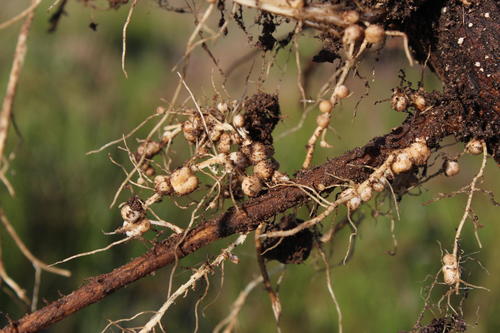
Organisms pictured · Representative pictures of the matched species, not figures from the paper.

Verbatim
e0“Nodule number, ARA and photosynthetic rate was highest in 2,4-D induced seedlings inoculated with Azorhizobium caulinodans”
t0“wheat”
Claim · model-written summary
IBA with Nostoc gave the highest total dry weight, tiller number and leaf area.
- Taxon
- wheatTriticum aestivumt0
- Treatment
- IBA with Nostoce0
- Outcome
- total dry weight, tiller number, leaf areae0
- Direction
- higheste0
 Nostoc
Not reportedComparator
Organisms pictured · Representative pictures of the matched species, not figures from the paper.

Verbatim
e0“total dry weight, tiller number, leaf area was highest in IBA with Nostoc”
t0“wheat”
Claim · model-written summary
IBA with Nostoc gave maximum NPK content.
- Taxon
- wheatTriticum aestivumt0
- Treatment
- IBA with Nostoce0
- Outcome
- NPK contente0
- Direction
- maximume0
Not reportedComparator
Organisms pictured · Representative pictures of the matched species, not figures from the paper.
Verbatim
e0“IBA with Nostoc and most significantly NPK content was also maximum in this combination”
t0“wheat”
Claim · model-written summary
IBA with Azorhizobium caulinodans gave the highest yield.
- Taxon
- wheatTriticum aestivumt0
- Treatment
- IBA treated seedlings inoculated with Azorhizobium caulinodanse0
- Interactor
- Azorhizobium caulinodansAzorhizobium caulinodanse0symbiont
- Outcome
- Yielde0
- Direction
- higheste0
Not reportedComparator
Organisms pictured · Representative pictures of the matched species, not figures from the paper.
Verbatim
e0“Yield was highest in IBA treated seedlings inoculated with Azorhizobium caulinodans”
t0“wheat”
The same questions in other papers
Nostoc · nutrient: content · Triticum aestivum (wheat)Positive and negative results
1 paper in the same direction as this paper · 1 in the opposite direction
- no effect
- positive
2,4-D · physiology: photosynthesis · Triticum aestivum (wheat)Positive and negative results
2 papers in the same direction as this paper · 4 in the opposite direction
- negative
- negative
- negative
3 papers more in this group
See all 7 papers →Nostoc · yield · Triticum aestivum (wheat)Results agree
1 paper in the same direction as this paper
- positive
indole-3-butyric acid · nutrient: content · Triticum aestivum (wheat)Results agree
1 paper in the same direction as this paper
- positive
indole-3-butyric acid · yield · Triticum aestivum (wheat)Results agree
2 papers in the same direction as this paper
- positive
- positive
inoculation · physiology: photosynthesis · Triticum aestivum (wheat)Positive and negative results
33 papers in the same direction as this paper · 8 in the opposite direction
- no effect
- no effect
- negative
38 papers more in this group
See all 42 papers →inoculation · yield · Triticum aestivum (wheat)Positive and negative results
548 papers in the same direction as this paper · 60 in the opposite direction · 5 reporting no difference from an alternative
- negative
- negative
- negative
610 papers more in this group
See all 614 papers →Claims are grouped by organism, treatment and what was measured or targeted. A paper counts as positive when any of its claims in the group is positive.