Abstract
Abstract The effectiveness of Trichoderma atroviride , T. asperellum , T. harzianum , against targeted tea disease causing pathogen, Fusarium solani (dieback), Beauveria bassiana against tea mosquito ( Helopeltis theivora ), and Metarhizium anisopliae against the red spider mite, Oligonychus coffeae Nietner, and the live wood eating termite ( Microcerotermes beesoni Snyder ), respectively were evaluated under laboratory and field conditions. The Trichoderma isolates showed effective control of F. solani (64.6 to 71.7%) under laboratory conditions, while the wettable powder (WP) formulation could reduce dieback disease incidence (57.1 to 77.7%) over control, under field conditions. The post prune application of Trichoderma asperellum on light pruned (LP) and application of T. asperellum as well as T. harzianum on deep skiffed (DS) tea fields showed a significant growth promotional response. The treated bushes could produce an average number of 421.2 and 398.4 shoots when it was applied 7.5 and 5.0% (w/v), respectively, which was higher than the number of shoots recorded in the control plots (259.4). The antagonist also induced comparatively higher shoot length (6.85–7.99 cm) than the untreated control plots (5.13–6.38 cm). The B. bassiana isolates (2 × 10 9 conidia/ml) exhibited 71.5 to 93.0% control of 2nd instar nymphs of H. theivora under in vitro conditions. However, addition of different adjuvants resulted in enhanced mortality. Under field conditions, the highest reduction of tea mosquito population of 52.3% was noted when B. bassiana (1 × 10 9 cfu/ml) was sprayed along with Tween 20 plus and crude sugar. However, the wettable powder formulation of this EPF along with jaggery reduced the insect incidence. The M. anisopliae effectively controlled the red spider mite to the tune of 46.3 to 63.8% under laboratory conditions, while the wettable powder formulation of this isolate was more effective against the termite, resulting in the reduction of infestation to the tune of 84.2% under field conditions.
Abstract from the paper’s OpenAlex record; open copy licensed cc-by. Read at the source ↗
The text the model read, with the source record’s inline markup (italics, sub- and superscripts) rendered and its character entities decoded; quote offsets refer to the raw text.
Claims 14
Claim · model-written summary
Trichoderma isolates controlled F. solani by 64.6 to 71.7% in laboratory tests.
- Taxon
- teat0
- Treatment
- Trichoderma isolatese0
- Interactor
- F. solani
 Fusarium solanie0pathogen
- Second interactor
- Trichoderma isolatese0biocontrol_agent
- Outcome
- control of F. solanie0
- Direction
- controle0
- Value
- 64.6 to 71.7%e0
- Setting
- laboratory conditionse0
Not reportedComparator
Organisms pictured · Representative pictures of the matched species, not figures from the paper.

Verbatim
e0“The Trichoderma isolates showed effective control of F. solani (64.6 to 71.7%) under laboratory conditions”
t0“tea plantation”
Claim · model-written summary
Trichoderma wettable powder reduced tea dieback incidence by 57.1 to 77.7% over control in the field.
Verbatim
e0“the wettable powder (WP) formulation could reduce dieback disease incidence (57.1 to 77.7%) over control, under field conditions”
t0“tea plantation”
Claim · model-written summary
Post prune T. asperellum promoted growth in light pruned tea fields.
- Taxon
- teae0
- Treatment
- Trichoderma asperellume0
- Interactor
- Trichoderma asperellum
 Trichoderma asperellume0symbiont
- Outcome
- growth promotional responsee0
- Direction
- promotionale0
- Qualifier
- light pruned (LP)e0
Not reportedComparator
Organisms pictured · Representative pictures of the matched species, not figures from the paper.

Verbatim
e0“The post prune application of Trichoderma asperellum on light pruned (LP) and application of T. asperellum as well as T. harzianum on deep skiffed (DS) tea fields showed a significant growth promotional response”
Claim · model-written summary
T. asperellum promoted growth in deep skiffed tea fields.
- Taxon
- teae0
- Treatment
- T. asperellume0
- Interactor
- T. asperellumTrichoderma asperellume0symbiont
- Outcome
- growth promotional responsee0
- Direction
- promotionale0
- Qualifier
- deep skiffed (DS)e0
Not reportedComparator
Organisms pictured · Representative pictures of the matched species, not figures from the paper.
Verbatim
e0“application of T. asperellum as well as T. harzianum on deep skiffed (DS) tea fields showed a significant growth promotional response”
Claim · model-written summary
T. harzianum promoted growth in deep skiffed tea fields.
- Taxon
- teae0
- Treatment
- T. harzianume0
- Interactor
- T. harzianum
 Trichoderma harzianume0symbiont
- Outcome
- growth promotional responsee0
- Direction
- promotionale0
- Qualifier
- deep skiffed (DS)e0
Not reportedComparator
Organisms pictured · Representative pictures of the matched species, not figures from the paper.

Verbatim
e0“application of T. asperellum as well as T. harzianum on deep skiffed (DS) tea fields showed a significant growth promotional response”
Claim · model-written summary
At 7.5% application, treated bushes averaged 421.2 shoots versus 259.4 in controls.
Verbatim
e0“The treated bushes could produce an average number of 421.2 and 398.4 shoots when it was applied 7.5 and 5.0% (w/v), respectively, which was higher than the number of shoots recorded in the control plots (259.4)”
t0“tea plantation”
Claim · model-written summary
At 5.0% application, treated bushes averaged 398.4 shoots versus 259.4 in controls.
Verbatim
e0“The treated bushes could produce an average number of 421.2 and 398.4 shoots when it was applied 7.5 and 5.0% (w/v), respectively, which was higher than the number of shoots recorded in the control plots (259.4)”
t0“tea plantation”
Claim · model-written summary
Antagonist treatment increased shoot length to 6.85–7.99 cm versus 5.13–6.38 cm in controls.
Verbatim
e0“The antagonist also induced comparatively higher shoot length (6.85–7.99 cm) than the untreated control plots (5.13–6.38 cm)”
t0“tea plantation”
Claim · model-written summary
B. bassiana controlled second instar H. theivora nymphs by 71.5 to 93.0% in vitro.
- Taxon
- teat0
- Treatment
- B. bassiana isolates (2 × 10 9 conidia/ml)e0
- Interactor
- H. theivora
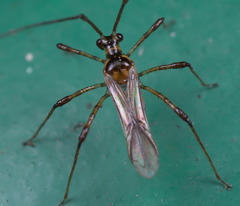 Helopeltis theivorae0pest
- Second interactor
- B. bassiana
 Beauveria bassianae0biocontrol_agent
- Outcome
- control of 2nd instar nymphs of H. theivorae0
- Direction
- controle0
- Value
- 71.5 to 93.0%e0
Not reportedComparator
Organisms pictured · Representative pictures of the matched species, not figures from the paper.
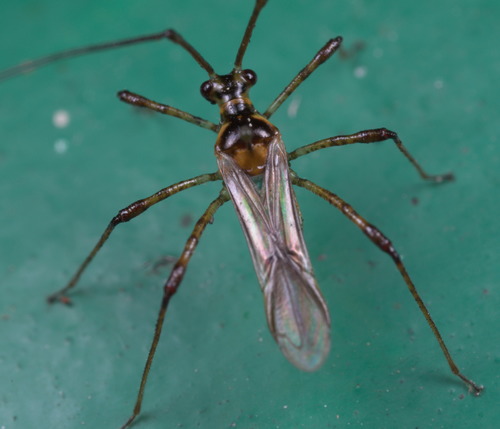

Verbatim
e0“The B. bassiana isolates (2 × 10 9 conidia/ml) exhibited 71.5 to 93.0% control of 2nd instar nymphs of H. theivora under in vitro conditions”
t0“tea plantation”
Claim · model-written summary
Adjuvants enhanced pest mortality with B. bassiana.
Not reportedComparator
Verbatim
e0“addition of different adjuvants resulted in enhanced mortality”
t0“tea plantation”
Claim · model-written summary
B. bassiana with Tween 20 plus and crude sugar gave 52.3% reduction in tea mosquito population in the field.
- Taxon
- teae0
- Treatment
- B. bassiana (1 × 10 9 cfu/ml) was sprayed along with Tween 20 plus and crude sugare0
- Interactor
- tea mosquitoe0pest
- Second interactor
- B. bassianaBeauveria bassianae0biocontrol_agent
- Outcome
- tea mosquito populatione0
- Direction
- reductione0
- Value
- 52.3%e0
- Setting
- field conditionse0
Not reportedComparator
Organisms pictured · Representative pictures of the matched species, not figures from the paper.
Verbatim
e0“Under field conditions, the highest reduction of tea mosquito population of 52.3% was noted when B. bassiana (1 × 10 9 cfu/ml) was sprayed along with Tween 20 plus and crude sugar”
Claim · model-written summary
B. bassiana wettable powder with jaggery reduced insect incidence.
- Taxon
- teat0
- Treatment
- wettable powder formulation of this EPF along with jaggerye0
- Outcome
- insect incidencee0
- Direction
- reducede0
Not reportedComparator
Verbatim
e0“the wettable powder formulation of this EPF along with jaggery reduced the insect incidence”
t0“tea plantation”
Claim · model-written summary
M. anisopliae controlled red spider mite by 46.3 to 63.8% in laboratory conditions.
- Taxon
- teat0
- Treatment
- M. anisopliaee0
- Interactor
- red spider mitee0pest
- Second interactor
- M. anisopliae
 Metarhizium anisopliaee0biocontrol_agent
- Outcome
- controlled the red spider mitee0
- Direction
- controllede0
- Value
- 46.3 to 63.8%e0
- Setting
- laboratory conditionse0
Not reportedComparator
Organisms pictured · Representative pictures of the matched species, not figures from the paper.

Verbatim
e0“The M. anisopliae effectively controlled the red spider mite to the tune of 46.3 to 63.8% under laboratory conditions”
t0“tea plantation”
Claim · model-written summary
M. anisopliae wettable powder reduced termite infestation by 84.2% in the field.
- Taxon
- teat0
- Treatment
- wettable powder formulation of this isolatee0
- Interactor
- termitee0pest
- Outcome
- infestatione0
- Direction
- reductione0
- Value
- 84.2%e0
- Setting
- field conditionse0
Not reportedComparator
Verbatim
e0“the wettable powder formulation of this isolate was more effective against the termite, resulting in the reduction of infestation to the tune of 84.2% under field conditions”
t0“tea plantation”
The same questions in other papers
botanical · disease · Camellia sinensis (black tea)Positive and negative results
2 papers in the same direction as this paper · 1 in the opposite direction
- negative
- positive
- positive
botanical · pest · Camellia sinensis (black tea)Positive and negative results
8 papers in the same direction as this paper · 1 in the opposite direction
- no effect
- positive
- positive
6 papers more in this group
See all 10 papers →biocontrol · growth · Camellia sinensis (black tea)Results agree
1 paper in the same direction as this paper
- positive
application · pest · Camellia sinensis (black tea)Results agree
3 papers in the same direction as this paper
- positive
- positive
- positive
Claims are grouped by organism, treatment and what was measured or targeted. A paper counts as positive when any of its claims in the group is positive.