Abstract
The objective of this work was to formulate a peat-free substrate for organic production (OP) of potted parsley and coriander. Substrates were prepared with coconut coir fiber (F) and forestry wastes compost (C) in the following proportions (by volume): 1F:0C; 1/3F:2/3C; 2/3F:1/3C and 0F:1C. All the peat-free substrates were fertilized with an organic fertilizer, certified for OP. An OP certified commercial substrate (black Sphagnum peat, coir and organic fertilizer) was used as control. Parsley (Petroselinum crispum (Mill.) Fuss) and coriander (Coriandrum sativum L.) seeds were sown in 290 mL pots (diameter: 8.5 cm, height: 8.2 cm) and grown for 2 months. The compost substrate (0F:1C) had an electrical conductivity of 73 mS m-1 (water extract 1:5, v v-1), slightly higher than the adequate range, and the highest nutrient availability. Mixing compost with coir had a positive effect on the substrate properties, increasing nutrients availability as well as plants growth. The shoot mass of the plants (parsley and coriander) growing in the coir and compost mixes (2/3F:1/3C and 1/3F:2/3C) was significantly higher than the shoot mass of the plants growing in the peat-based control substrate. Furthermore, the cost of the peat-free substrates formulated in this study (0.045-0.063 € L-1) was significantly lower than the cost of the commercial substrates (0.109 € L-1). Compost and coir mixes proved to be a low cost efficient alternative to the commercial substrates for the organic production of potted parsley and coriander.
Abstract from the paper’s OpenAlex record, shown for indexing and research. Copyright remains with the authors or the publisher. Read at the source ↗
The text the model read, with the source record’s inline markup (italics, sub- and superscripts) rendered and its character entities decoded; quote offsets refer to the raw text.
Claims 6
Claim · model-written summary
The compost substrate had an electrical conductivity of 73 mS m-1, slightly higher than the adequate range.
- Taxon
- parsley and coriander
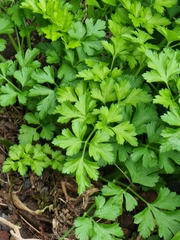 Petroselinum crispum
 Coriandrum sativumt0
- Treatment
- compost substrate (0F:1C)e1
- Outcome
- electrical conductivitye1
- Value
- 73 mS m-1e1
- Qualifier
- slightly higher than the adequate rangee1
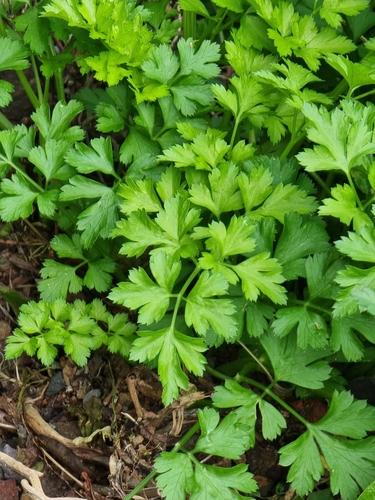
Organisms pictured · Representative pictures of the matched species, not figures from the paper.

Verbatim
t0“parsley and coriander”
e1“The compost substrate (0F:1C) had an electrical conductivity of 73 mS m-1 (water extract 1:5, v v-1), slightly higher than the adequate range, and the highest nutrient availability.”
Claim · model-written summary
The compost substrate had the highest nutrient availability.
- Taxon
- parsley and corianderPetroselinum crispumCoriandrum sativumt0
- Treatment
- compost substrate (0F:1C)e1
- Outcome
- nutrient availabilitye1
- Direction
- higheste1
Organisms pictured · Representative pictures of the matched species, not figures from the paper.
Verbatim
t0“parsley and coriander”
e1“The compost substrate (0F:1C) had an electrical conductivity of 73 mS m-1 (water extract 1:5, v v-1), slightly higher than the adequate range, and the highest nutrient availability.”
Claim · model-written summary
Mixing compost with coir increased nutrient availability as well as plant growth.
- Taxon
- parsley and corianderPetroselinum crispumCoriandrum sativumt0
- Treatment
- Mixing compost with coire2
- Outcome
- nutrients availability as well as plants growthe2
- Direction
- increasinge2
Not reportedComparator
Organisms pictured · Representative pictures of the matched species, not figures from the paper.
Verbatim
t0“parsley and coriander”
e2“Mixing compost with coir had a positive effect on the substrate properties, increasing nutrients availability as well as plants growth”
Claim · model-written summary
The shoot mass of parsley and coriander grown in the coir and compost mixes (2/3F:1/3C and 1/3F:2/3C) was significantly higher than in the peat-based control substrate.
- Taxon
- parsley and corianderPetroselinum crispumCoriandrum sativume3
- Treatment
- coir and compost mixes (2/3F:1/3C and 1/3F:2/3C)e3
- Outcome
- shoot masse3
- Direction
- highere3
- Comparator
- peat-based control substratee3
Not reportedValue
Organisms pictured · Representative pictures of the matched species, not figures from the paper.
Verbatim
e3“The shoot mass of the plants (parsley and coriander) growing in the coir and compost mixes (2/3F:1/3C and 1/3F:2/3C) was significantly higher than the shoot mass of the plants growing in the peat-based control substrate”
Claim · model-written summary
The cost of the peat-free substrates was lower than the cost of the commercial substrates.
- Taxon
- parsley and corianderPetroselinum crispumCoriandrum sativumt0
- Treatment
- peat-free substrates formulated in this studye4
- Outcome
- coste4
- Direction
- lowere4
- Value
- 0.045-0.063 € L-1e4
- Qualifier
- 0.109 € L-1e4
- Comparator
- commercial substratese4
Organisms pictured · Representative pictures of the matched species, not figures from the paper.
Verbatim
t0“parsley and coriander”
e4“the cost of the peat-free substrates formulated in this study (0.045-0.063 € L-1) was significantly lower than the cost of the commercial substrates (0.109 € L-1)”
Claim · model-written summary
Compost and coir mixes are a low-cost, efficient alternative to commercial substrates for organic production of potted parsley and coriander.
- Taxon
- parsley and corianderPetroselinum crispumCoriandrum sativume5
- Outcome
- a low cost efficient alternative to the commercial substratese5
Organisms pictured · Representative pictures of the matched species, not figures from the paper.
Verbatim
e5“Compost and coir mixes proved to be a low cost efficient alternative to the commercial substrates for the organic production of potted parsley and coriander”
The same questions in other papers
fertilization · growth · Coriandrum sativum (coriander)Positive and negative results
32 papers in the same direction as this paper · 4 in the opposite direction
- no effect
- no effect
- no effect
33 papers more in this group
See all 37 papers →growing medium · yield · Petroselinum crispum (parsley)Results agree
1 paper in the same direction as this paper
- positive
growing medium · growth · Petroselinum crispum (parsley)Results agree
2 papers in the same direction as this paper
- positive
- positive
growing medium · growth · Coriandrum sativum (coriander)Results agree
4 papers in the same direction as this paper
- positive
- positive
- positive
1 paper more in this group
See all 5 papers →fertilization · growth · Petroselinum crispum (parsley)Results agree
8 papers in the same direction as this paper
- positive
- positive
- positive
5 papers more in this group
See all 9 papers →Claims are grouped by organism, treatment and what was measured or targeted. A paper counts as positive when any of its claims in the group is positive.