Abstract
Abstract The demand for organic foods is increasing globally, but a key limiting factor to the production of organic greenhouse produce is the lack of certified liquid fertilizers. In this experiment, four organic fertilizers were produced using either acidic extraction, anaerobic digestion or both of ensiled biomass of organic red clover and white mustard. The resulting fertilizers were applied to greenhouse-grown parsley either alone, or in combination with nitrogen (N)-enriched water produced by flushing acidic water with ammonia, to determine their effect on plant growth and the nutrient concentrations of parsley. Six combinations of fertilizer treatments were included in the greenhouse experiment. Three treatments received either fertilizers derived from acidic extraction, anaerobic digestion or both and three treatments received fertilizers derived from acidic extraction combined with N-enriched water. Conventional inorganic liquid fertilizer, chicken manure extract and no liquid fertilizer (only water) were added as control treatments. A higher N-min (ammonium and nitrate) to potassium (K) ratio was found in fertilizers after anaerobic digestion compared to acidic extraction. All organic fertigation treatments resulted in high pH, high K and chloride concentrations and high NH 4 /NO 3 ratios in the root zone. In addition, high electrical conductivity (EC), P, K and Mg concentrations were found when only acidic extracted fertilizers were applied. Application of plant-based organic fertilizers without amending with N-enriched water resulted in biomass yields that were 21–26% lower than the inorganic fertigation control. However, fertigation with chicken manure extract, or a combination of fertilizer derived from acidic extraction and N-enriched water, resulted in similar plant growth as inorganic fertilizer. The lower yield from fertilizer derived from acidic extraction was due to elevated EC levels in the growing medium. Our results suggest that yield of greenhouse-grown parsley using either organic fertilizers combined with N-enriched water or chicken manure extract is similar to conventional fertilizer.
Abstract from the paper’s OpenAlex record, shown for indexing and research. Copyright remains with the authors or the publisher. Read at the source ↗
The text the model read, with the source record’s inline markup (italics, sub- and superscripts) rendered and its character entities decoded; quote offsets refer to the raw text.
Claims 8
Claim · model-written summary
Anaerobic digestion gave a higher N-min to K fertilizer ratio than acidic extraction.
- Taxon
- parsley
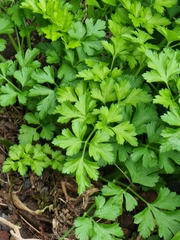 Petroselinum crispumt0
- Treatment
- anaerobic digestione0
- Outcome
- N-min (ammonium and nitrate) to potassium (K) ratioe0
- Direction
- highere0
- Comparator
- acidic extractione0
Organisms pictured · Representative pictures of the matched species, not figures from the paper.
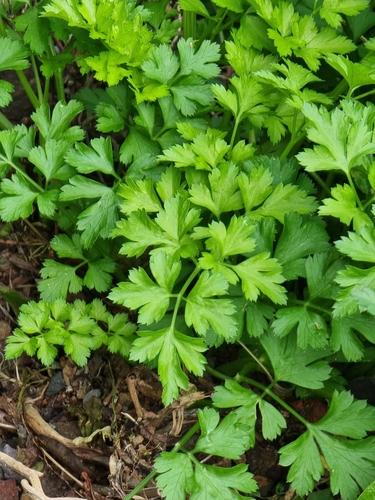
Verbatim
e0“A higher N-min (ammonium and nitrate) to potassium (K) ratio was found in fertilizers after anaerobic digestion compared to acidic extraction”
t0“parsley”
Claim · model-written summary
All organic fertigation treatments produced high pH, potassium and chloride in the root zone.
- Taxon
- parsleyPetroselinum crispumt0
- Treatment
- organic fertigation treatmentse0
- Outcome
- high pH, high K and chloride concentrationse0
- Direction
- highe0
Not reportedComparator
Organisms pictured · Representative pictures of the matched species, not figures from the paper.
Verbatim
e0“All organic fertigation treatments resulted in high pH, high K and chloride concentrations and high NH 4 /NO 3 ratios in the root zone”
t0“parsley”
Claim · model-written summary
Organic fertigation produced high NH4/NO3 root-zone ratios.
- Taxon
- parsleyPetroselinum crispumt0
- Treatment
- organic fertigation treatmentse0
- Outcome
- NH 4 /NO 3 ratiose0
- Direction
- highe0
Not reportedComparator
Organisms pictured · Representative pictures of the matched species, not figures from the paper.
Verbatim
e0“All organic fertigation treatments resulted in high pH, high K and chloride concentrations and high NH 4 /NO 3 ratios in the root zone”
t0“parsley”
Claim · model-written summary
Acidic extracts alone produced high EC, P, K and Mg in the root zone.
- Taxon
- parsleyPetroselinum crispumt0
- Treatment
- acidic extracted fertilizerse0
- Outcome
- electrical conductivity (EC), P, K and Mg concentrationse0
- Direction
- highe0
Not reportedComparator
Organisms pictured · Representative pictures of the matched species, not figures from the paper.
Verbatim
e0“high electrical conductivity (EC), P, K and Mg concentrations were found when only acidic extracted fertilizers were applied”
t0“parsley”
Claim · model-written summary
Unamended plant-based organic fertilizer yielded 21–26% less biomass than inorganic fertigation.
- Taxon
- parsleyPetroselinum crispumt0
- Treatment
- plant-based organic fertilizers without amending with N-enriched watere0
- Outcome
- biomass yieldse0
- Direction
- lowere0
- Value
- 21–26%e0
- Comparator
- inorganic fertigation controle0
Organisms pictured · Representative pictures of the matched species, not figures from the paper.
Verbatim
e0“Application of plant-based organic fertilizers without amending with N-enriched water resulted in biomass yields that were 21–26% lower than the inorganic fertigation control”
t0“parsley”
Claim · model-written summary
Chicken manure extract produced growth similar to inorganic fertilizer.
- Taxon
- parsleyPetroselinum crispumt0
- Treatment
- chicken manure extracte0
- Outcome
- plant growthe0
- Direction
- similare0
- Comparator
- inorganic fertilizere0
Organisms pictured · Representative pictures of the matched species, not figures from the paper.
Verbatim
e0“fertigation with chicken manure extract, or a combination of fertilizer derived from acidic extraction and N-enriched water, resulted in similar plant growth as inorganic fertilizer”
t0“parsley”
Claim · model-written summary
Acidic extract with N-enriched water produced growth similar to inorganic fertilizer.
- Taxon
- parsleyPetroselinum crispumt0
- Treatment
- a combination of fertilizer derived from acidic extraction and N-enriched watere0
- Outcome
- plant growthe0
- Direction
- similare0
- Comparator
- inorganic fertilizere0
Organisms pictured · Representative pictures of the matched species, not figures from the paper.
Verbatim
e0“fertigation with chicken manure extract, or a combination of fertilizer derived from acidic extraction and N-enriched water, resulted in similar plant growth as inorganic fertilizer”
t0“parsley”
Claim · model-written summary
Elevated EC in growing medium explained the lower yield from acidic extract.
- Taxon
- parsleyPetroselinum crispumt0
- Treatment
- fertilizer derived from acidic extractione0
- Outcome
- lower yielde0
- Qualifier
- elevated EC levels in the growing mediume0
Organisms pictured · Representative pictures of the matched species, not figures from the paper.
Verbatim
e0“The lower yield from fertilizer derived from acidic extraction was due to elevated EC levels in the growing medium”
t0“parsley”
The same questions in other papers
botanical · growth · Petroselinum crispum (parsley)Positive and negative results
4 papers in the same direction as this paper · 1 in the opposite direction
- no effect
- positive
- positive
2 papers more in this group
See all 6 papers →fertilization · yield · Petroselinum crispum (parsley)Positive and negative results
2 papers in the same direction as this paper · 9 in the opposite direction
- positive
- positive
- positive
8 papers more in this group
See all 12 papers →fertilization · growth · Petroselinum crispum (parsley)Results agree
8 papers in the same direction as this paper
- positive
- positive
- positive
5 papers more in this group
See all 9 papers →Claims are grouped by organism, treatment and what was measured or targeted. A paper counts as positive when any of its claims in the group is positive.