Abstract
Seed-borne infection by Bipolaris sorokiniana decreased the percentage germination of barley seeds and the emergence of seedlings. Infection levels were higher in non-germinated than in germinated seeds. Seed treatment with organomercurial fungicide or imazalil improved the percentage emergence but a low number of diseased seedlings still remained in the crops. The fungus caused a reduction in grain yields in most experiments and also decreased their value as sowing seed, if the weather conditions were favourable for compute disease expression. Yield losses in greenhouse experiments varied from 7.2 to 38.5 % and in the field from 5 to 11 %, and showed a strong correlation with the infection levels in the seed stocks. Higher losses were associated with the six-row cultivars. Organomercury seed treatment resulted in a slight but in significant increase in yields but it was able to prevent an occurrence of secondary infection in the crop resulting in a lower seed infection levels of the grain. In field experiments in Inari (69° N.L.) seed-borne inoculum could be demonstrated clearly to be the only source of a severe disease outbreak. The inoculum remaining in the soil was capable of initiating soil-borne infection of barley seedlings during the following two growing seasons.
Abstract from the paper’s OpenAlex record; open copy licensed cc-by. Read at the source ↗
The text the model read, with the source record’s inline markup (italics, sub- and superscripts) rendered and its character entities decoded; quote offsets refer to the raw text.
Claims 15
Claim · model-written summary
Seed-borne Bipolaris infection decreased barley seed germination and seedling emergence.
- Taxon
- barley
 Hordeum vulgaree0
- Interactor
- Bipolaris sorokiniana
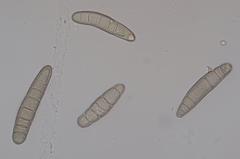 Bipolaris sorokinianae0pathogen
- Outcome
- percentage germination of barley seeds and the emergence of seedlingse0
- Direction
- decreasede0
Organisms pictured · Representative pictures of the matched species, not figures from the paper.

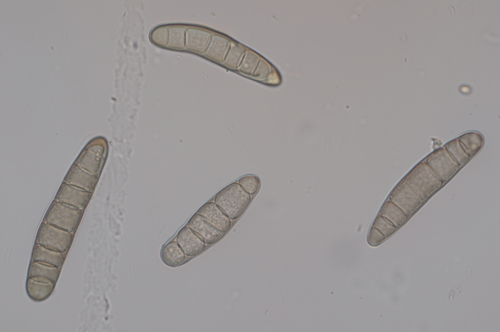
Verbatim
e0“Seed-borne infection by Bipolaris sorokiniana decreased the percentage germination of barley seeds and the emergence of seedlings.”
Claim · model-written summary
Infection was higher in non-germinated than germinated barley seeds.
- Taxon
- barleyHordeum vulgaret0
- Outcome
- Infection levelse0
- Direction
- highere0
- Comparator
- germinated seedse0
Not reportedInteractor
Organisms pictured · Representative pictures of the matched species, not figures from the paper.
Verbatim
e0“Infection levels were higher in non-germinated than in germinated seeds.”
t0“barley”
Claim · model-written summary
Organomercurial fungicide seed treatment improved barley emergence.
- Taxon
- barleyHordeum vulgaret0
- Treatment
- organomercurial fungicidee0
- Outcome
- percentage emergencee0
- Direction
- improvede0
Not reportedComparator
Organisms pictured · Representative pictures of the matched species, not figures from the paper.
Verbatim
e0“Seed treatment with organomercurial fungicide or imazalil improved the percentage emergence but a low number of diseased seedlings still remained in the crops.”
t0“barley”
Claim · model-written summary
Imazalil seed treatment improved barley emergence.
- Taxon
- barleyHordeum vulgaret0
- Treatment
- imazalile0
- Outcome
- percentage emergencee0
- Direction
- improvede0
Not reportedComparator
Organisms pictured · Representative pictures of the matched species, not figures from the paper.
Verbatim
e0“Seed treatment with organomercurial fungicide or imazalil improved the percentage emergence but a low number of diseased seedlings still remained in the crops.”
t0“barley”
Claim · model-written summary
A low number of diseased barley seedlings remained after seed treatment.
- Taxon
- barleyHordeum vulgaret0
- Outcome
- diseased seedlings still remainede0
Organisms pictured · Representative pictures of the matched species, not figures from the paper.
Verbatim
e0“a low number of diseased seedlings still remained in the crops”
t0“barley”
Claim · model-written summary
The fungus reduced barley grain yields in most experiments.
- Taxon
- barleyHordeum vulgaret0
- Interactor
- Bipolaris sorokinianaBipolaris sorokinianat0pathogen
- Outcome
- grain yieldse0
- Direction
- reductione0
- Qualifier
- most experimentse0
Organisms pictured · Representative pictures of the matched species, not figures from the paper.
Verbatim
e0“The fungus caused a reduction in grain yields in most experiments”
t0“Bipolaris sorokiniana on barley”
Claim · model-written summary
The fungus decreased barley grain value as sowing seed under favorable disease weather.
- Taxon
- barleyHordeum vulgaret0
- Interactor
- Bipolaris sorokinianaBipolaris sorokinianat0pathogen
- Outcome
- value as sowing seede0
- Direction
- decreasede0
- Qualifier
- if the weather conditions were favourable for compute disease expressione0
Organisms pictured · Representative pictures of the matched species, not figures from the paper.
Verbatim
e0“decreased their value as sowing seed, if the weather conditions were favourable for compute disease expression”
t0“Bipolaris sorokiniana on barley”
Claim · model-written summary
Barley yield losses in greenhouse experiments ranged from 7.2 to 38.5 %.
- Taxon
- barleyHordeum vulgaret0
- Interactor
- Bipolaris sorokinianaBipolaris sorokinianat0pathogen
- Outcome
- Yield lossese0
- Value
- 7.2 to 38.5 %e0
- Setting
- greenhouse experimentse0
Organisms pictured · Representative pictures of the matched species, not figures from the paper.
Verbatim
e0“Yield losses in greenhouse experiments varied from 7.2 to 38.5 %”
t0“Bipolaris sorokiniana on barley”
Claim · model-written summary
Barley yield losses in the field ranged from 5 to 11 %.
- Taxon
- barleyHordeum vulgaret0
- Interactor
- Bipolaris sorokinianaBipolaris sorokinianat0pathogen
- Outcome
- in the fielde0
- Value
- 5 to 11 %e0
- Setting
- fielde0
Organisms pictured · Representative pictures of the matched species, not figures from the paper.
Verbatim
e0“in the field from 5 to 11 %”
t0“Bipolaris sorokiniana on barley”
Claim · model-written summary
Barley yield losses were strongly correlated with seed-stock infection levels.
- Taxon
- barleyHordeum vulgaret0
- Interactor
- Bipolaris sorokinianaBipolaris sorokinianat0pathogen
- Outcome
- strong correlatione0
- Qualifier
- infection levels in the seed stockse0
Not reportedDirection
Organisms pictured · Representative pictures of the matched species, not figures from the paper.
Verbatim
e0“showed a strong correlation with the infection levels in the seed stocks”
t0“Bipolaris sorokiniana on barley”
Claim · model-written summary
Yield losses were higher in six-row barley cultivars.
- Taxon
- barleyHordeum vulgaret0
- Material
- six-row cultivarse0
- Outcome
- lossese0
- Direction
- Highere0
Organisms pictured · Representative pictures of the matched species, not figures from the paper.
Verbatim
e0“Higher losses were associated with the six-row cultivars.”
t0“barley”
Claim · model-written summary
Organomercury seed treatment gave a slight but insignificant barley yield increase.
- Taxon
- barleyHordeum vulgaret0
- Treatment
- Organomercury seed treatmente0
- Outcome
- yieldse0
- Direction
- increasee0
- Qualifier
- slighte0
Not reportedComparator
Organisms pictured · Representative pictures of the matched species, not figures from the paper.
Verbatim
e0“Organomercury seed treatment resulted in a slight but in significant increase in yields”
t0“barley”
Claim · model-written summary
Organomercury seed treatment prevented secondary barley infection and lowered grain seed infection.
- Taxon
- barleyHordeum vulgaret0
- Outcome
- seed infection levels of the graine0
- Direction
- lowere0
Not reportedTreatmentComparator
Organisms pictured · Representative pictures of the matched species, not figures from the paper.
Verbatim
e0“it was able to prevent an occurrence of secondary infection in the crop resulting in a lower seed infection levels of the grain”
t0“barley”
Claim · model-written summary
Seed-borne inoculum was the only source of a severe barley disease outbreak in Inari field experiments.
- Taxon
- barleyHordeum vulgaret0
- Outcome
- severe disease outbreake0
- Qualifier
- seed-borne inoculume0
- Setting
- Inari (69° N.L.)e0
Organisms pictured · Representative pictures of the matched species, not figures from the paper.
Verbatim
e0“In field experiments in Inari (69° N.L.) seed-borne inoculum could be demonstrated clearly to be the only source of a severe disease outbreak.”
t0“barley”
Claim · model-written summary
Residual soil inoculum initiated barley seedling infection over the following two growing seasons.
- Taxon
- barleyHordeum vulgaree0
- Outcome
- soil-borne infection of barley seedlingse0
- Qualifier
- following two growing seasonse0
Organisms pictured · Representative pictures of the matched species, not figures from the paper.
Verbatim
e0“The inoculum remaining in the soil was capable of initiating soil-borne infection of barley seedlings during the following two growing seasons.”
The same questions in other papers
enilconazole · growth · Hordeum vulgare (barley)Positive and negative results
2 papers in the same direction as this paper · 1 in the opposite direction
- negative
- positive
- positive
fungicide · growth · Hordeum vulgare (barley)Positive and negative results
11 papers in the same direction as this paper · 6 in the opposite direction
- negative
- negative
- negative
14 papers more in this group
See all 18 papers →seed treatment · yield · Hordeum vulgare (barley)Positive and negative results
42 papers in the same direction as this paper · 5 in the opposite direction · 1 reporting no difference from an alternative
- positive
- no effect
- no effect
45 papers more in this group
See all 49 papers →Claims are grouped by organism, treatment and what was measured or targeted. A paper counts as positive when any of its claims in the group is positive.