Abstract
Abstract Caged Davis soybean plants were infested with Nezara viridula (L.) and Riptortus serripes (F.) (4.4 adults/m) at 3 stages of pod development in 3 experiments in 1987, 1988 and 1989. Bug feeding reduced seed yield and oil content during pod fill, but not during pod elongation or pod ripening. N. viridula reduced yields significantly in 1987 and 1988, (183 and 494 kg/ha) but R. serripes reduced yields significantly only in 1988 (353 kg/ha). Both species damaged more seeds during pod fill than during any other pod stage, but N. viridula damaged more seeds than R. serripes . Mean seed weight was reduced only during pod fill. In contrast, the mean weight of undamaged seeds increased during pod fill. This indicated partial compensation by Davis soybeans for damage caused by the above bug species at a density of 4.4 adults/m. Seed oil content, recorded only in 1988, was reduced significantly by N. viridula , but not by R. serripes .
Abstract from the paper’s OpenAlex record, shown for indexing and research. Copyright remains with the authors or the publisher. Read at the source ↗
The text the model read, with the source record’s inline markup (italics, sub- and superscripts) rendered and its character entities decoded; quote offsets refer to the raw text.
Claims 12
Claim · model-written summary
Bug feeding reduced soybean seed yield and oil content during pod fill.
- Taxon
- SOYBEANS
 Glycine maxt0
- Organ / stage
- pod fille1
- Treatment
- Bug feedinge1
- Interactor
- Buge1pest
- Outcome
- seed yield and oil contente1
- Direction
- reducede1
Not reportedComparator
Organisms pictured · Representative pictures of the matched species, not figures from the paper.

Verbatim
t0“SOYBEANS”
e1“Bug feeding reduced seed yield and oil content during pod fill, but not during pod elongation or pod ripening”
Claim · model-written summary
Bug feeding did not reduce soybean seed yield and oil content during pod elongation or pod ripening.
- Taxon
- SOYBEANSGlycine maxt0
- Organ / stage
- pod elongation or pod ripeninge1
- Treatment
- Bug feedinge1
- Interactor
- Buge1pest
- Outcome
- seed yield and oil contente1
- Direction
- note1
Not reportedComparator
Organisms pictured · Representative pictures of the matched species, not figures from the paper.
Verbatim
t0“SOYBEANS”
e1“Bug feeding reduced seed yield and oil content during pod fill, but not during pod elongation or pod ripening”
Claim · model-written summary
N. viridula significantly reduced soybean yield in 1987 by 183 kg/ha.
- Taxon
- SOYBEANSGlycine maxt0
- Treatment
- N. viridulae1
- Interactor
- N. viridula
 Nezara viridulae1pest
- Outcome
- yieldse1
- Direction
- reducede1
- Value
- 183e1
- Qualifier
- 1987e1
Not reportedComparator
Organisms pictured · Representative pictures of the matched species, not figures from the paper.

Verbatim
t0“SOYBEANS”
e1“N. viridula reduced yields significantly in 1987 and 1988, (183 and 494 kg/ha)”
Claim · model-written summary
N. viridula significantly reduced soybean yield in 1988 by 494 kg/ha.
- Taxon
- SOYBEANSGlycine maxt0
- Treatment
- N. viridulae1
- Interactor
- N. viridulaNezara viridulae1pest
- Outcome
- yieldse1
- Direction
- reducede1
- Value
- 494e1
- Qualifier
- 1988e1
Not reportedComparator
Organisms pictured · Representative pictures of the matched species, not figures from the paper.
Verbatim
t0“SOYBEANS”
e1“N. viridula reduced yields significantly in 1987 and 1988, (183 and 494 kg/ha)”
Claim · model-written summary
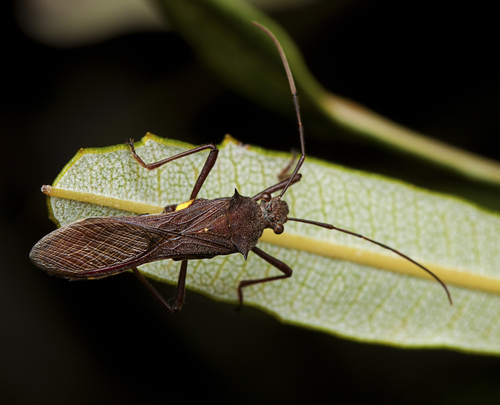
R. serripes significantly reduced soybean yield only in 1988, by 353 kg/ha.
- Taxon
- SOYBEANSGlycine maxt0
- Treatment
- R. serripese1
- Interactor
- R. serripes
 Riptortus serripese1pest
- Outcome
- yieldse1
- Direction
- reducede1
- Value
- 353 kg/hae1
- Qualifier
- only in 1988e1
Not reportedComparator
Organisms pictured · Representative pictures of the matched species, not figures from the paper.
Verbatim
t0“SOYBEANS”
e1“R. serripes reduced yields significantly only in 1988 (353 kg/ha)”
Claim · model-written summary
Both bug species damaged more seeds during pod fill than during any other pod stage.
- Taxon
- SOYBEANSGlycine maxt0
- Organ / stage
- pod fille1
- Treatment
- infested with Nezara viridula (L.) and Riptortus serripes (F.)e2
- Interactor
- Nezara viridula (L.)Nezara viridulae2pest
- Second interactor
- Riptortus serripes (F.)Riptortus serripese2pest
- Outcome
- damaged more seedse1
- Direction
- moree1
Not reportedComparator
Organisms pictured · Representative pictures of the matched species, not figures from the paper.
Verbatim
t0“SOYBEANS”
e1“Both species damaged more seeds during pod fill than during any other pod stage”
e2“infested with Nezara viridula (L.) and Riptortus serripes (F.)”
Claim · model-written summary
N. viridula damaged more seeds than R. serripes.
- Taxon
- SOYBEANSGlycine maxt0
- Treatment
- N. viridulae1
- Interactor
- N. viridulaNezara viridulae1pest
- Second interactor
- R. serripesRiptortus serripese1pest
- Outcome
- damaged more seedse1
- Direction
- moree1
- Comparator
- R. serripese1
Organisms pictured · Representative pictures of the matched species, not figures from the paper.
Verbatim
t0“SOYBEANS”
e1“N. viridula damaged more seeds than R. serripes”
Claim · model-written summary
Mean soybean seed weight was reduced only during pod fill in infested plants.
- Taxon
- SOYBEANSGlycine maxt0
- Organ / stage
- pod fille1
- Treatment
- infested with Nezara viridula (L.) and Riptortus serripes (F.)e2
- Interactor
- Nezara viridula (L.)Nezara viridulae2pest
- Second interactor
- Riptortus serripes (F.)Riptortus serripese2pest
- Outcome
- Mean seed weighte1
- Direction
- reducede1
Not reportedComparator
Organisms pictured · Representative pictures of the matched species, not figures from the paper.
Verbatim
t0“SOYBEANS”
e1“Mean seed weight was reduced only during pod fill”
e2“infested with Nezara viridula (L.) and Riptortus serripes (F.)”
Claim · model-written summary
The mean weight of undamaged soybean seeds increased during pod fill.
- Taxon
- SOYBEANSGlycine maxt0
- Organ / stage
- pod fille1
- Treatment
- infested with Nezara viridula (L.) and Riptortus serripes (F.)e2
- Interactor
- Nezara viridula (L.)Nezara viridulae2pest
- Second interactor
- Riptortus serripes (F.)Riptortus serripese2pest
- Outcome
- mean weight of undamaged seedse1
- Direction
- increasede1
Not reportedComparator
Organisms pictured · Representative pictures of the matched species, not figures from the paper.
Verbatim
t0“SOYBEANS”
e1“the mean weight of undamaged seeds increased during pod fill”
e2“infested with Nezara viridula (L.) and Riptortus serripes (F.)”
Claim · model-written summary
The authors interpret the pattern as partial compensation by Davis soybeans for damage by the bug species at 4.4 adults/m.
Verbatim
e1“This indicated partial compensation by Davis soybeans for damage caused by the above bug species at a density of 4.4 adults/m”
Claim · model-written summary
Seed oil content (recorded only in 1988) was significantly reduced by N. viridula.
- Taxon
- SOYBEANSGlycine maxt0
- Treatment
- N. viridulae1
- Interactor
- N. viridulaNezara viridulae1pest
- Outcome
- Seed oil contente1
- Direction
- reducede1
- Qualifier
- recorded only in 1988e1
Not reportedComparator
Organisms pictured · Representative pictures of the matched species, not figures from the paper.
Verbatim
t0“SOYBEANS”
e1“Seed oil content, recorded only in 1988, was reduced significantly by N. viridula , but not by R. serripes”
Claim · model-written summary
Seed oil content (recorded only in 1988) was not reduced by R. serripes.
- Taxon
- SOYBEANSGlycine maxt0
- Treatment
- R. serripese1
- Interactor
- R. serripesRiptortus serripese1pest
- Outcome
- Seed oil contente1
- Direction
- but note1
- Qualifier
- recorded only in 1988e1
Not reportedComparator
Organisms pictured · Representative pictures of the matched species, not figures from the paper.
Verbatim
t0“SOYBEANS”
e1“Seed oil content, recorded only in 1988, was reduced significantly by N. viridula , but not by R. serripes”
The same questions in other papers
infection · yield · Glycine max (soybean)Results differ
41 papers in the same direction as this paper · 9 in the opposite direction
- negative
- positive
- positive
47 papers more in this group
See all 51 papers →infection · quality: oil · Glycine max (soybean)Positive and negative results
3 papers in the same direction as this paper · 1 in the opposite direction
- positive
- no effect
- negative
1 paper more in this group
See all 5 papers →Claims are grouped by organism, treatment and what was measured or targeted. A paper counts as positive when any of its claims in the group is positive.