Abstract
The Problems of Weed Management by Herbicide Systems Applied in Maize Detailed recognition of weed infestation state and degree in south-western region of Poland provided the basis for starting field experiment on three types of soils aiming at the assessment of weed control effectiveness by means of suitably selected herbicide systems. High efficiency of weed elimination on alluvial soils was obtained due to herbicide mixture mesotrione + nicosulfuron in split doses. In the experiment established on brown soils the mentioned weed species were most satisfactorily controlled by herbicide mixture applied according to infestation degree: mesotrione + nicosulfuron i rimsulfuron + adjuvant + dicamba applied once in full doses. The mixture rimsulfuron + adjuvant + dicamba showed to be the most efficient regarding the weeds typical for alluvial soils, except for Elymus repens , numerously occurring in the experiment, which exhibited medium sesitivity, as well as winter forms of Anthemis arvensis. Mixture of rimsulfuron + adjuvant + florasulam + 2,4- D allowed to eliminate undesired plants on that soil stand in the most efficient way and to achieve the highest grain yield.
Abstract from the paper’s OpenAlex record; open copy licensed cc-by-nc-nd. Read at the source ↗
The text the model read, with the source record’s inline markup (italics, sub- and superscripts) rendered and its character entities decoded; quote offsets refer to the raw text.
Claims 7
Claim · model-written summary
Split doses of mesotrione plus nicosulfuron gave high weed elimination on alluvial soils.
- Treatment
- mesotrione + nicosulfuron in split dosese0
- Outcome
- weed eliminatione0
- Direction
- High efficiencye0
- Setting
- alluvial soilse0
 Zea mays
Not reportedComparator
Organisms pictured · Representative pictures of the matched species, not figures from the paper.

Verbatim
t0“Maize”
e0“High efficiency of weed elimination on alluvial soils was obtained due to herbicide mixture mesotrione + nicosulfuron in split doses”
Claim · model-written summary
Full dose mesotrione plus nicosulfuron and rimsulfuron plus adjuvant plus dicamba satisfactorily controlled weeds on brown soils.
- Treatment
- mesotrione + nicosulfuron i rimsulfuron + adjuvant + dicamba applied once in full dosese0
- Outcome
- weed speciese0
- Direction
- most satisfactorily controllede0
- Setting
- brown soilse0
Not reportedComparator
Organisms pictured · Representative pictures of the matched species, not figures from the paper.
Verbatim
t0“Maize”
e0“In the experiment established on brown soils the mentioned weed species were most satisfactorily controlled by herbicide mixture applied according to infestation degree: mesotrione + nicosulfuron i rimsulfuron + adjuvant + dicamba applied once in full doses”
Claim · model-written summary
Rimsulfuron plus adjuvant plus dicamba was most efficient against weeds typical of alluvial soils.
- Treatment
- rimsulfuron + adjuvant + dicambae0
- Outcome
- weeds typical for alluvial soilse0
- Direction
- most efficiente0
- Setting
- alluvial soilse0
Not reportedComparator
Organisms pictured · Representative pictures of the matched species, not figures from the paper.
Verbatim
t0“Maize”
e0“The mixture rimsulfuron + adjuvant + dicamba showed to be the most efficient regarding the weeds typical for alluvial soils”
Claim · model-written summary
Elymus repens showed medium sensitivity to rimsulfuron plus adjuvant plus dicamba.
- Treatment
- rimsulfuron + adjuvant + dicambae0
- Interactor
- Elymus repens
 Elymus repense0weed
- Outcome
- Elymus repense0
- Direction
- medium sesitivitye0
Not reportedComparator
Organisms pictured · Representative pictures of the matched species, not figures from the paper.

Verbatim
t0“Maize”
e0“The mixture rimsulfuron + adjuvant + dicamba showed to be the most efficient regarding the weeds typical for alluvial soils, except for Elymus repens , numerously occurring in the experiment, which exhibited medium sesitivity”
Claim · model-written summary
Winter forms of Anthemis arvensis were an exception to the strong control of the rimsulfuron mixture.
- Treatment
- rimsulfuron + adjuvant + dicambae0
- Interactor
- Anthemis arvensis
 Anthemis arvensise0weed
- Outcome
- winter forms of Anthemis arvensise0
Not reportedComparatorDirection
Organisms pictured · Representative pictures of the matched species, not figures from the paper.
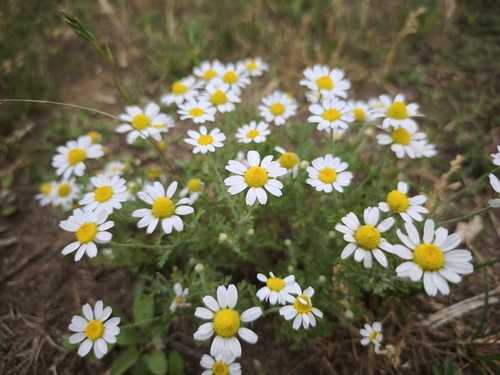
Verbatim
t0“Maize”
e0“The mixture rimsulfuron + adjuvant + dicamba showed to be the most efficient regarding the weeds typical for alluvial soils, except for Elymus repens , numerously occurring in the experiment, which exhibited medium sesitivity, as well as winter forms of Anthemis arvensis”
Claim · model-written summary
Rimsulfuron plus adjuvant plus florasulam plus 2,4-D most efficiently eliminated unwanted plants on that soil stand.
- Treatment
- rimsulfuron + adjuvant + florasulam + 2,4- De0
- Outcome
- undesired plantse0
- Direction
- most efficiente0
Not reportedComparator
Organisms pictured · Representative pictures of the matched species, not figures from the paper.
Verbatim
t0“Maize”
e0“Mixture of rimsulfuron + adjuvant + florasulam + 2,4- D allowed to eliminate undesired plants on that soil stand in the most efficient way”
Claim · model-written summary
Rimsulfuron plus adjuvant plus florasulam plus 2,4-D achieved the highest maize grain yield.
Not reportedComparator
Organisms pictured · Representative pictures of the matched species, not figures from the paper.
Verbatim
t0“Maize”
e0“Mixture of rimsulfuron + adjuvant + florasulam + 2,4- D allowed to eliminate undesired plants on that soil stand in the most efficient way and to achieve the highest grain yield”
The same questions in other papers
adjuvant · yield · Zea mays (maize)Positive and negative results
9 papers in the same direction as this paper · 1 in the opposite direction · 1 reporting no difference from an alternative
- no effect
- no effect
- positive
8 papers more in this group
See all 12 papers →dicamba · weed · Zea mays (maize)Positive and negative results
11 papers in the same direction as this paper · 2 in the opposite direction
- negative
- negative
- positive
10 papers more in this group
See all 14 papers →rimsulfuron · yield · Zea mays (maize)Positive and negative results
9 papers in the same direction as this paper · 4 in the opposite direction
- negative
- no effect
- no effect
10 papers more in this group
See all 14 papers →adjuvant · weed · Zea mays (maize)Positive and negative results
15 papers in the same direction as this paper · 1 in the opposite direction · 1 reporting no difference from an alternative
- positive
- no effect
- no effect
14 papers more in this group
See all 18 papers →2,4-D · yield · Zea mays (maize)Positive and negative results
29 papers in the same direction as this paper · 6 in the opposite direction
- negative
- negative
- negative
32 papers more in this group
See all 36 papers →nicosulfuron · weed · Zea mays (maize)Positive and negative results
35 papers in the same direction as this paper · 2 in the opposite direction
- positive
- no effect
- no effect
34 papers more in this group
See all 38 papers →rimsulfuron · weed · Zea mays (maize)Results agree
4 papers in the same direction as this paper
- positive
- positive
- positive
1 paper more in this group
See all 5 papers →mesotrione · weed · Zea mays (maize)Results agree
26 papers in the same direction as this paper
- positive
- positive
- positive
23 papers more in this group
See all 27 papers →Claims are grouped by organism, treatment and what was measured or targeted. A paper counts as positive when any of its claims in the group is positive.