Abstract
Summary Helminthosporium oryzae toxin induced electrolyte leakage from rice callus tissues and caused their browning and death. A virulent isolate of the pathogen invaded and colonised callus tissues rapidly, while a less virulent and a nonpathogenic isolate colonised calluses only weakly if at all. Addition of the toxin to calluses permitted colonisation of calluses by the nonpathogenic isolate. Four toxin‐resistant calluses were selected and plants regenerated from two of these resistant calluses showed resistance to the pathogen. This resistance was heritable and stability of resistance was observed in the R 1 , R 2 and R 3 generations.
Abstract from the paper’s OpenAlex record, shown for indexing and research. Copyright remains with the authors or the publisher. Read at the source ↗
The text the model read, with the source record’s inline markup (italics, sub- and superscripts) rendered and its character entities decoded; quote offsets refer to the raw text.
Claims 7
Claim · model-written summary
Helminthosporium oryzae toxin induced electrolyte leakage from rice callus tissues.
- Taxon
- rice
 Oryza sativae1
- Organ / stage
- calluse1
- Treatment
- Helminthosporium oryzae toxine0
- Interactor
- Helminthosporium oryzae
 Bipolaris oryzaee0pathogen
- Outcome
- electrolyte leakagee0
- Direction
- inducede0
Not reportedComparator
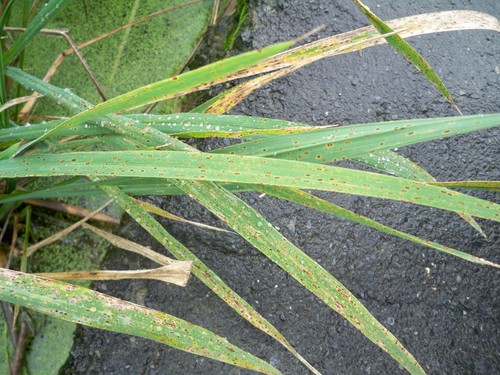
Organisms pictured · Representative pictures of the matched species, not figures from the paper.

Verbatim
e1“rice callus tissues”
e0“Helminthosporium oryzae toxin induced electrolyte leakage”
Claim · model-written summary
Helminthosporium oryzae toxin caused browning and death of rice callus tissues.
- Taxon
- riceOryza sativae1
- Organ / stage
- calluse1
- Treatment
- Helminthosporium oryzae toxine0
- Interactor
- Helminthosporium oryzaeBipolaris oryzaee0pathogen
- Outcome
- browning and deathe0
- Direction
- causede0
Not reportedComparator
Organisms pictured · Representative pictures of the matched species, not figures from the paper.
Verbatim
e1“rice callus tissues”
e0“Helminthosporium oryzae toxin induced electrolyte leakage from rice callus tissues and caused their browning and death”
Claim · model-written summary
A virulent isolate of the pathogen invaded and colonised rice callus tissues rapidly.
- Taxon
- riceOryza sativae1
- Interactor
- virulent isolate of the pathogene0pathogen
- Outcome
- invaded and colonised callus tissues rapidlye0
Organisms pictured · Representative pictures of the matched species, not figures from the paper.
Verbatim
e1“rice callus tissues”
e0“A virulent isolate of the pathogen invaded and colonised callus tissues rapidly”
Claim · model-written summary
A less virulent and a nonpathogenic isolate colonised rice calluses only weakly if at all.
- Taxon
- riceOryza sativae1
- Interactor
- a less virulent and a nonpathogenic isolatee0pathogen
- Outcome
- colonised calluses only weakly if at alle0
Organisms pictured · Representative pictures of the matched species, not figures from the paper.
Verbatim
e1“rice callus tissues”
e0“a less virulent and a nonpathogenic isolate colonised calluses only weakly if at all”
Claim · model-written summary
Addition of the toxin to calluses permitted colonisation of rice calluses by the nonpathogenic isolate.
- Taxon
- riceOryza sativae1
- Treatment
- Addition of the toxine0
- Interactor
- nonpathogenic isolatee0pathogen
- Outcome
- colonisation of callusese0
- Direction
- permittede0
Not reportedComparator
Organisms pictured · Representative pictures of the matched species, not figures from the paper.
Verbatim
e1“rice callus tissues”
e0“Addition of the toxin to calluses permitted colonisation of calluses by the nonpathogenic isolate”
Claim · model-written summary
Plants regenerated from two of four selected toxin-resistant calluses showed resistance to the pathogen.
- Taxon
- riceOryza sativat0
- Material
- resistant callusese0
- Outcome
- resistance to the pathogene0
Organisms pictured · Representative pictures of the matched species, not figures from the paper.
Verbatim
t0“rice plants”
e0“plants regenerated from two of these resistant calluses showed resistance to the pathogen”
Claim · model-written summary
The resistance was heritable and stable in the R1, R2 and R3 generations.
- Taxon
- riceOryza sativat0
- Outcome
- resistance was heritable and stability of resistancee0
Organisms pictured · Representative pictures of the matched species, not figures from the paper.
Verbatim
t0“rice plants”
e0“This resistance was heritable and stability of resistance was observed in the R 1 , R 2 and R 3 generations”
The same questions in other papers
Bipolaris oryzae · physiology: oxidative · Oryza sativa (rice)Results agree
1 paper in the same direction as this paper
- negative
Bipolaris oryzae · disease · Oryza sativa (rice)Results agree
2 papers in the same direction as this paper
- negative
- negative
pathogen product · physiology: oxidative · Oryza sativa (rice)Positive and negative results
1 in the opposite direction
- positive
pathogen product · disease · Oryza sativa (rice)Positive and negative results
7 papers in the same direction as this paper · 15 in the opposite direction
- positive
- positive
- positive
19 papers more in this group
See all 23 papers →Claims are grouped by organism, treatment and what was measured or targeted. A paper counts as positive when any of its claims in the group is positive.