Abstract
Immunochemical cross-reactivity of wound- and auxin-induced 1-aminocyclopropane-1-carboxylate (ACC) synthase was examined with the antibody against wound-induced ACC synthase purified from mesocarp of winter squash (Cucurbita maxima Duch.). The antibody recognized ACC synthase from wounded hypocotyls of winter squash and from wounded pericarp of tomato fruits, but not the enzyme from IAA-treated hypocotyls of winter squash, tomato and mung bean. These results indicate that the primary structure of the wound-induced enzyme is different from that of the auxin-induced enzyme in the same species, and implies that there are two different genes for ACC synthase, one for wound induction and the other for auxin induction.
Abstract from the paper’s OpenAlex record, shown for indexing and research. Copyright remains with the authors or the publisher. Read at the source ↗
The text the model read, with the source record’s inline markup (italics, sub- and superscripts) rendered and its character entities decoded; quote offsets refer to the raw text.
Claims 6
Claim · model-written summary
Antibody against wound-induced ACC synthase recognized the enzyme from wounded winter squash hypocotyls.
- Taxon
- winter squash
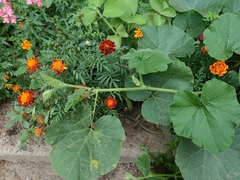 Cucurbita maximae1
- Treatment
- wounded hypocotylse1
- Outcome
- recognized ACC synthasee1
Not reportedComparatorDirection
Organisms pictured · Representative pictures of the matched species, not figures from the paper.

Verbatim
e1“The antibody recognized ACC synthase from wounded hypocotyls of winter squash and from wounded pericarp of tomato fruits, but not the enzyme from IAA-treated hypocotyls of winter squash, tomato and mung bean”
Claim · model-written summary
Antibody against wound-induced ACC synthase recognized the enzyme from wounded tomato pericarp.
- Taxon
- tomato
 Solanum lycopersicume1
- Treatment
- wounded pericarpe1
- Outcome
- recognized ACC synthasee1
Not reportedComparatorDirection
Organisms pictured · Representative pictures of the matched species, not figures from the paper.

Verbatim
e1“The antibody recognized ACC synthase from wounded hypocotyls of winter squash and from wounded pericarp of tomato fruits, but not the enzyme from IAA-treated hypocotyls of winter squash, tomato and mung bean”
Claim · model-written summary
Antibody against wound-induced ACC synthase did not recognize the enzyme from IAA-treated winter squash hypocotyls.
- Taxon
- winter squashCucurbita maximae1
- Treatment
- IAA-treated hypocotylse1
- Outcome
- recognized ACC synthasee1
- Comparator
- wounded hypocotylse1
Not reportedDirection
Organisms pictured · Representative pictures of the matched species, not figures from the paper.
Verbatim
e1“The antibody recognized ACC synthase from wounded hypocotyls of winter squash and from wounded pericarp of tomato fruits, but not the enzyme from IAA-treated hypocotyls of winter squash, tomato and mung bean”
Claim · model-written summary
Antibody against wound-induced ACC synthase did not recognize the enzyme from IAA-treated tomato.
- Taxon
- tomatoSolanum lycopersicume1
- Treatment
- IAA-treatede1
- Outcome
- recognized ACC synthasee1
- Comparator
- wounded pericarpe1
Not reportedDirection
Organisms pictured · Representative pictures of the matched species, not figures from the paper.
Verbatim
e1“The antibody recognized ACC synthase from wounded hypocotyls of winter squash and from wounded pericarp of tomato fruits, but not the enzyme from IAA-treated hypocotyls of winter squash, tomato and mung bean”
Claim · model-written summary
Antibody against wound-induced ACC synthase did not recognize the enzyme from IAA-treated mung bean.
- Taxon
- mung bean
 Vigna radiatae1
- Treatment
- IAA-treatede1
- Outcome
- recognized ACC synthasee1
- Comparator
- wounded pericarpe1
Not reportedDirection
Organisms pictured · Representative pictures of the matched species, not figures from the paper.

Verbatim
e1“The antibody recognized ACC synthase from wounded hypocotyls of winter squash and from wounded pericarp of tomato fruits, but not the enzyme from IAA-treated hypocotyls of winter squash, tomato and mung bean”
Claim · model-written summary
The primary structure of the wound-induced ACC synthase differs from that of the auxin-induced enzyme in the same species.
- Taxon
- winter squashCucurbita maximae1
- Gene
- wound-induced enzymee2
- Outcome
- primary structure of the wound-induced enzymee2
- Qualifier
- different from that of the auxin-induced enzymee2
Organisms pictured · Representative pictures of the matched species, not figures from the paper.
Verbatim
e1“The antibody recognized ACC synthase from wounded hypocotyls of winter squash and from wounded pericarp of tomato fruits, but not the enzyme from IAA-treated hypocotyls of winter squash, tomato and mung bean”
e2“These results indicate that the primary structure of the wound-induced enzyme is different from that of the auxin-induced enzyme in the same species”
The same questions in other papers
indole-3-acetic acid · molecular: metabolites · Solanum lycopersicum (tomato)Positive and negative results
1 paper in the same direction as this paper · 2 reporting no difference from an alternative
- positive
- positive
- negative
indole-3-acetic acid · molecular: metabolites · Vigna radiata (mung bean)Positive and negative results
1 paper in the same direction as this paper · 7 reporting no difference from an alternative
- positive
- positive
- positive
5 papers more in this group
See all 9 papers →Claims are grouped by organism, treatment and what was measured or targeted. A paper counts as positive when any of its claims in the group is positive.