Abstract
A field experiment was conducted in 2005–06 on maize variety PMH-1 with dual inoculation of Azorhizobium and VAM (Glomus fasciculatum) along with application of formononetin. The seeds inoculated with Azorhizobium and VAM and treated with formononetin showed positive interactions for germination, percent mycorrhizal infection, N and P contents, total chlorophyll and other growth parameters as compared to control. Azorhizobium +VAM + formononetin treatment increased nitrogenase activity of treated plant roots. A 22.1 per cent increase in grain yield over control was observed by the dual inoculation and formononetin treatment.
Abstract from the paper’s OpenAlex record, shown for indexing and research. Copyright remains with the authors or the publisher. Read at the source ↗
The text the model read, with the source record’s inline markup (italics, sub- and superscripts) rendered and its character entities decoded; quote offsets refer to the raw text.
Claims 5
Claim · model-written summary
Seeds inoculated with Azorhizobium and VAM and treated with formononetin showed positive interactions for germination and percent mycorrhizal infection compared with control.
- Material
- PMH-1e0
- Treatment
- inoculated with Azorhizobium and VAM and treated with formononetine1
- Interactor
- VAMe1symbiont
- Second interactor
- Azorhizobium
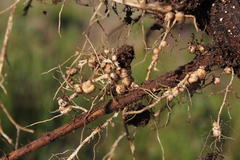 Azorhizobiume1symbiont
- Outcome
- germination, percent mycorrhizal infectione1
- Direction
- positive interactionse1
- Comparator
- controle1
- Setting
- field experimente0
 Zea mays
Organisms pictured · Representative pictures of the matched species, not figures from the paper.

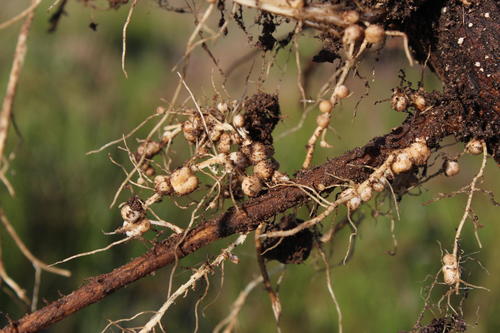
Verbatim
e0“A field experiment was conducted in 2005–06 on maize variety PMH-1 with dual inoculation of Azorhizobium and VAM (Glomus fasciculatum) along with application of formononetin”
e1“The seeds inoculated with Azorhizobium and VAM and treated with formononetin showed positive interactions for germination, percent mycorrhizal infection, N and P contents, total chlorophyll and other growth parameters as compared to control”
Claim · model-written summary
Seeds inoculated with Azorhizobium and VAM and treated with formononetin showed positive interactions for N and P contents and total chlorophyll compared with control.
- Material
- PMH-1e0
- Treatment
- inoculated with Azorhizobium and VAM and treated with formononetine1
- Interactor
- VAMe1symbiont
- Second interactor
- AzorhizobiumAzorhizobiume1symbiont
- Outcome
- N and P contents, total chlorophylle1
- Direction
- positive interactionse1
- Comparator
- controle1
Organisms pictured · Representative pictures of the matched species, not figures from the paper.
Verbatim
e0“A field experiment was conducted in 2005–06 on maize variety PMH-1 with dual inoculation of Azorhizobium and VAM (Glomus fasciculatum) along with application of formononetin”
e1“The seeds inoculated with Azorhizobium and VAM and treated with formononetin showed positive interactions for germination, percent mycorrhizal infection, N and P contents, total chlorophyll and other growth parameters as compared to control”
Claim · model-written summary
Seeds inoculated with Azorhizobium and VAM and treated with formononetin showed positive interactions for other growth parameters compared with control.
- Material
- PMH-1e0
- Treatment
- inoculated with Azorhizobium and VAM and treated with formononetine1
- Interactor
- VAMe1symbiont
- Second interactor
- AzorhizobiumAzorhizobiume1symbiont
- Outcome
- other growth parameterse1
- Direction
- positive interactionse1
- Comparator
- controle1
Organisms pictured · Representative pictures of the matched species, not figures from the paper.
Verbatim
e0“A field experiment was conducted in 2005–06 on maize variety PMH-1 with dual inoculation of Azorhizobium and VAM (Glomus fasciculatum) along with application of formononetin”
e1“The seeds inoculated with Azorhizobium and VAM and treated with formononetin showed positive interactions for germination, percent mycorrhizal infection, N and P contents, total chlorophyll and other growth parameters as compared to control”
Claim · model-written summary
Azorhizobium with VAM and formononetin treatment increased nitrogenase activity of treated maize roots.
- Organ / stage
- rootse2
- Treatment
- Azorhizobium +VAM + formononetin treatmente2
- Interactor
- AzorhizobiumAzorhizobiume2symbiont
- Outcome
- nitrogenase activitye2
- Direction
- increasede2
Not reportedComparator
Organisms pictured · Representative pictures of the matched species, not figures from the paper.
Verbatim
e0“A field experiment was conducted in 2005–06 on maize variety PMH-1 with dual inoculation of Azorhizobium and VAM (Glomus fasciculatum) along with application of formononetin”
e2“Azorhizobium +VAM + formononetin treatment increased nitrogenase activity of treated plant roots”
Claim · model-written summary
Dual inoculation and formononetin treatment increased grain yield by 22.1 per cent over control.
- Treatment
- dual inoculation and formononetin treatmente3
- Outcome
- grain yielde3
- Direction
- increasee3
- Value
- 22.1 per cente3
- Comparator
- controle3
Organisms pictured · Representative pictures of the matched species, not figures from the paper.
Verbatim
e0“A field experiment was conducted in 2005–06 on maize variety PMH-1 with dual inoculation of Azorhizobium and VAM (Glomus fasciculatum) along with application of formononetin”
e3“A 22.1 per cent increase in grain yield over control was observed by the dual inoculation and formononetin treatment”
The same questions in other papers
Azorhizobium · physiology: pigments · Zea mays (maize)Results agree
1 paper in the same direction as this paper
- positive
Azorhizobium · physiology: enzyme activity · Zea mays (maize)Results agree
1 paper in the same direction as this paper
- positive
formononetin · yield · Zea mays (maize)Results agree
1 paper in the same direction as this paper
- positive
mycorrhiza · physiology: pigments · Zea mays (maize)Results differ
22 papers in the same direction as this paper · 2 in the opposite direction
- no effect
- no effect
- positive
21 papers more in this group
See all 25 papers →inoculation · physiology: pigments · Zea mays (maize)Results differ
84 papers in the same direction as this paper · 9 in the opposite direction · 1 reporting no difference from an alternative
- negative
- no effect
- no effect
91 papers more in this group
See all 95 papers →mycorrhiza · growth · Zea mays (maize)Positive and negative results
168 papers in the same direction as this paper · 17 in the opposite direction · 2 reporting no difference from an alternative
- negative
- no effect
- no effect
184 papers more in this group
See all 188 papers →inoculation · yield · Zea mays (maize)Positive and negative results
478 papers in the same direction as this paper · 52 in the opposite direction · 7 reporting no difference from an alternative
- no effect
- no effect
- negative
534 papers more in this group
See all 538 papers →inoculation · growth · Zea mays (maize)Positive and negative results
634 papers in the same direction as this paper · 61 in the opposite direction · 3 reporting no difference from an alternative
- negative
- no effect
- no effect
695 papers more in this group
See all 699 papers →8 of 11 groups shown: named compounds and organisms first, then groups whose results differ (checked claim by claim), then those with positive and negative results, then the smaller groups.
Claims are grouped by organism, treatment and what was measured or targeted. A paper counts as positive when any of its claims in the group is positive.