Abstract
The experiment was carried out to assess their possible use as bio-agents for several antagonistic fungi on growth of two cumin fungal pathogens under in vitro and field conditions. Under in vitro conditions maximum inhibition (82.86%) of radial growth of Fusarium oxysporum f. sp. cumini was observed with the treatment of Trichoderma harzianum strain I, whereas maximum inhibition (85.45%) of the mycelial growth of Alternaria burnsii was observed in the presence of Trichoderma harzianum strain II. The antagonists who showed maximum inhibition of the pathogen in laboratory conditions were applied in field conditions as soil treatment/seed treatment or as foliar spray. The incidence of wilt disease was found to be lowest (PDI 27.40%) when soil was treated with Trichoderma harzianium strain I at the rate of 24g / 6m2 (weight of fungus with sorghum seeds). Minimum blight disease incidence was observed when T. harzianum strain II was applied to the soil at the rate of 24g / 6m2 (36.15%) or when 10% spore suspension of T. harzianum strain II was applied as seed treatment at the time of sowing and as spray at the time of flowering (PDI 35.10%). Thus treatments of Trichoderma harzianum strain I for wilt and Trichoderma harzianum strain II for blight diseases of cumin under both the conditions @ 24g / 6m2 or 40kg / ha seems promising for sustainable management of crop diseases.
Abstract from the paper’s OpenAlex record; open copy licensed cc-by-sa. Read at the source ↗
The text the model read, with the source record’s inline markup (italics, sub- and superscripts) rendered and its character entities decoded; quote offsets refer to the raw text.
Claims 7
Claim · model-written summary
Trichoderma harzianum strain I maximally inhibited Fusarium oxysporum f. sp. cumini growth in vitro by 82.86%.
- Taxon
- Cumin
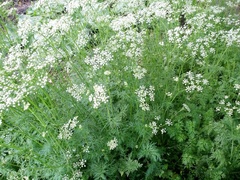 Cuminum cyminumt0
- Treatment
- Trichoderma harzianum strain Ie0
- Interactor
- Fusarium oxysporum f. sp. cumini
 Fusarium oxysporum f. sp. cuminie0pathogen
- Second interactor
- Trichoderma harzianum strain I
 Trichoderma harzianume0biocontrol_agent
- Outcome
- radial growth of Fusarium oxysporum f. sp. cuminie0
- Direction
- maximum inhibitione0
- Value
- 82.86%e0
Not reportedComparator
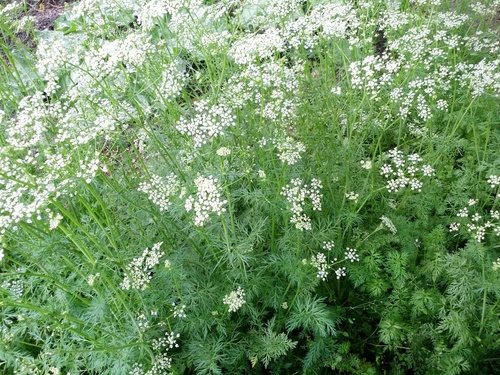
Organisms pictured · Representative pictures of the matched species, not figures from the paper.


Verbatim
e0“Under in vitro conditions maximum inhibition (82.86%) of radial growth of Fusarium oxysporum f. sp. cumini was observed with the treatment of Trichoderma harzianum strain I, whereas maximum inhibition (85.45%) of the mycelial growth of Alternaria burnsii was observed in the presence of Trichoderma harzianum strain II.”
t0“Cumin”
Claim · model-written summary
Trichoderma harzianum strain II maximally inhibited Alternaria burnsii growth in vitro by 85.45%.
- Taxon
- CuminCuminum cyminumt0
- Treatment
- Trichoderma harzianum strain IIe0
- Interactor
- Alternaria burnsiiAlternaria burnsiie0pathogen
- Second interactor
- Trichoderma harzianum strain IITrichoderma harzianume0biocontrol_agent
- Outcome
- mycelial growth of Alternaria burnsiie0
- Direction
- maximum inhibitione0
- Value
- 85.45%e0
Not reportedComparator
Organisms pictured · Representative pictures of the matched species, not figures from the paper.
Verbatim
e0“Under in vitro conditions maximum inhibition (82.86%) of radial growth of Fusarium oxysporum f. sp. cumini was observed with the treatment of Trichoderma harzianum strain I, whereas maximum inhibition (85.45%) of the mycelial growth of Alternaria burnsii was observed in the presence of Trichoderma harzianum strain II.”
t0“Cumin”
Claim · model-written summary
Soil treatment with Trichoderma harzianium strain I produced the lowest wilt incidence, PDI 27.40%.
- Taxon
- CuminCuminum cyminumt0
- Treatment
- Trichoderma harzianium strain I at the rate of 24g / 6m2e0
- Interactor
- Trichoderma harzianium strain Ie0biocontrol_agent
- Outcome
- incidence of wilt diseasee0
- Direction
- loweste0
- Value
- 27.40%e0
Not reportedComparator
Organisms pictured · Representative pictures of the matched species, not figures from the paper.
Verbatim
e0“The incidence of wilt disease was found to be lowest (PDI 27.40%) when soil was treated with Trichoderma harzianium strain I at the rate of 24g / 6m2 (weight of fungus with sorghum seeds).”
t0“Cumin”
Claim · model-written summary
Blight incidence was minimal under T. harzianum strain II was applied to the soil at the rate of 24g / 6m2, at 36.15%.
- Taxon
- CuminCuminum cyminumt0
- Treatment
- T. harzianum strain II was applied to the soil at the rate of 24g / 6m2e0
- Interactor
- T. harzianum strain IITrichoderma harzianume0biocontrol_agent
- Outcome
- blight disease incidencee0
- Direction
- Minimume0
- Value
- 36.15%e0
Not reportedComparator
Organisms pictured · Representative pictures of the matched species, not figures from the paper.
Verbatim
e0“Minimum blight disease incidence was observed when T. harzianum strain II was applied to the soil at the rate of 24g / 6m2 (36.15%) or when 10% spore suspension of T. harzianum strain II was applied as seed treatment at the time of sowing and as spray at the time of flowering (PDI 35.10%).”
t0“Cumin”
Claim · model-written summary
Blight incidence was minimal under 10% spore suspension of T. harzianum strain II was applied as seed treatment at the time of sowing and as spray at the time of flowering, at 35.10%.
- Taxon
- CuminCuminum cyminumt0
- Treatment
- 10% spore suspension of T. harzianum strain II was applied as seed treatment at the time of sowing and as spray at the time of floweringe0
- Interactor
- T. harzianum strain IITrichoderma harzianume0biocontrol_agent
- Outcome
- blight disease incidencee0
- Direction
- Minimume0
- Value
- 35.10%e0
Not reportedComparator
Organisms pictured · Representative pictures of the matched species, not figures from the paper.
Verbatim
e0“Minimum blight disease incidence was observed when T. harzianum strain II was applied to the soil at the rate of 24g / 6m2 (36.15%) or when 10% spore suspension of T. harzianum strain II was applied as seed treatment at the time of sowing and as spray at the time of flowering (PDI 35.10%).”
t0“Cumin”
Claim · model-written summary
Trichoderma harzianum strain I seems promising for sustainable management of cumin wilt.
- Taxon
- cuminCuminum cyminume0
- Treatment
- Trichoderma harzianum strain Ie0
- Interactor
- Trichoderma harzianum strain ITrichoderma harzianume0biocontrol_agent
- Outcome
- sustainable management of crop diseasese0
- Qualifier
- wilte0
Organisms pictured · Representative pictures of the matched species, not figures from the paper.
Verbatim
e0“Thus treatments of Trichoderma harzianum strain I for wilt and Trichoderma harzianum strain II for blight diseases of cumin under both the conditions @ 24g / 6m2 or 40kg / ha seems promising for sustainable management of crop diseases.”
Claim · model-written summary
Trichoderma harzianum strain II seems promising for sustainable management of cumin blight.
- Taxon
- cuminCuminum cyminume0
- Treatment
- Trichoderma harzianum strain IIe0
- Interactor
- Trichoderma harzianum strain IITrichoderma harzianume0biocontrol_agent
- Outcome
- sustainable management of crop diseasese0
- Qualifier
- blighte0
Organisms pictured · Representative pictures of the matched species, not figures from the paper.
Verbatim
e0“Thus treatments of Trichoderma harzianum strain I for wilt and Trichoderma harzianum strain II for blight diseases of cumin under both the conditions @ 24g / 6m2 or 40kg / ha seems promising for sustainable management of crop diseases.”
The same questions in other papers
Trichoderma harzianum · Fusarium oxysporum f. sp. cumini · Cuminum cyminum (cumin)Results agree
1 paper in the same direction as this paper
- positive
Trichoderma harzianum · disease · Cuminum cyminum (cumin)Results agree
1 paper in the same direction as this paper
- positive
Trichoderma harzianum · Alternaria burnsii · Cuminum cyminum (cumin)Results agree
2 papers in the same direction as this paper
- positive
- positive
sowing time · disease · Cuminum cyminum (cumin)Results agree
1 paper in the same direction as this paper
- positive
seed treatment · disease · Cuminum cyminum (cumin)Results agree
1 paper in the same direction as this paper
- positive
application · disease · Cuminum cyminum (cumin)Results agree
2 papers in the same direction as this paper
- positive
- positive
Claims are grouped by organism, treatment and what was measured or targeted. A paper counts as positive when any of its claims in the group is positive.