Abstract
This experiment was carried out to clarify the effect of herbicide chlormethoxynil 7G, CNP 9G and butachlor 3.5/pyrazolate 6G on weed control and seedling growth in rice seedbed. Different quantities of the herbicides were applied as soil incorporation or surface broadcasting. At earlier sowing annual grasses such as Echinochlva spp. and Alopecurus spp. were dominated, but Cyperus spp. were dominated at later sowing. Weed suppression by herbicides was greater in soil incorporation than in broadcasting and chlormethoxynil 7G and CNP 9G application (30kg/ha) showed about 70% weed control, while butachlor 3.5/pyrazolate 6G (10-20kg/ha) showed 90 to 100% weed control. At lower rate of butachlor 3.5/pyrazolate 6G (10kg/ha) emergence ratio, healthy seedling ratio and relative growth rate of rice were higher, and phytotoxicity was lower than in the others.
Abstract from the paper’s OpenAlex record, shown for indexing and research. Copyright remains with the authors or the publisher. Read at the source ↗
The text the model read, with the source record’s inline markup (italics, sub- and superscripts) rendered and its character entities decoded; quote offsets refer to the raw text.
Claims 7
Claim · model-written summary
Chlormethoxynil 7G and CNP 9G application (30kg/ha) showed about 70% weed control in rice seedbed.
- Taxon
- rice
 Oryza sativat0
- Treatment
- chlormethoxynil 7G and CNP 9G application (30kg/ha)e1
- Outcome
- weed controle1
- Direction
- increaseinferrede1
- Value
- about 70%e1
- Setting
- rice seedbede0
Not reportedComparator
Organisms pictured · Representative pictures of the matched species, not figures from the paper.

Verbatim
t0“Rice Nursery”
e0“on weed control and seedling growth in rice seedbed”
e1“chlormethoxynil 7G and CNP 9G application (30kg/ha) showed about 70% weed control”
Claim · model-written summary
Weed suppression by herbicides was greater in soil incorporation than in surface broadcasting.
- Taxon
- riceOryza sativat0
- Treatment
- soil incorporatione2
- Outcome
- Weed suppressione2
- Direction
- greatere2
- Comparator
- broadcastinge2
Organisms pictured · Representative pictures of the matched species, not figures from the paper.
Verbatim
t0“Rice Nursery”
e2“Weed suppression by herbicides was greater in soil incorporation than in broadcasting”
Claim · model-written summary
Butachlor 3.5/pyrazolate 6G (10-20kg/ha) showed 90 to 100% weed control in rice seedbed.
- Taxon
- riceOryza sativat0
- Treatment
- butachlor 3.5/pyrazolate 6G (10-20kg/ha)e3
- Outcome
- weed controle3
- Direction
- increaseinferrede3
- Value
- 90 to 100%e3
Not reportedComparator
Organisms pictured · Representative pictures of the matched species, not figures from the paper.
Verbatim
t0“Rice Nursery”
e3“butachlor 3.5/pyrazolate 6G (10-20kg/ha) showed 90 to 100% weed control”
Claim · model-written summary
At the lower rate of butachlor 3.5/pyrazolate 6G (10kg/ha), emergence ratio, healthy seedling ratio and relative growth rate of rice were higher than in the others.
- Taxon
- riceOryza sativat0
- Treatment
- lower rate of butachlor 3.5/pyrazolate 6G (10kg/ha)e4
- Outcome
- emergence ratio, healthy seedling ratio and relative growth rate of ricee4
- Direction
- highere4
- Comparator
- the otherse5
Organisms pictured · Representative pictures of the matched species, not figures from the paper.
Verbatim
t0“Rice Nursery”
e4“At lower rate of butachlor 3.5/pyrazolate 6G (10kg/ha) emergence ratio, healthy seedling ratio and relative growth rate of rice were higher”
e5“phytotoxicity was lower than in the others”
Claim · model-written summary
At the lower rate of butachlor 3.5/pyrazolate 6G (10kg/ha), phytotoxicity to rice was lower than in the others.
- Taxon
- riceOryza sativat0
- Treatment
- lower rate of butachlor 3.5/pyrazolate 6G (10kg/ha)e4
- Outcome
- phytotoxicitye5
- Direction
- lowere5
- Comparator
- the otherse5
Organisms pictured · Representative pictures of the matched species, not figures from the paper.
Verbatim
t0“Rice Nursery”
e4“At lower rate of butachlor 3.5/pyrazolate 6G (10kg/ha) emergence ratio, healthy seedling ratio and relative growth rate of rice were higher”
e5“phytotoxicity was lower than in the others”
Claim · model-written summary
At earlier sowing, annual grasses such as Echinochlva spp. and Alopecurus spp. were dominant in the rice seedbed.
- Taxon
- riceOryza sativat0
- Interactor
- Echinochlva spp.e6weed
- Second interactor
- Alopecurus spp.
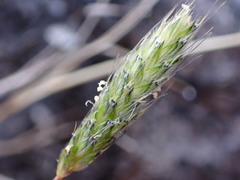 Alopecuruse6weed
- Outcome
- annual grassese6
- Qualifier
- At earlier sowinge6
Organisms pictured · Representative pictures of the matched species, not figures from the paper.
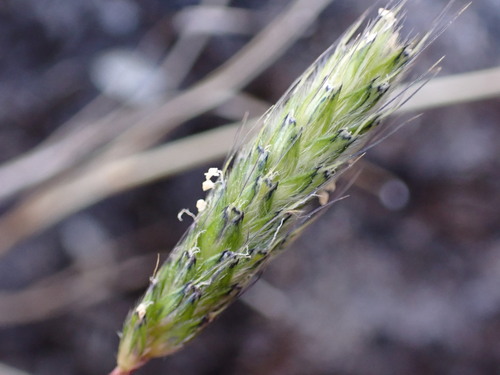
Verbatim
t0“Rice Nursery”
e6“At earlier sowing annual grasses such as Echinochlva spp. and Alopecurus spp. were dominated”
Claim · model-written summary
At later sowing, Cyperus spp. were dominant in the rice seedbed.
- Taxon
- riceOryza sativat0
- Outcome
- were dominatede7
- Qualifier
- at later sowinge7
 Cyperus
Organisms pictured · Representative pictures of the matched species, not figures from the paper.

Verbatim
t0“Rice Nursery”
e7“but Cyperus spp. were dominated at later sowing”
The same questions in other papers
butachlor · weed · Oryza sativa (rice)Results differ
89 papers in the same direction as this paper · 4 in the opposite direction · 3 reporting no difference from an alternative
- negative
- no effect
- negative
93 papers more in this group
See all 97 papers →pyrazolynate · crop injury · Oryza sativa (rice)Positive and negative results
1 in the opposite direction
- negative
butachlor · crop injury · Oryza sativa (rice)Positive and negative results
4 papers in the same direction as this paper · 1 in the opposite direction · 1 reporting no difference from an alternative
- negative
- no effect
- positive
3 papers more in this group
See all 7 papers →butachlor · growth · Oryza sativa (rice)Positive and negative results
4 papers in the same direction as this paper · 6 in the opposite direction
- negative
- negative
- negative
7 papers more in this group
See all 11 papers →pyrazolynate · growth · Oryza sativa (rice)Results agree
2 papers in the same direction as this paper
- positive
- positive
pyrazolynate · weed · Oryza sativa (rice)Results agree
3 papers in the same direction as this paper
- positive
- positive
- positive
Claims are grouped by organism, treatment and what was measured or targeted. A paper counts as positive when any of its claims in the group is positive.