Abstract
Capsicum pepper is a rich source of phytochemical compounds such as capsaicinoids, phenols, flavonoids, and so forth. Due to their antimicrobial and antioxidant potential all of these compounds have been assessed and used for both human and plant health benefits. Herein, three fresh varieties of Capsicum annuum (Cacho de Cabra, Bell pepper, and Hungarian Wax varieties) and one fresh and ripe variety of C. baccatum (Cristal) were evaluated. Capsaicin, dihydrocapsaicin, nordihydrocapsaicin and the phenolic content of Capsicum spp. extracts were characterised. The antifungal potential of capsaicinoids and antioxidant activities, and the ecotoxicity of each Capsicum spp. extract, using the model Galleria mellonella , were also evaluated. Phytochemical analyses showed that the Cristal and Hungarian Wax varieties presented the highest amount of capsaicin, dihydrocapsaicin, and nordihydrocapsaicin; while Bell Pepper had the highest phenol content and antioxidant activity. Capsaicinoids’ standards and Capsicum spp. extracts showed fungistatic activity against the fungal strains assessed. For the fungal strains assessed, the fungistatic activities of capsaicinoids’ standards were higher than those observed in Capsicum spp. extracts. The Hungarian Wax extracts inhibited slightly the growth of Aspergillus niger MUM05.11 and Fusarium oxysporum MUM16.143. Similarly, A. niger , F. oxysporum , Rhizopus arrhizus MUM16.05 and Alternaria sp. UFRO17.178 had their growth retarded by the use of Cacho de Cabra and Cristal extracts. Noticeable changes were observed in the fungal strains’ morphologies, such as the presence of fragile fungal structures, pigmentation loss, variation in the reproductive structures size and the conidia number. Capsicum extracts weaken the growth of fungi, indicating their fungistatic potential. Considering the fungistatic potential and non-ecotoxicity of these extracts, it is possible to suggest their use as a tool for pest management in the agri-food sector, controlling the growth and reproduction of fungi without posing a risk to non-target biodiversity.
Abstract from the paper’s OpenAlex record; open copy licensed cc-by. Read at the source ↗
The text the model read, with the source record’s inline markup (italics, sub- and superscripts) rendered and its character entities decoded; quote offsets refer to the raw text.
Claims 12
Claim · model-written summary
Cristal and Hungarian Wax Capsicum varieties had the highest amounts of capsaicin, dihydrocapsaicin and nordihydrocapsaicin.
- Material
- Cristal and Hungarian Wax varietiese1
- Outcome
- amount of capsaicin, dihydrocapsaicin, and nordihydrocapsaicine1
- Direction
- higheste1
 Capsicum
Organisms pictured · Representative pictures of the matched species, not figures from the paper.

Verbatim
t0“Capsicum pepper aqueous extracts”
e1“Cristal and Hungarian Wax varieties presented the highest amount of capsaicin, dihydrocapsaicin, and nordihydrocapsaicin”
Claim · model-written summary
Bell Pepper had the highest phenol content and antioxidant activity among the Capsicum varieties.
Organisms pictured · Representative pictures of the matched species, not figures from the paper.
Verbatim
t0“Capsicum pepper aqueous extracts”
e2“while Bell Pepper had the highest phenol content and antioxidant activity”
Claim · model-written summary
Capsicum spp. extracts showed fungistatic activity against the fungal strains assessed.
Not reportedComparatorDirection
Organisms pictured · Representative pictures of the matched species, not figures from the paper.
Verbatim
t0“Capsicum pepper aqueous extracts”
e3“Capsicum spp. extracts showed fungistatic activity against the fungal strains assessed”
Claim · model-written summary
Hungarian Wax extracts slightly inhibited the growth of Aspergillus niger MUM05.11.
- Treatment
- Hungarian Wax extractse4
- Interactor
- Aspergillus niger MUM05.11
 Aspergillus nigere4other
- Outcome
- growthe4
- Direction
- inhibitede4
- Qualifier
- slightlye4
Not reportedComparator
Organisms pictured · Representative pictures of the matched species, not figures from the paper.

Verbatim
t0“Capsicum pepper aqueous extracts”
e4“The Hungarian Wax extracts inhibited slightly the growth of Aspergillus niger MUM05.11 and Fusarium oxysporum MUM16.143”
Claim · model-written summary
Hungarian Wax extracts slightly inhibited the growth of Fusarium oxysporum MUM16.143.
- Treatment
- Hungarian Wax extractse4
- Interactor
- Fusarium oxysporum MUM16.143
 Fusarium oxysporume4other
- Outcome
- growthe4
- Direction
- inhibitede4
- Qualifier
- slightlye4
Not reportedComparator
Organisms pictured · Representative pictures of the matched species, not figures from the paper.

Verbatim
t0“Capsicum pepper aqueous extracts”
e4“The Hungarian Wax extracts inhibited slightly the growth of Aspergillus niger MUM05.11 and Fusarium oxysporum MUM16.143”
Claim · model-written summary
Cacho de Cabra and Cristal extracts retarded the growth of A. niger.
- Treatment
- Cacho de Cabra and Cristal extractse5
- Interactor
- A. nigerAspergillus nigere5other
- Outcome
- growthe5
- Direction
- retardede5
Not reportedComparator
Organisms pictured · Representative pictures of the matched species, not figures from the paper.
Verbatim
t0“Capsicum pepper aqueous extracts”
e5“Similarly, A. niger , F. oxysporum , Rhizopus arrhizus MUM16.05 and Alternaria sp. UFRO17.178 had their growth retarded by the use of Cacho de Cabra and Cristal extracts”
Claim · model-written summary
Cacho de Cabra and Cristal extracts retarded the growth of F. oxysporum.
- Treatment
- Cacho de Cabra and Cristal extractse5
- Interactor
- F. oxysporumFusarium oxysporume5other
- Outcome
- growthe5
- Direction
- retardede5
Not reportedComparator
Organisms pictured · Representative pictures of the matched species, not figures from the paper.
Verbatim
t0“Capsicum pepper aqueous extracts”
e5“Similarly, A. niger , F. oxysporum , Rhizopus arrhizus MUM16.05 and Alternaria sp. UFRO17.178 had their growth retarded by the use of Cacho de Cabra and Cristal extracts”
Claim · model-written summary
Cacho de Cabra and Cristal extracts retarded the growth of Rhizopus arrhizus MUM16.05.
- Treatment
- Cacho de Cabra and Cristal extractse5
- Interactor
- Rhizopus arrhizus MUM16.05
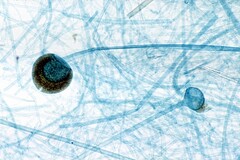 Rhizopus arrhizuse5other
- Outcome
- growthe5
- Direction
- retardede5
Not reportedComparator
Organisms pictured · Representative pictures of the matched species, not figures from the paper.

Verbatim
t0“Capsicum pepper aqueous extracts”
e5“Similarly, A. niger , F. oxysporum , Rhizopus arrhizus MUM16.05 and Alternaria sp. UFRO17.178 had their growth retarded by the use of Cacho de Cabra and Cristal extracts”
Claim · model-written summary
Cacho de Cabra and Cristal extracts retarded the growth of Alternaria sp. UFRO17.178.
- Treatment
- Cacho de Cabra and Cristal extractse5
- Interactor
- Alternaria sp. UFRO17.178e5other
- Outcome
- growthe5
- Direction
- retardede5
Not reportedComparator
Organisms pictured · Representative pictures of the matched species, not figures from the paper.
Verbatim
t0“Capsicum pepper aqueous extracts”
e5“Similarly, A. niger , F. oxysporum , Rhizopus arrhizus MUM16.05 and Alternaria sp. UFRO17.178 had their growth retarded by the use of Cacho de Cabra and Cristal extracts”
Claim · model-written summary
Extract treatment changed the morphology of the fungal strains, with fragile fungal structures, pigmentation loss, and altered reproductive structure size and conidia number.
- Interactor
- fungal strainse0other
- Outcome
- fragile fungal structurese6
- Qualifier
- pigmentation loss, variation in the reproductive structures size and the conidia numbere6
Organisms pictured · Representative pictures of the matched species, not figures from the paper.
Verbatim
t0“Capsicum pepper aqueous extracts”
e0“Noticeable changes were observed in the fungal strains’ morphologies”
e6“such as the presence of fragile fungal structures, pigmentation loss, variation in the reproductive structures size and the conidia number”
Claim · model-written summary
Capsaicinoids standards had higher fungistatic activities than Capsicum spp. extracts against the fungal strains assessed.
- Treatment
- capsaicinoidse7
- Outcome
- fungistatic activitiese7
- Direction
- highere7
- Comparator
- Capsicum spp. extractse7
Organisms pictured · Representative pictures of the matched species, not figures from the paper.
Verbatim
t0“Capsicum pepper aqueous extracts”
e7“For the fungal strains assessed, the fungistatic activities of capsaicinoids’ standards were higher than those observed in Capsicum spp. extracts”
Claim · model-written summary
The authors suggest that the extracts can be used as a tool for pest management in the agri-food sector, given their fungistatic potential and non-ecotoxicity.
- Outcome
- their use as a tool for pest management in the agri-food sectore0
Organisms pictured · Representative pictures of the matched species, not figures from the paper.
Verbatim
t0“Capsicum pepper aqueous extracts”
e0“Considering the fungistatic potential and non-ecotoxicity of these extracts, it is possible to suggest their use as a tool for pest management in the agri-food sector”
The same questions in other papers
botanical · growth · Capsicum (peppers)Positive and negative results
22 papers in the same direction as this paper · 7 in the opposite direction
- negative
- negative
- negative
26 papers more in this group
See all 30 papers →botanical · Aspergillus niger · Capsicum (peppers)Results agree
1 paper in the same direction as this paper
- positive
botanical · Fusarium oxysporum · Capsicum (peppers)Results agree
2 papers in the same direction as this paper
- positive
- positive
Claims are grouped by organism, treatment and what was measured or targeted. A paper counts as positive when any of its claims in the group is positive.