Abstract
Field application of three entomopathogenic fungi, Beauveria bassiana, Metarhizium anisopliae and Verticillium lacanii (Lacanicillium lecanii), neem oil alone and in combination with the entomopathogen, release of the predator (Coccinella septempunctata), allyl isothiocyanate, sulphur extract of karanj seed (Pongamia pinnata L.), and a standard insecticide check against aphids showed that all entomopathogens worked well in controlling aphids in cumin crop. However, the application of V. lecanii proved to be the most effective, and after the third application, the aphid population was reduced to 0.9 aphids/umbel with a higher seed yield (501q/ha.). Among all biorational products, neem oil provides maximum protection and yield (0.6 aphids/umbel, and yield of 5.34 q/ha). The application of allyl isothiocyanate and karanj extract of sulphur compound also reduces the aphid population significantly and gives a higher yield.
Abstract from the paper’s OpenAlex record, shown for indexing and research. Copyright remains with the authors or the publisher. Read at the source ↗
The text the model read, with the source record’s inline markup (italics, sub- and superscripts) rendered and its character entities decoded; quote offsets refer to the raw text.
Claims 7
Claim · model-written summary
All three entomopathogenic fungi controlled aphids in cumin.
- Taxon
- cumin
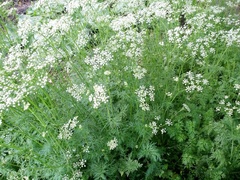 Cuminum cyminume0
- Treatment
- entomopathogense0
- Interactor
- aphidsAphidomorphae0pest
- Second interactor
- Beauveria bassiana, Metarhizium anisopliae and Verticillium lacanii (Lacanicillium lecanii)e1biocontrol_agent
- Outcome
- controlling aphidse0
Not reportedComparatorDirection
Organisms pictured · Representative pictures of the matched species, not figures from the paper.
Verbatim
e0“all entomopathogens worked well in controlling aphids in cumin crop”
e1“three entomopathogenic fungi, Beauveria bassiana, Metarhizium anisopliae and Verticillium lacanii (Lacanicillium lecanii)”
Claim · model-written summary
After three applications, V. lecanii reduced aphid density to 0.9 aphids per umbel.
- Taxon
- cuminCuminum cyminume1
- Treatment
- application of V. lecaniie0
- Interactor
- aphide0pest
- Second interactor
- V. lecanii
 Akanthomyces lecaniie0biocontrol_agent
- Outcome
- aphid populatione0
- Direction
- reducede0
- Value
- 0.9 aphids/umbele0
Not reportedComparator
Organisms pictured · Representative pictures of the matched species, not figures from the paper.
Verbatim
e0“application of V. lecanii proved to be the most effective, and after the third application, the aphid population was reduced to 0.9 aphids/umbel”
e1“cumin crop”
Claim · model-written summary
V. lecanii treatment yielded 501q/ha of cumin seed.
- Taxon
- cuminCuminum cyminume2
- Treatment
- application of V. lecaniie1
- Interactor
- V. lecaniiAkanthomyces lecaniie1biocontrol_agent
- Outcome
- seed yielde0
- Direction
- highere0
- Value
- 501q/ha.e0
Not reportedComparator
Organisms pictured · Representative pictures of the matched species, not figures from the paper.
Verbatim
e0“with a higher seed yield (501q/ha.)”
e1“application of V. lecanii”
e2“cumin crop”
Claim · model-written summary
Neem oil gave maximum protection with 0.6 aphids per umbel.
- Taxon
- cuminCuminum cyminume1
- Treatment
- neem oile0
- Interactor
- aphidsAphidomorphae0pest
- Outcome
- protectione0
- Direction
- maximume0
- Value
- 0.6 aphids/umbele0
Not reportedComparator
Organisms pictured · Representative pictures of the matched species, not figures from the paper.
Verbatim
e0“neem oil provides maximum protection and yield (0.6 aphids/umbel, and yield of 5.34 q/ha)”
e1“cumin crop”
Claim · model-written summary
Neem oil gave maximum cumin yield of 5.34 q/ha.
Not reportedComparator
Organisms pictured · Representative pictures of the matched species, not figures from the paper.
Verbatim
e0“neem oil provides maximum protection and yield (0.6 aphids/umbel, and yield of 5.34 q/ha)”
e1“cumin crop”
Claim · model-written summary
Allyl isothiocyanate significantly reduced aphid populations.
- Taxon
- cuminCuminum cyminume1
- Treatment
- allyl isothiocyanatee0
- Interactor
- aphide0pest
- Outcome
- aphid populatione0
- Direction
- reducese0
Not reportedComparator
Organisms pictured · Representative pictures of the matched species, not figures from the paper.
Verbatim
e0“application of allyl isothiocyanate and karanj extract of sulphur compound also reduces the aphid population significantly”
e1“cumin crop”
Claim · model-written summary
Karanj extract significantly reduced aphid populations.
- Taxon
- cuminCuminum cyminume1
- Treatment
- karanj extract of sulphur compounde0
- Interactor
- aphide0pest
- Outcome
- aphid populatione0
- Direction
- reducese0
Not reportedComparator
Organisms pictured · Representative pictures of the matched species, not figures from the paper.
Verbatim
e0“application of allyl isothiocyanate and karanj extract of sulphur compound also reduces the aphid population significantly”
e1“cumin crop”
The same questions in other papers
Akanthomyces lecanii · yield · Cuminum cyminum (cumin)Results agree
1 paper in the same direction as this paper
- positive
botanical · pest · Cuminum cyminum (cumin)Results agree
1 paper in the same direction as this paper
- positive
botanical · yield · Cuminum cyminum (cumin)Results agree
6 papers in the same direction as this paper
- positive
- positive
- positive
3 papers more in this group
See all 7 papers →Claims are grouped by organism, treatment and what was measured or targeted. A paper counts as positive when any of its claims in the group is positive.