Abstract
Field experiments were conducted for 2 years to determine the effectiveness of combined use of two biocontrol agents, Bacillus firmus and Aspergillus versicolor for control of Macrophomina phaseolina induced charcoal rot of cowpea and Fusarium oxysporum f. sp. cumini induced wilt of cumin. The lowest level of plant mortality (3‒4%) due to charcoal rot of cowpea was recorded when bacterium coated seeds were sown in radish compost amended soil compared to the non-amended soil (13.8‒20.5%), but this was not significantly better than some other treatments. Cowpea roots from B. firmus coated seeds had better nodulation than any of the individual A. versicolor treatments. Although B. firmus coated seeds + A. versicolor + farmyard manure resulted in maximum nodulation this was not significantly different to B. firmus seed coating. Root colonization by the combined biocontrol agent treatments was better than the individual biocontrol agent treatments. Combining A. versicolor with farmyard manure supported the maximum populations of total fungi and actinomycetes. In both winter seasons, the lowest incidence of wilt (1.0‒5.2%) on cumin was recorded when A. versicolor was amended with neem compost compared to the non-amended soil (5.7‒10.5%). Maximum colonization of A. versicolor on roots was observed in B. firmus + A. versicolor + farmyard manure amended plots. During both years, the treatment combination of A. versicolor in neem compost amended plots resulted in maximum populations of fungi, bacteria and A. versicolor in the soil, which was greater than in the non-amended soil. Significant increases in disease control were not recorded after single or repeated delivery of A. versicolor. These results suggest that combining B. firmus as seed coatings with A. versicolor as soil applications gives improved control of M. phaseolina and Fusarium induced diseases on legume and seed spice crops in arid soils.
Abstract from the paper’s OpenAlex record; open copy licensed cc-by-sa. Read at the source ↗
The text the model read, with the source record’s inline markup (italics, sub- and superscripts) rendered and its character entities decoded; quote offsets refer to the raw text.
Claims 10
Claim · model-written summary
Bacterium coated cowpea seeds in radish compost had 3‒4% mortality versus 13.8‒20.5% in non-amended soil; the advantage over some other treatments was not significant.
- Taxon
- cowpea
 Vigna unguiculatae0
- Treatment
- bacterium coated seeds were sown in radish compost amended soile0
- Outcome
- plant mortalitye0
- Direction
- loweste0
- Value
- 3‒4%e0
- Qualifier
- 13.8‒20.5%e0
- Comparator
- non-amended soile0
Organisms pictured · Representative pictures of the matched species, not figures from the paper.

Verbatim
e0“The lowest level of plant mortality (3‒4%) due to charcoal rot of cowpea was recorded when bacterium coated seeds were sown in radish compost amended soil compared to the non-amended soil (13.8‒20.5%), but this was not significantly better than some other treatments”
Claim · model-written summary
Cowpea roots from B. firmus coated seeds had better nodulation than individual A. versicolor treatments.
- Taxon
- CowpeaVigna unguiculatae0
- Treatment
- B. firmus coated seedse0
- Interactor
- B. firmus
 Cytobacillus firmuse0symbiont
- Outcome
- nodulatione0
- Direction
- bettere0
- Comparator
- individual A. versicolor treatmentse0
Organisms pictured · Representative pictures of the matched species, not figures from the paper.

Verbatim
e0“Cowpea roots from B. firmus coated seeds had better nodulation than any of the individual A. versicolor treatments”
Claim · model-written summary
The B. firmus, A. versicolor and manure combination gave maximum cowpea nodulation, without a significant difference from B. firmus coating.
- Taxon
- cowpeaVigna unguiculatat0
- Treatment
- B. firmus coated seeds + A. versicolor + farmyard manuree0
- Outcome
- nodulatione0
- Direction
- maximume0
- Comparator
- B. firmus seed coatinge0
Organisms pictured · Representative pictures of the matched species, not figures from the paper.
Verbatim
e0“B. firmus coated seeds + A. versicolor + farmyard manure resulted in maximum nodulation this was not significantly different to B. firmus seed coating”
t0“charcoal rot of cowpea”
Claim · model-written summary
Combined biocontrol treatments improved root colonization over individual treatments.
- Taxon
- cowpeaVigna unguiculatat0
- Treatment
- combined biocontrol agent treatmentse0
- Outcome
- Root colonizatione0
- Direction
- bettere0
- Comparator
- individual biocontrol agent treatmentse0
Organisms pictured · Representative pictures of the matched species, not figures from the paper.
Verbatim
e0“Root colonization by the combined biocontrol agent treatments was better than the individual biocontrol agent treatments”
t0“charcoal rot of cowpea and wilt of cumin”
Claim · model-written summary
A. versicolor with farmyard manure supported maximum total fungal and actinomycete populations.
- Taxon
- cowpeaVigna unguiculatat0
- Treatment
- A. versicolor with farmyard manuree0
- Outcome
- populations of total fungi and actinomycetese0
- Direction
- maximume0
Not reportedComparator
Organisms pictured · Representative pictures of the matched species, not figures from the paper.
Verbatim
e0“Combining A. versicolor with farmyard manure supported the maximum populations of total fungi and actinomycetes”
t0“charcoal rot of cowpea and wilt of cumin”
Claim · model-written summary
A. versicolor in neem compost gave the lowest cumin wilt incidence, 1.0‒5.2%, versus 5.7‒10.5% in non-amended soil.
- Taxon
- cumin
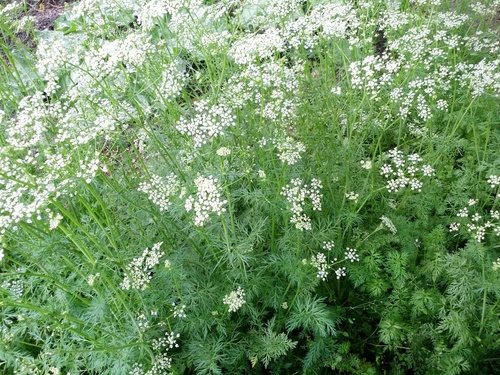
 Cuminum cyminume0
- Treatment
- A. versicolor was amended with neem composte0
- Interactor
- A. versicolorAspergillus versicolore0biocontrol_agent
- Outcome
- incidence of wilte0
- Direction
- loweste0
- Value
- 1.0‒5.2%e0
- Qualifier
- 5.7‒10.5%e0
- Comparator
- non-amended soile0
Organisms pictured · Representative pictures of the matched species, not figures from the paper.
Verbatim
e0“the lowest incidence of wilt (1.0‒5.2%) on cumin was recorded when A. versicolor was amended with neem compost compared to the non-amended soil (5.7‒10.5%)”
Claim · model-written summary
Maximum A. versicolor root colonization occurred with B. firmus, A. versicolor and manure.
- Taxon
- cowpeaVigna unguiculatat0
- Treatment
- B. firmus + A. versicolor + farmyard manuree0
- Interactor
- A. versicolorAspergillus versicolore0biocontrol_agent
- Outcome
- colonization of A. versicolor on rootse0
- Direction
- Maximume0
Not reportedComparator
Organisms pictured · Representative pictures of the matched species, not figures from the paper.
Verbatim
e0“Maximum colonization of A. versicolor on roots was observed in B. firmus + A. versicolor + farmyard manure amended plots”
t0“charcoal rot of cowpea and wilt of cumin”
Claim · model-written summary
A. versicolor in neem compost increased soil fungi, bacteria and A. versicolor populations over non-amended soil.
- Taxon
- cuminCuminum cyminumt0
- Treatment
- A. versicolor in neem compost amended plotse0
- Outcome
- populations of fungi, bacteria and A. versicolor in the soile0
- Direction
- greatere0
- Comparator
- non-amended soile0
Organisms pictured · Representative pictures of the matched species, not figures from the paper.
Verbatim
e0“A. versicolor in neem compost amended plots resulted in maximum populations of fungi, bacteria and A. versicolor in the soil, which was greater than in the non-amended soil”
t0“wilt of cumin”
Claim · model-written summary
Single or repeated A. versicolor delivery did not significantly increase disease control.
- Taxon
- cowpeaVigna unguiculatat0
- Treatment
- single or repeated delivery of A. versicolore0
- Outcome
- disease controle0
Not reportedComparatorDirection
Organisms pictured · Representative pictures of the matched species, not figures from the paper.
Verbatim
e0“Significant increases in disease control were not recorded after single or repeated delivery of A. versicolor”
t0“charcoal rot of cowpea and wilt of cumin”
Claim · model-written summary
The authors suggest combining B. firmus seed coating with A. versicolor soil application for improved disease control in arid crops.
- Taxon
- cowpeaVigna unguiculatat0
- Outcome
- combining B. firmus as seed coatings with A. versicolor as soil applications gives improved control of M. phaseolina and Fusarium induced diseasese0
- Setting
- arid soilse0
Organisms pictured · Representative pictures of the matched species, not figures from the paper.
Verbatim
e0“combining B. firmus as seed coatings with A. versicolor as soil applications gives improved control of M. phaseolina and Fusarium induced diseases on legume and seed spice crops in arid soils”
t0“charcoal rot of cowpea and wilt of cumin”
The same questions in other papers
fertilization · disease · Vigna unguiculata (cowpea)Positive and negative results
7 papers in the same direction as this paper · 1 in the opposite direction
- negative
- positive
- positive
5 papers more in this group
See all 9 papers →fertilization · pest · Vigna unguiculata (cowpea)Positive and negative results
8 papers in the same direction as this paper · 1 in the opposite direction
- negative
- positive
- positive
6 papers more in this group
See all 10 papers →fertilization · symbiosis · Vigna unguiculata (cowpea)Positive and negative results
43 papers in the same direction as this paper · 7 in the opposite direction
- no effect
- negative
- negative
47 papers more in this group
See all 51 papers →botanical · pest · Cuminum cyminum (cumin)Results agree
1 paper in the same direction as this paper
- positive
botanical · disease · Cuminum cyminum (cumin)Results agree
4 papers in the same direction as this paper
- positive
- positive
- positive
1 paper more in this group
See all 5 papers →biocontrol · disease · Vigna unguiculata (cowpea)Results agree
4 papers in the same direction as this paper
- positive
- positive
- positive
1 paper more in this group
See all 5 papers →Claims are grouped by organism, treatment and what was measured or targeted. A paper counts as positive when any of its claims in the group is positive.