Abstract
Abstract Salinity and drought are two commonly occurring major threats to agricultural yields worldwide, including sugar beet production. Therefore, this work aimed to determine the effectiveness of biochar amendment in improving soil health and alleviating the combined effects induced by salinity and drought on morphological, physiological and biochemical responses of sugar beet plants. Two field studies were established at the experimental farm of Fayoum University, Egypt over two successive winter seasons (2019/2020 and 2020/2021). The experiments were carried out in a split-split plot design with triplicate including three factors: 1) soil salinity, with two levels of ECe (< 4 dS m −1 as control and 10 dS m −1 ) as main-plot factor; 2) deficit irrigation regimes (I 100 , I 80 , and I 60 ) representing 100%, 80%, and 60% of crop evapotranspiration (ETc), respectively as sub-plot factor; and 3) biochar amendment with three application levels (B 0 as control, B 10 , and B 20 ) corresponding to 0, 10, and 20 t ha −1 , respectively as sub-sub plot factor. Drought and salinity stress induced significant reduction in growth attributes, relative water content, membrane stability, relative chlorophyll content (SPAD), yield and yield components of sugar beet plants. Meanwhile, the contents of sucrose, proline, Na, K, α amino-N were substantially increased with increasing stress severity. The application of biochar amendment improved the soil physical and chemical properties, resulting in better morphological, physiological and biochemical responses of saline-drought stressed sugar beet plants. Biochar at level (B 20 ) produced the highest values of root yield (95.02 t ha −1 ) and sugar yield (20.24 t ha −1 ) for full irrigated sugar beet plants in non-saline soil. Moreover, the application of biochar enhanced water productivity for drought and saline stressed sugar beet plants. Biochar amendment could be effectively used as a helpful agro-management strategy in alleviating the detrimental impacts of salinity and water stress on sugar beet plants, improving soil quality and enhancing water productivity to ensure water sustainability and food security, especially in areas of limited water supply.
Abstract from the paper’s OpenAlex record; open copy licensed cc-by. Read at the source ↗
The text the model read, with the source record’s inline markup (italics, sub- and superscripts) rendered and its character entities decoded; quote offsets refer to the raw text.
Claims 8
Claim · model-written summary
Drought and salinity significantly reduced growth, water status, chlorophyll and yield traits.
- Taxon
- Sugar Beet (Beta vulgaris L.)
 Beta vulgarist0
- Treatment
- Drought and salinity stresse0
- Outcome
- growth attributes, relative water content, membrane stability, relative chlorophyll content (SPAD), yield and yield componentse0
- Direction
- reductione0
Not reportedComparator
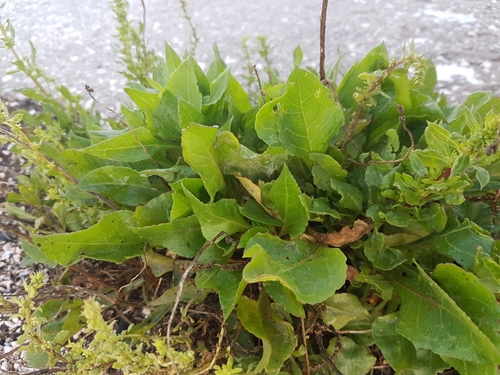
Organisms pictured · Representative pictures of the matched species, not figures from the paper.
Verbatim
t0“Sugar Beet (Beta vulgaris L.)”
e0“Drought and salinity stress induced significant reduction in growth attributes, relative water content, membrane stability, relative chlorophyll content (SPAD), yield and yield components of sugar beet plants”
Claim · model-written summary
Increasing stress severity increased sucrose, proline, Na, K and α amino-N.
- Taxon
- Sugar Beet (Beta vulgaris L.)Beta vulgarist0
- Treatment
- increasing stress severitye0
- Outcome
- contents of sucrose, proline, Na, K, α amino-Ne0
- Direction
- increasede0
Organisms pictured · Representative pictures of the matched species, not figures from the paper.
Verbatim
t0“Sugar Beet (Beta vulgaris L.)”
e0“the contents of sucrose, proline, Na, K, α amino-N were substantially increased with increasing stress severity”
Claim · model-written summary
Biochar improved soil physical and chemical properties.
- Taxon
- Sugar Beet (Beta vulgaris L.)Beta vulgarist0
- Treatment
- biochar amendmente0
- Outcome
- soil physical and chemical propertiese0
- Direction
- improvede0
Not reportedComparator
Organisms pictured · Representative pictures of the matched species, not figures from the paper.
Verbatim
t0“Sugar Beet (Beta vulgaris L.)”
e0“The application of biochar amendment improved the soil physical and chemical properties”
Claim · model-written summary
Biochar improved plant morphological, physiological and biochemical responses under saline drought stress.
- Taxon
- Sugar Beet (Beta vulgaris L.)Beta vulgarist0
- Outcome
- morphological, physiological and biochemical responsese0
- Direction
- bettere0
Not reportedTreatmentComparator
Organisms pictured · Representative pictures of the matched species, not figures from the paper.
Verbatim
t0“Sugar Beet (Beta vulgaris L.)”
e0“resulting in better morphological, physiological and biochemical responses of saline-drought stressed sugar beet plants”
Claim · model-written summary
B20 gave maximum root yield of 95.02 t ha −1 under full irrigation and non saline soil.
- Taxon
- Sugar Beet (Beta vulgaris L.)Beta vulgarist0
- Treatment
- Biochar at level (B 20 )e0
- Outcome
- root yielde0
- Direction
- higheste0
- Value
- 95.02 t ha −1e0
- Qualifier
- full irrigated sugar beet plants in non-saline soile0
Not reportedComparator
Organisms pictured · Representative pictures of the matched species, not figures from the paper.
Verbatim
t0“Sugar Beet (Beta vulgaris L.)”
e0“Biochar at level (B 20 ) produced the highest values of root yield (95.02 t ha −1 ) and sugar yield (20.24 t ha −1 ) for full irrigated sugar beet plants in non-saline soil”
Claim · model-written summary
B20 gave maximum sugar yield of 20.24 t ha −1 under full irrigation and non saline soil.
- Taxon
- Sugar Beet (Beta vulgaris L.)Beta vulgarist0
- Treatment
- Biochar at level (B 20 )e0
- Outcome
- sugar yielde0
- Direction
- higheste0
- Value
- 20.24 t ha −1e0
Not reportedComparator
Organisms pictured · Representative pictures of the matched species, not figures from the paper.
Verbatim
t0“Sugar Beet (Beta vulgaris L.)”
e0“Biochar at level (B 20 ) produced the highest values of root yield (95.02 t ha −1 ) and sugar yield (20.24 t ha −1 ) for full irrigated sugar beet plants in non-saline soil”
Claim · model-written summary
Biochar enhanced water productivity under drought and salinity.
- Taxon
- Sugar Beet (Beta vulgaris L.)Beta vulgarist0
- Treatment
- biochare0
- Outcome
- water productivitye0
- Direction
- enhancede0
Not reportedComparator
Organisms pictured · Representative pictures of the matched species, not figures from the paper.
Verbatim
t0“Sugar Beet (Beta vulgaris L.)”
e0“the application of biochar enhanced water productivity for drought and saline stressed sugar beet plants”
Claim · model-written summary
Authors recommend biochar to alleviate salinity and water stress in sugar beet.
- Taxon
- Sugar Beet (Beta vulgaris L.)Beta vulgarist0
- Outcome
- Biochar amendment could be effectively used as a helpful agro-management strategye0
Organisms pictured · Representative pictures of the matched species, not figures from the paper.
Verbatim
t0“Sugar Beet (Beta vulgaris L.)”
e0“Biochar amendment could be effectively used as a helpful agro-management strategy in alleviating the detrimental impacts of salinity and water stress on sugar beet plants”
The same questions in other papers
biochar · yield · Beta vulgaris (beet)Positive and negative results
3 papers in the same direction as this paper · 1 in the opposite direction
- positive
- negative
- positive
1 paper more in this group
See all 5 papers →salinity · physiology: water · Beta vulgaris (beet)Positive and negative results
5 papers in the same direction as this paper · 6 in the opposite direction
- positive
- positive
- positive
8 papers more in this group
See all 12 papers →drought · physiology: water · Beta vulgaris (beet)Positive and negative results
7 papers in the same direction as this paper · 7 in the opposite direction
- positive
- positive
- positive
11 papers more in this group
See all 15 papers →biochar · quality: sugar starch · Beta vulgaris (beet)Results agree
1 paper in the same direction as this paper
- positive
biochar · physiology: water · Beta vulgaris (beet)Results agree
1 paper in the same direction as this paper
- positive
Claims are grouped by organism, treatment and what was measured or targeted. A paper counts as positive when any of its claims in the group is positive.