Abstract
Abstract The surveys were focused on assessing the opportunity for presowing treatment of barley seeds with low-energy electron beam radiation to improve the growth processes and to reduce the damage caused by phytopathogens. The laboratory experiment was carried out to study the impact of low-energy electron beam radiation (160 keV) at doses of 1 kGy, 3 kGy, and 5 kGy and a radiation dose rate of 500 Gy/imp on a range of plant parameters. They included seed germination characteristics and seedling morphometric traits along with the damage caused by fungal diseases at the reference of natural infection, enzyme activities, and phytohormone concentrations in 7-day-old seedlings. The seeds untreated with radiation were used to serve as a control group. Treatment at a dose of 3 kGy induced significant increases in the laboratory germination and the seed growth force by 6 and 10%, respectively, when compared to the control seed group. Irradiation at doses of 1 and 5 kGy did not have any effects on these parameter values. With respect to the doses of 1 and 5 kGy, increases in the lengths of a sprout and a rootlet by 6.8–8.2 and 5.9–24.6%, respectively were recorded, when compared to the control. A dose of 3 kGy had no effect on the values of these parameters. Irradiation had insignificant impacts on seedling’s fresh and dry mass and water contents in them. The electron beam radiation treatment of seeds at doses of 1, 3, and 5 kGy completely suppressed the spread of Penicillium spp. Irradiation at 3 and 5 kGy inactivated Fusarium spp. However, the treatment at a dose of 5 kGy is associated with a significant, 2.1-fold increase in the seedling damage caused by Bipolaris sorokiniana and a 1.8-fold increase in its spread. Irradiation had no impact on the activity of most enzymes and phytohormones in seedlings, except the 1.5- and 2.7-fold increases in the contents of indolylacetic and indolylbutyric acids at irradiation at 5 and 1 kGy, respectively, when compared to the control.
Abstract from the paper’s OpenAlex record, shown for indexing and research. Copyright remains with the authors or the publisher. Read at the source ↗
The text the model read, with the source record’s inline markup (italics, sub- and superscripts) rendered and its character entities decoded; quote offsets refer to the raw text.
Claims 14
Claim · model-written summary
Presowing irradiation at 3 kGy increased laboratory germination of barley seeds by 6% relative to untreated controls.
- Taxon
- barley
 Hordeum vulgaree0
- Treatment
- Treatment at a dose of 3 kGye1
- Outcome
- laboratory germinatione1
- Direction
- increasese1
- Value
- 6 and 10%e1
- Comparator
- control seed groupe1
Organisms pictured · Representative pictures of the matched species, not figures from the paper.

Verbatim
e0“presowing treatment of barley seeds”
e1“Treatment at a dose of 3 kGy induced significant increases in the laboratory germination and the seed growth force by 6 and 10%, respectively, when compared to the control seed group”
Claim · model-written summary
Presowing irradiation at 3 kGy increased seed growth force of barley seeds by 10% relative to untreated controls.
- Taxon
- barleyHordeum vulgaree0
- Treatment
- Treatment at a dose of 3 kGye1
- Outcome
- seed growth forcee1
- Direction
- increasese1
- Value
- 10%e1
- Comparator
- control seed groupe1
Organisms pictured · Representative pictures of the matched species, not figures from the paper.
Verbatim
e0“presowing treatment of barley seeds”
e1“Treatment at a dose of 3 kGy induced significant increases in the laboratory germination and the seed growth force by 6 and 10%, respectively, when compared to the control seed group”
Claim · model-written summary
Presowing irradiation at 1 and 5 kGy did not affect laboratory germination or seed growth force of barley seeds.
- Taxon
- barleyHordeum vulgaree0
- Treatment
- Irradiation at doses of 1 and 5 kGye1
- Outcome
- these parameter valuese1
- Direction
- no_changeinferrede1
- Comparator
- control groupe2
Organisms pictured · Representative pictures of the matched species, not figures from the paper.
Verbatim
e0“presowing treatment of barley seeds”
e1“Irradiation at doses of 1 and 5 kGy did not have any effects on these parameter values”
e2“The seeds untreated with radiation were used to serve as a control group”
Claim · model-written summary
Presowing irradiation at 1 and 5 kGy increased sprout length of barley seedlings by 6.8–8.2% relative to controls.
- Taxon
- barleyHordeum vulgaree0
- Organ / stage
- sproute1
- Treatment
- 1 and 5 kGye1
- Outcome
- lengths of a sproute1
- Direction
- increasese1
- Value
- 6.8–8.2e1
- Comparator
- controle1
Organisms pictured · Representative pictures of the matched species, not figures from the paper.
Verbatim
e0“presowing treatment of barley seeds”
e1“With respect to the doses of 1 and 5 kGy, increases in the lengths of a sprout and a rootlet by 6.8–8.2 and 5.9–24.6%, respectively were recorded, when compared to the control”
Claim · model-written summary
Presowing irradiation at 1 and 5 kGy increased rootlet length of barley seedlings by 5.9–24.6% relative to controls.
- Taxon
- barleyHordeum vulgaree0
- Organ / stage
- rootlete1
- Treatment
- 1 and 5 kGye1
- Outcome
- lengths of a sprout and a rootlete1
- Direction
- increasese1
- Value
- 5.9–24.6%e1
- Comparator
- controle1
Organisms pictured · Representative pictures of the matched species, not figures from the paper.
Verbatim
e0“presowing treatment of barley seeds”
e1“With respect to the doses of 1 and 5 kGy, increases in the lengths of a sprout and a rootlet by 6.8–8.2 and 5.9–24.6%, respectively were recorded, when compared to the control”
Claim · model-written summary
Presowing irradiation at 3 kGy had no effect on sprout and rootlet lengths of barley seedlings.
- Taxon
- barleyHordeum vulgaree0
- Treatment
- A dose of 3 kGye1
- Outcome
- values of these parameterse1
- Direction
- no_changeinferrede1
- Comparator
- control groupe2
Organisms pictured · Representative pictures of the matched species, not figures from the paper.
Verbatim
e0“presowing treatment of barley seeds”
e1“A dose of 3 kGy had no effect on the values of these parameters”
e2“The seeds untreated with radiation were used to serve as a control group”
Claim · model-written summary
Presowing irradiation had no significant effect on fresh mass, dry mass and water content of barley seedlings.
- Taxon
- barleyHordeum vulgaree0
- Organ / stage
- seedlinge1
- Treatment
- Irradiatione1
- Outcome
- fresh and dry mass and water contentse1
- Direction
- no_changeinferrede1
- Comparator
- control groupe2
Organisms pictured · Representative pictures of the matched species, not figures from the paper.
Verbatim
e0“presowing treatment of barley seeds”
e1“Irradiation had insignificant impacts on seedling’s fresh and dry mass and water contents in them”
e2“The seeds untreated with radiation were used to serve as a control group”
Claim · model-written summary
Electron beam treatment of barley seeds at 1, 3 and 5 kGy completely suppressed spread of Penicillium spp. on seedlings.
- Taxon
- barleyHordeum vulgaree0
- Treatment
- electron beam radiation treatment of seeds at doses of 1, 3, and 5 kGye1
- Interactor
- Penicillium spp
 Penicilliume1pathogen
- Outcome
- spread of Penicillium sppe1
- Direction
- suppressede1
- Qualifier
- completelye1
- Comparator
- control groupe2
Organisms pictured · Representative pictures of the matched species, not figures from the paper.

Verbatim
e0“presowing treatment of barley seeds”
e1“The electron beam radiation treatment of seeds at doses of 1, 3, and 5 kGy completely suppressed the spread of Penicillium spp”
e2“The seeds untreated with radiation were used to serve as a control group”
Claim · model-written summary
Irradiation at 3 and 5 kGy inactivated Fusarium spp. on barley seeds and seedlings.
- Taxon
- barleyHordeum vulgaree0
- Treatment
- Irradiation at 3 and 5 kGye1
- Outcome
- inactivated Fusarium sppe1
- Comparator
- control groupe2
 Fusarium
Not reportedDirection
Organisms pictured · Representative pictures of the matched species, not figures from the paper.

Verbatim
e0“presowing treatment of barley seeds”
e1“Irradiation at 3 and 5 kGy inactivated Fusarium spp”
e2“The seeds untreated with radiation were used to serve as a control group”
Claim · model-written summary
A dose of 5 kGy increased seedling damage caused by Bipolaris sorokiniana 2.1-fold relative to controls.
- Taxon
- barleyHordeum vulgaree0
- Treatment
- treatment at a dose of 5 kGye1
- Interactor
- Bipolaris sorokiniana
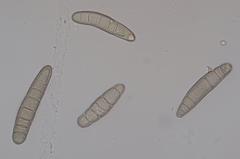 Bipolaris sorokinianae1pathogen
- Outcome
- seedling damage caused by Bipolaris sorokinianae1
- Direction
- increasee1
- Value
- 2.1-folde1
- Comparator
- control groupe2
Organisms pictured · Representative pictures of the matched species, not figures from the paper.
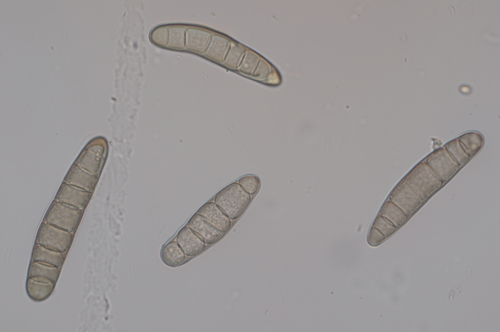
Verbatim
e0“presowing treatment of barley seeds”
e1“However, the treatment at a dose of 5 kGy is associated with a significant, 2.1-fold increase in the seedling damage caused by Bipolaris sorokiniana and a 1.8-fold increase in its spread”
e2“The seeds untreated with radiation were used to serve as a control group”
Claim · model-written summary
A dose of 5 kGy increased spread of Bipolaris sorokiniana 1.8-fold relative to controls.
- Taxon
- barleyHordeum vulgaree0
- Treatment
- treatment at a dose of 5 kGye1
- Interactor
- Bipolaris sorokinianaBipolaris sorokinianae1pathogen
- Outcome
- spreade1
- Direction
- increasee1
- Value
- 1.8-folde1
- Comparator
- control groupe2
Organisms pictured · Representative pictures of the matched species, not figures from the paper.
Verbatim
e0“presowing treatment of barley seeds”
e1“However, the treatment at a dose of 5 kGy is associated with a significant, 2.1-fold increase in the seedling damage caused by Bipolaris sorokiniana and a 1.8-fold increase in its spread”
e2“The seeds untreated with radiation were used to serve as a control group”
Claim · model-written summary
Irradiation had no impact on the activity of most enzymes and phytohormones in barley seedlings.
- Taxon
- barleyHordeum vulgaree0
- Organ / stage
- seedlingse1
- Treatment
- Irradiatione1
- Outcome
- activity of most enzymes and phytohormonese1
- Direction
- no_changeinferrede1
- Comparator
- controle1
Organisms pictured · Representative pictures of the matched species, not figures from the paper.
Verbatim
e0“presowing treatment of barley seeds”
e1“Irradiation had no impact on the activity of most enzymes and phytohormones in seedlings, except the 1.5- and 2.7-fold increases in the contents of indolylacetic and indolylbutyric acids at irradiation at 5 and 1 kGy, respectively, when compared to the control”
Claim · model-written summary
Irradiation at 5 kGy increased indolylacetic acid content in barley seedlings 1.5-fold relative to controls.
- Taxon
- barleyHordeum vulgaree0
- Organ / stage
- seedlingse1
- Treatment
- irradiation at 5 and 1 kGye1
- Outcome
- contents of indolylacetice1
- Direction
- increasese1
- Value
- 1.5- and 2.7-folde1
- Qualifier
- respectivelye1
- Comparator
- controle1
Organisms pictured · Representative pictures of the matched species, not figures from the paper.
Verbatim
e0“presowing treatment of barley seeds”
e1“Irradiation had no impact on the activity of most enzymes and phytohormones in seedlings, except the 1.5- and 2.7-fold increases in the contents of indolylacetic and indolylbutyric acids at irradiation at 5 and 1 kGy, respectively, when compared to the control”
Claim · model-written summary
Irradiation at 1 kGy increased indolylbutyric acid content in barley seedlings 2.7-fold relative to controls.
- Taxon
- barleyHordeum vulgaree0
- Organ / stage
- seedlingse1
- Treatment
- irradiation at 5 and 1 kGye1
- Outcome
- indolylbutyric acidse1
- Direction
- increasese1
- Value
- 2.7-folde1
- Qualifier
- respectivelye1
- Comparator
- controle1
Organisms pictured · Representative pictures of the matched species, not figures from the paper.
Verbatim
e0“presowing treatment of barley seeds”
e1“Irradiation had no impact on the activity of most enzymes and phytohormones in seedlings, except the 1.5- and 2.7-fold increases in the contents of indolylacetic and indolylbutyric acids at irradiation at 5 and 1 kGy, respectively, when compared to the control”
The same questions in other papers
radiation · growth · Hordeum vulgare (barley)Results differ
22 papers in the same direction as this paper · 13 in the opposite direction
- positive
- positive
- positive
32 papers more in this group
See all 36 papers →radiation · Fusarium · Hordeum vulgare (barley)Results agree
1 paper in the same direction as this paper
- positive
radiation · physiology: hormones · Hordeum vulgare (barley)Results agree
1 paper in the same direction as this paper
- no effect
radiation · Penicillium · Hordeum vulgare (barley)Results agree
2 papers in the same direction as this paper
- positive
- positive
Claims are grouped by organism, treatment and what was measured or targeted. A paper counts as positive when any of its claims in the group is positive.