Abstract
An experiment entitled “Efficacy of different insecticides against pest complex of okra (Abelmoschus esculentus L. Moench) by sequential strategy” was conducted at the All India Co-ordinated Research Project on Vegetable Crops, Department of Horticulture, Mahatma Phule Krishi Vidyapeeth, Rahuri, Dist: Ahmednagar (Maharashtra) during summer 2022. During the course of study, six sequential strategies were evaluated against sucking pest complex of okra. The results showed that treatment with spraying of Lecanicillium lecanii @ 5 g/l followed by thiamethoxam 25 SG @ 0.25 g/l followed by pongamia oil 1% @ 10ml/l was found to be most effective and recorded least average survived population of aphids, leaf hoppers, whitefly and mites.
Abstract from the paper’s OpenAlex record, shown for indexing and research. Copyright remains with the authors or the publisher. Read at the source ↗
The text the model read, with the source record’s inline markup (italics, sub- and superscripts) rendered and its character entities decoded; quote offsets refer to the raw text.
Claims 2
Claim · model-written summary
The sequential spray treatment produced the least average surviving aphids, leaf hoppers, whitefly on okra.
- Taxon
- okra
 Abelmoschus esculentust0
- Treatment
- spraying of Lecanicillium lecanii @ 5 g/l followed by thiamethoxam 25 SG @ 0.25 g/l followed by pongamia oil 1% @ 10ml/le0
- Interactor
- aphids, leaf hoppers, whiteflye0pest
- Second interactor
- Lecanicillium lecanii
 Akanthomyces lecaniie0biocontrol_agent
- Outcome
- average survived population of aphids, leaf hoppers, whiteflye0
- Direction
- leaste0
Not reportedComparator
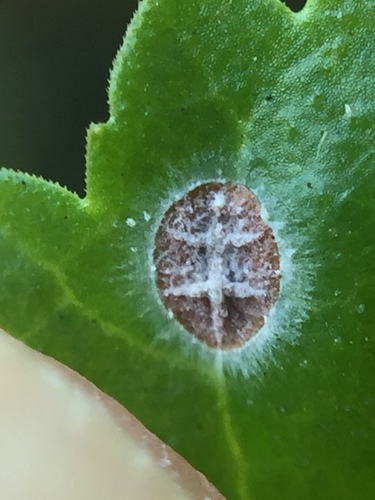
Organisms pictured · Representative pictures of the matched species, not figures from the paper.

Verbatim
t0“okra”
e0“The results showed that treatment with spraying of Lecanicillium lecanii @ 5 g/l followed by thiamethoxam 25 SG @ 0.25 g/l followed by pongamia oil 1% @ 10ml/l was found to be most effective and recorded least average survived population of aphids, leaf hoppers, whitefly and mites.”
Claim · model-written summary
The sequential spray treatment produced the least average surviving mites on okra.
- Taxon
- okraAbelmoschus esculentust0
- Treatment
- spraying of Lecanicillium lecanii @ 5 g/l followed by thiamethoxam 25 SG @ 0.25 g/l followed by pongamia oil 1% @ 10ml/le0
- Interactor
- mitese0pest
- Second interactor
- Lecanicillium lecaniiAkanthomyces lecaniie0biocontrol_agent
- Outcome
- mitese0
- Direction
- leaste0
Not reportedComparator
Organisms pictured · Representative pictures of the matched species, not figures from the paper.
Verbatim
t0“okra”
e0“The results showed that treatment with spraying of Lecanicillium lecanii @ 5 g/l followed by thiamethoxam 25 SG @ 0.25 g/l followed by pongamia oil 1% @ 10ml/l was found to be most effective and recorded least average survived population of aphids, leaf hoppers, whitefly and mites.”
The same questions in other papers
thiamethoxam · pest · Abelmoschus esculentus (okra)Positive and negative results
11 papers in the same direction as this paper · 1 in the opposite direction
- positive
- negative
- positive
9 papers more in this group
See all 13 papers →Akanthomyces lecanii · pest · Abelmoschus esculentus (okra)Results agree
2 papers in the same direction as this paper
- positive
- positive
application · pest · Abelmoschus esculentus (okra)Positive and negative results
21 papers in the same direction as this paper · 4 in the opposite direction
- positive
- no effect
- negative
22 papers more in this group
See all 26 papers →Claims are grouped by organism, treatment and what was measured or targeted. A paper counts as positive when any of its claims in the group is positive.