Abstract
Cleistanthus collinus Roxb., Lantana camara L. and Strychnos nux-vomica L. are abundantly available in tropical countries and are being used for pest management as an Indigenous Technical Knowledge. The present study decoded the biochemical constituents of these species and tested the efficacy of these plant products against major rice insect pests and diseases. Significantly higher phenol content and antioxidant activity (2,2-Diphenyl-1-picrylhydrazyl (DPPH) and 2,2-Azinobis (3-ethyl-benzothiazoline-6-sulfonic acid (ABTS) assay) were found in C. collinus water extract, whereas S. nux-vomica extract had higher flavonoids. The major chemical constituents of C. collinus, L. camara and S. nux-vomica were 1,2,3-Benzenetriol, β- Phellandrene and Phytol, respectively. Water extract of C. collinus had significantly reduced the insect pests (brown planthopper, Nilaparvata lugens Stål and gall midge, Orseolia oryzae Wood-Mason) and diseases (brown spot, Helminthosporium oryzae and bacterial leaf blight, Xanthomonas oryzae pv. oryzae). In contrast, S. nux-vomica water extract was most effective against the pathogens causing blast, Magnaporthe oryzae and sheath blight disease, Rhizoctonia solani in rice. The secondary metabolites, namely, 1,2,3-Benzenetriol, Neophytadiene, n-Hexadecanoic acid, Phytol etc. present in C. collinus extract reported to have biocidal activities against number of crop pests. As C. collinus has been listed as ‘vulnerable’ in the International Union for Conservation of Nature (IUCN) red list, it can be promoted as a viable component in Integrated Pest Management (IPM) of rice for its conservation and economic utilization.
Abstract from the paper’s OpenAlex record; open copy licensed cc-by-nc-nd. Read at the source ↗
The text the model read, with the source record’s inline markup (italics, sub- and superscripts) rendered and its character entities decoded; quote offsets refer to the raw text.
Claims 12
Claim · model-written summary
C. collinus water extract had significantly higher phenol content and antioxidant activity (DPPH and ABTS assays).
- Taxon
- C. collinus
 Cleistanthus collinuse0
- Outcome
- phenol content and antioxidant activitye0
- Direction
- highere0
Organisms pictured · Representative pictures of the matched species, not figures from the paper.

Verbatim
e0“Significantly higher phenol content and antioxidant activity (2,2-Diphenyl-1-picrylhydrazyl (DPPH) and 2,2-Azinobis (3-ethyl-benzothiazoline-6-sulfonic acid (ABTS) assay) were found in C. collinus water extract”
Claim · model-written summary
S. nux-vomica extract had higher flavonoid content.
- Taxon
- S. nux-vomica
 Strychnos nux-vomicae0
- Outcome
- flavonoidse0
- Direction
- highere0
Organisms pictured · Representative pictures of the matched species, not figures from the paper.

Verbatim
e0“whereas S. nux-vomica extract had higher flavonoids”
Claim · model-written summary
The major chemical constituent of C. collinus was 1,2,3-Benzenetriol.
- Taxon
- C. collinusCleistanthus collinuse0
- Outcome
- major chemical constituentse0
Organisms pictured · Representative pictures of the matched species, not figures from the paper.
Verbatim
e0“The major chemical constituents of C. collinus, L. camara and S. nux-vomica were 1,2,3-Benzenetriol, β- Phellandrene and Phytol, respectively”
Claim · model-written summary
The major chemical constituent of L. camara was beta-Phellandrene.
- Taxon
- L. camara
 Lantana camarae0
- Outcome
- major chemical constituentse0
Organisms pictured · Representative pictures of the matched species, not figures from the paper.

Verbatim
e0“The major chemical constituents of C. collinus, L. camara and S. nux-vomica were 1,2,3-Benzenetriol, β- Phellandrene and Phytol, respectively”
Claim · model-written summary
The major chemical constituent of S. nux-vomica was Phytol.
- Taxon
- S. nux-vomicaStrychnos nux-vomicae0
- Outcome
- major chemical constituentse0
Organisms pictured · Representative pictures of the matched species, not figures from the paper.
Verbatim
e0“The major chemical constituents of C. collinus, L. camara and S. nux-vomica were 1,2,3-Benzenetriol, β- Phellandrene and Phytol, respectively”
Claim · model-written summary
C. collinus water extract significantly reduced brown planthopper in rice.
- Taxon
- rice
 Oryza sativat0
- Treatment
- Water extract of C. collinuse0
- Interactor
- Nilaparvata lugens Stål
 Nilaparvata lugense1pest
- Outcome
- brown planthoppere1
- Direction
- reducede0
Not reportedComparator
Organisms pictured · Representative pictures of the matched species, not figures from the paper.


Verbatim
e0“Water extract of C. collinus had significantly reduced the insect pests”
e1“brown planthopper, Nilaparvata lugens Stål”
t0“rice”
Claim · model-written summary
C. collinus water extract significantly reduced gall midge in rice.
- Taxon
- riceOryza sativat0
- Treatment
- Water extract of C. collinuse0
- Interactor
- Orseolia oryzae Wood-MasonOrseolia oryzaee1pest
- Outcome
- gall midgee1
- Direction
- reducede0
Not reportedComparator
Organisms pictured · Representative pictures of the matched species, not figures from the paper.
Verbatim
e0“Water extract of C. collinus had significantly reduced the insect pests”
e1“gall midge, Orseolia oryzae Wood-Mason”
t0“rice”
Claim · model-written summary
C. collinus water extract significantly reduced brown spot in rice.
- Taxon
- riceOryza sativat0
- Treatment
- Water extract of C. collinuse0
- Interactor
- Helminthosporium oryzae
 Bipolaris oryzaee1pathogen
- Outcome
- brown spote1
- Direction
- reducede0
Not reportedComparator
Organisms pictured · Representative pictures of the matched species, not figures from the paper.
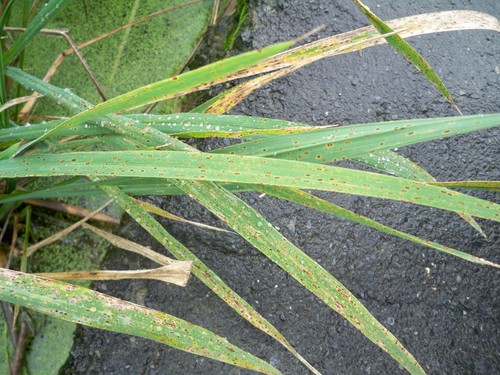
Verbatim
e0“Water extract of C. collinus had significantly reduced the insect pests”
e1“brown spot, Helminthosporium oryzae”
t0“rice”
Claim · model-written summary
C. collinus water extract significantly reduced bacterial leaf blight in rice.
- Taxon
- riceOryza sativat0
- Treatment
- Water extract of C. collinuse0
- Interactor
- Xanthomonas oryzae pv. oryzae
 Xanthomonas oryzae pv. oryzaee1pathogen
- Outcome
- bacterial leaf blighte1
- Direction
- reducede0
Not reportedComparator
Organisms pictured · Representative pictures of the matched species, not figures from the paper.

Verbatim
e0“Water extract of C. collinus had significantly reduced the insect pests”
e1“bacterial leaf blight, Xanthomonas oryzae pv. oryzae”
t0“rice”
Claim · model-written summary
S. nux-vomica water extract was most effective against the blast pathogen Magnaporthe oryzae in rice.
- Taxon
- riceOryza sativat0
- Treatment
- S. nux-vomica water extracte0
- Interactor
- Magnaporthe oryzae
 Pyricularia oryzaee0pathogen
- Outcome
- blaste0
- Direction
- most effectivee0
Not reportedComparator
Organisms pictured · Representative pictures of the matched species, not figures from the paper.
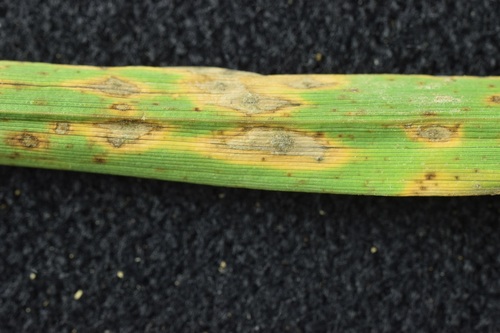
Verbatim
e0“S. nux-vomica water extract was most effective against the pathogens causing blast, Magnaporthe oryzae”
t0“rice”
Claim · model-written summary
S. nux-vomica water extract was most effective against sheath blight, Rhizoctonia solani, in rice.
- Taxon
- riceOryza sativae0
- Treatment
- S. nux-vomica water extracte0
- Interactor
- Rhizoctonia solani
 Rhizoctonia solanie0pathogen
- Outcome
- sheath blight diseasee0
- Direction
- most effectivee0
Not reportedComparator
Organisms pictured · Representative pictures of the matched species, not figures from the paper.

Verbatim
e0“S. nux-vomica water extract was most effective against the pathogens causing blast, Magnaporthe oryzae and sheath blight disease, Rhizoctonia solani in rice”
Claim · model-written summary
The authors propose that C. collinus can be promoted as a viable component of Integrated Pest Management of rice.
- Taxon
- riceOryza sativae0
- Outcome
- viable component in Integrated Pest Management (IPM)e0
Organisms pictured · Representative pictures of the matched species, not figures from the paper.
Verbatim
e0“it can be promoted as a viable component in Integrated Pest Management (IPM) of rice”
The same questions in other papers
botanical · Orseolia oryzae · Oryza sativa (rice)Positive and negative results
3 papers in the same direction as this paper · 1 in the opposite direction
- negative
- positive
- positive
1 paper more in this group
See all 5 papers →botanical · Rhizoctonia solani · Oryza sativa (rice)Positive and negative results
18 papers in the same direction as this paper · 2 in the opposite direction
- no effect
- negative
- positive
17 papers more in this group
See all 21 papers →botanical · Nilaparvata lugens · Oryza sativa (rice)Positive and negative results
21 papers in the same direction as this paper · 1 in the opposite direction
- negative
- positive
- positive
19 papers more in this group
See all 23 papers →botanical · Pyricularia oryzae · Oryza sativa (rice)Positive and negative results
36 papers in the same direction as this paper · 1 in the opposite direction
- negative
- positive
- positive
34 papers more in this group
See all 38 papers →botanical · Xanthomonas oryzae pv. oryzae · Oryza sativa (rice)Results agree
11 papers in the same direction as this paper
- positive
- positive
- positive
8 papers more in this group
See all 12 papers →botanical · Bipolaris oryzae · Oryza sativa (rice)Results agree
14 papers in the same direction as this paper
- positive
- positive
- positive
11 papers more in this group
See all 15 papers →Claims are grouped by organism, treatment and what was measured or targeted. A paper counts as positive when any of its claims in the group is positive.