Abstract
The oil extract from seeds of Azadirachta indica as well as water and ethanol leaf extracts of the plant were effective in reducing the radial growth of Cochliobolus miyabeanus in culture and in checking the spread of brown spot disease in rice. The oil extract was found to be the most effective, followed by ethanol leaf extract, in inhibiting the growth of the pathogen in vitro and in checking the development of the disease in vivo . Although the cold water extract from the plant leaf reduced the radial growth of the pathogen in culture, it failed to reduce the incidence and severity of the disease as effectively as the oil and ethanol extracts. The oil and ethanol extracts compared favourably with carbendazim (Bavistin) at 0.1% a.i and have the potential for control of brown spot disease of rice in the field.
Abstract from the paper’s OpenAlex record, shown for indexing and research. Copyright remains with the authors or the publisher. Read at the source ↗
The text the model read, with the source record’s inline markup (italics, sub- and superscripts) rendered and its character entities decoded; quote offsets refer to the raw text.
Claims 6
Claim · model-written summary
Neem seed oil and water and ethanol leaf extracts reduced Cochliobolus miyabeanus radial growth in culture.
- Taxon
- Rice
 Oryza sativat0
- Treatment
- oil extract from seeds of Azadirachta indica as well as water and ethanol leaf extractse0
- Interactor
- Cochliobolus miyabeanus
 Bipolaris oryzaee0pathogen
- Outcome
- radial growth of Cochliobolus miyabeanuse0
- Direction
- reducinge0
Not reportedComparator
Organisms pictured · Representative pictures of the matched species, not figures from the paper.

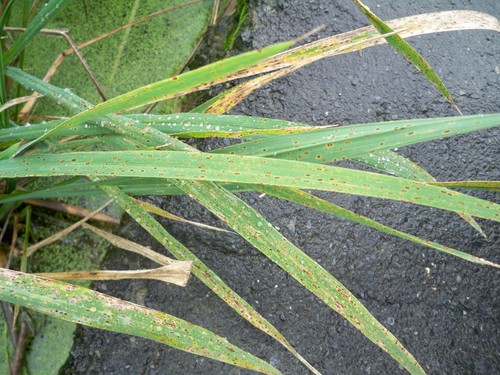
Verbatim
e0“The oil extract from seeds of Azadirachta indica as well as water and ethanol leaf extracts of the plant were effective in reducing the radial growth of Cochliobolus miyabeanus in culture”
t0“Rice”
Claim · model-written summary
Neem seed oil and water and ethanol leaf extracts checked brown spot disease spread in rice.
- Taxon
- riceOryza sativae0
- Treatment
- oil extract from seeds of Azadirachta indica as well as water and ethanol leaf extractse0
- Interactor
- Cochliobolus miyabeanusBipolaris oryzaee0pathogen
- Outcome
- spread of brown spot diseasee0
- Direction
- checkinge0
Not reportedComparator
Organisms pictured · Representative pictures of the matched species, not figures from the paper.
Verbatim
e0“The oil extract from seeds of Azadirachta indica as well as water and ethanol leaf extracts of the plant were effective in reducing the radial growth of Cochliobolus miyabeanus in culture and in checking the spread of brown spot disease in rice.”
Claim · model-written summary
Seed oil was the most effective neem extract, followed by ethanol leaf extract, against pathogen growth in vitro and disease development in vivo.
- Taxon
- RiceOryza sativat0
- Treatment
- oil extracte0
- Interactor
- Cochliobolus MiyabeanusBipolaris oryzaet0pathogen
- Outcome
- growth of the pathogen in vitro and in checking the development of the disease in vivoe0
- Direction
- most effectivee0
- Comparator
- ethanol leaf extracte0
Organisms pictured · Representative pictures of the matched species, not figures from the paper.
Verbatim
e0“The oil extract was found to be the most effective, followed by ethanol leaf extract, in inhibiting the growth of the pathogen in vitro and in checking the development of the disease in vivo .”
t0“Cochliobolus Miyabeanus causing Brown Spot Disease of Rice”
Claim · model-written summary
Cold water leaf extract reduced pathogen radial growth in culture.
- Taxon
- RiceOryza sativat0
- Treatment
- cold water extract from the plant leafe0
- Interactor
- Cochliobolus MiyabeanusBipolaris oryzaet0pathogen
- Outcome
- radial growth of the pathogene0
- Direction
- reducede0
Not reportedComparator
Organisms pictured · Representative pictures of the matched species, not figures from the paper.
Verbatim
e0“the cold water extract from the plant leaf reduced the radial growth of the pathogen in culture”
t0“Cochliobolus Miyabeanus causing Brown Spot Disease of Rice”
Claim · model-written summary
Cold water leaf extract controlled rice disease incidence and severity less effectively than oil and ethanol extracts.
- Taxon
- RiceOryza sativat0
- Treatment
- cold water extracte0
- Interactor
- Cochliobolus MiyabeanusBipolaris oryzaet0pathogen
- Outcome
- incidence and severity of the diseasee0
- Direction
- failed to reducee0
- Comparator
- oil and ethanol extractse0
Organisms pictured · Representative pictures of the matched species, not figures from the paper.
Verbatim
e0“Although the cold water extract from the plant leaf reduced the radial growth of the pathogen in culture, it failed to reduce the incidence and severity of the disease as effectively as the oil and ethanol extracts.”
t0“Cochliobolus Miyabeanus causing Brown Spot Disease of Rice”
Claim · model-written summary
Oil and ethanol extracts performed comparably to carbendazim for brown spot control.
- Taxon
- riceOryza sativae0
- Treatment
- oil and ethanol extractse0
- Interactor
- Cochliobolus MiyabeanusBipolaris oryzaet0pathogen
- Outcome
- control of brown spot diseasee0
- Direction
- compared favourablye0
- Comparator
- carbendazim (Bavistin) at 0.1% a.ie0
Organisms pictured · Representative pictures of the matched species, not figures from the paper.
Verbatim
e0“The oil and ethanol extracts compared favourably with carbendazim (Bavistin) at 0.1% a.i and have the potential for control of brown spot disease of rice in the field.”
t0“Cochliobolus Miyabeanus”
The same questions in other papers
Azadirachta indica · Bipolaris oryzae · Oryza sativa (rice)Results agree
3 papers in the same direction as this paper
- positive
- positive
- positive
botanical · Bipolaris oryzae · Oryza sativa (rice)Results agree
14 papers in the same direction as this paper
- positive
- positive
- positive
11 papers more in this group
See all 15 papers →Claims are grouped by organism, treatment and what was measured or targeted. A paper counts as positive when any of its claims in the group is positive.