Abstract
Experiments were conducted to evaluate the efficacy of different biocontrol agents against shoot and fruit borer, Earias vittella (Fabricius) infesting okra at Biological Control farm, Anand Agricultural University, Anand (Gujarat) during two successive years, kharif, 2018 and 2019. Among the different biocontrol agents evaluated, the plots sprayed with Bacillus thuringiensis @ 5 g/litre for three times at fortnightly interval witnessed lowest larval population (0.52 larva(e)/plant) and fruit damage (7.00%-number basis, 8.09%-weight basis). The treatment comprising six releases of egg parasitoid Trichogramma chilonis @ 50,000 parasitoids/ha was found next effective treatment with lower larval population (0.67larva(e)/plant) and fruit damage (8.19%-number basis, 9.97%-weight basis). This bio-efficacy of egg parasitoid T. chilonis was statistically at par with the efficacy of treatments viz., Neem Seed Kernel Extract (NSKE) @ 5% and Beauveria bassiana@ 5 g/litre. The highest fruit yield was documented in the treatment B. thuringiensis @ 5 g/litre (111.02 q/ha, CB ratio 1:2.79) followed by the treatments T. chilonis @ 50,000 parasitoids/ha (105.10 q/ha, CB ratio 1:2.77) and NSKE @ 5% (104.64 q/ha, CB ratio 1:2.76). The significant findings of this study could be used to frame BIPM strategy for the management of shoot and fruit borer, E. vittella in okra.
Abstract from the paper’s OpenAlex record, shown for indexing and research. Copyright remains with the authors or the publisher. Read at the source ↗
The text the model read, with the source record’s inline markup (italics, sub- and superscripts) rendered and its character entities decoded; quote offsets refer to the raw text.
Claims 10
Claim · model-written summary
Bacillus thuringiensis spray gave the lowest Earias vittella larval population, 0.52 larvae per plant.
- Taxon
- okra
 Abelmoschus esculentust0
- Treatment
- Bacillus thuringiensis @ 5 g/litree0
- Interactor
- Earias vittella
 Earias vittellat0pest
- Second interactor
- Bacillus thuringiensis
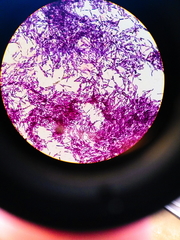 Bacillus thuringiensise0biocontrol_agent
- Outcome
- larval populatione0
- Direction
- loweste0
- Value
- 0.52 larva(e)/plante0
Not reportedComparator
Organisms pictured · Representative pictures of the matched species, not figures from the paper.


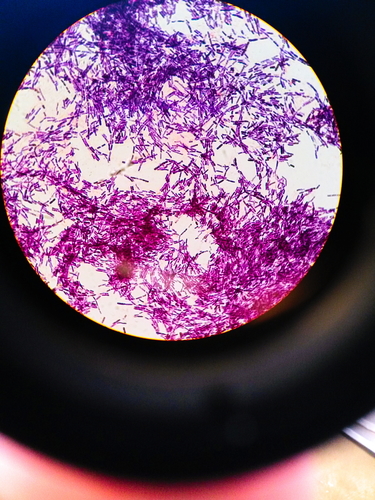
Verbatim
e0“plots sprayed with Bacillus thuringiensis @ 5 g/litre for three times at fortnightly interval witnessed lowest larval population (0.52 larva(e)/plant)”
t0“Earias vittella (Fabricius) (Lepidoptera: Noctuidae) in okra”
Claim · model-written summary
Bacillus thuringiensis spray gave the lowest fruit damage by number, 7.00%.
- Taxon
- okraAbelmoschus esculentust0
- Treatment
- Bacillus thuringiensise1
- Interactor
- Earias vittellaEarias vittellat0pest
- Second interactor
- Bacillus thuringiensisBacillus thuringiensise1biocontrol_agent
- Outcome
- fruit damagee0
- Value
- 7.00%e0
Not reportedComparatorDirection
Organisms pictured · Representative pictures of the matched species, not figures from the paper.
Verbatim
e0“fruit damage (7.00%-number basis, 8.09%-weight basis)”
t0“Bio-efficacy of different biocontrol agents against shoot and fruit borer, Earias vittella (Fabricius) (Lepidoptera: Noctuidae) in okra”
e1“plots sprayed with Bacillus thuringiensis @ 5 g/litre for three times at fortnightly interval witnessed lowest larval population (0.52 larva(e)/plant)”
Claim · model-written summary
Bacillus thuringiensis spray gave 8.09% fruit damage by weight.
- Taxon
- okraAbelmoschus esculentust0
- Treatment
- Bacillus thuringiensise1
- Interactor
- Earias vittellaEarias vittellat0pest
- Second interactor
- Bacillus thuringiensisBacillus thuringiensise1biocontrol_agent
- Outcome
- fruit damagee0
- Value
- 8.09%e0
Not reportedComparatorDirection
Organisms pictured · Representative pictures of the matched species, not figures from the paper.
Verbatim
e0“fruit damage (7.00%-number basis, 8.09%-weight basis)”
t0“Bio-efficacy of different biocontrol agents against shoot and fruit borer, Earias vittella (Fabricius) (Lepidoptera: Noctuidae) in okra”
e1“plots sprayed with Bacillus thuringiensis @ 5 g/litre for three times at fortnightly interval witnessed lowest larval population (0.52 larva(e)/plant)”
Claim · model-written summary
Trichogramma chilonis releases were the next most effective treatment with 0.67 larvae per plant.
- Taxon
- okraAbelmoschus esculentust0
- Treatment
- six releases of egg parasitoid Trichogramma chilonis @ 50,000 parasitoids/hae0
- Interactor
- Earias vittellaEarias vittellat0pest
- Second interactor
- Trichogramma chilonis
 Trichogramma chilonise0biocontrol_agent
- Outcome
- larval populatione0
- Direction
- lowere0
- Value
- 0.67larva(e)/plante0
Not reportedComparator
Organisms pictured · Representative pictures of the matched species, not figures from the paper.

Verbatim
e0“six releases of egg parasitoid Trichogramma chilonis @ 50,000 parasitoids/ha was found next effective treatment with lower larval population (0.67larva(e)/plant)”
t0“Earias vittella (Fabricius) (Lepidoptera: Noctuidae) in okra”
Claim · model-written summary
Trichogramma chilonis releases had fruit damage of 8.19% by number.
- Taxon
- okraAbelmoschus esculentust0
- Treatment
- Trichogramma chilonise1
- Interactor
- Earias vittellaEarias vittellat0pest
- Second interactor
- Trichogramma chilonisTrichogramma chilonise1biocontrol_agent
- Outcome
- fruit damagee0
- Value
- 8.19%e0
Not reportedComparatorDirection
Organisms pictured · Representative pictures of the matched species, not figures from the paper.
Verbatim
e0“fruit damage (8.19%-number basis, 9.97%-weight basis)”
t0“Bio-efficacy of different biocontrol agents against shoot and fruit borer, Earias vittella (Fabricius) (Lepidoptera: Noctuidae) in okra”
e1“six releases of egg parasitoid Trichogramma chilonis @ 50,000 parasitoids/ha was found next effective treatment with lower larval population (0.67larva(e)/plant)”
Claim · model-written summary
Trichogramma chilonis releases had fruit damage of 9.97% by weight.
- Taxon
- okraAbelmoschus esculentust0
- Treatment
- Trichogramma chilonise1
- Interactor
- Earias vittellaEarias vittellat0pest
- Second interactor
- Trichogramma chilonisTrichogramma chilonise1biocontrol_agent
- Outcome
- fruit damagee0
- Value
- 9.97%e0
Not reportedComparatorDirection
Organisms pictured · Representative pictures of the matched species, not figures from the paper.
Verbatim
e0“fruit damage (8.19%-number basis, 9.97%-weight basis)”
t0“Bio-efficacy of different biocontrol agents against shoot and fruit borer, Earias vittella (Fabricius) (Lepidoptera: Noctuidae) in okra”
e1“six releases of egg parasitoid Trichogramma chilonis @ 50,000 parasitoids/ha was found next effective treatment with lower larval population (0.67larva(e)/plant)”
Claim · model-written summary
Trichogramma chilonis efficacy was statistically at par with NSKE and Beauveria bassiana.
- Taxon
- okraAbelmoschus esculentust0
- Treatment
- T. chilonise0
- Interactor
- Earias vittellaEarias vittellat0pest
- Second interactor
- T. chilonisTrichogramma chilonise0biocontrol_agent
- Outcome
- bio-efficacye0
- Direction
- statistically at pare0
- Comparator
- Neem Seed Kernel Extract (NSKE) @ 5%e0
Organisms pictured · Representative pictures of the matched species, not figures from the paper.
Verbatim
e0“bio-efficacy of egg parasitoid T. chilonis was statistically at par with the efficacy of treatments viz., Neem Seed Kernel Extract (NSKE) @ 5% and Beauveria bassiana@ 5 g/litre”
t0“Earias vittella (Fabricius) (Lepidoptera: Noctuidae) in okra”
Claim · model-written summary
Bacillus thuringiensis gave the highest okra fruit yield, 111.02 q/ha.
- Taxon
- okraAbelmoschus esculentust0
- Treatment
- B. thuringiensis @ 5 g/litree0
- Outcome
- fruit yielde0
- Direction
- higheste0
- Value
- 111.02 q/hae0
Not reportedComparator
Organisms pictured · Representative pictures of the matched species, not figures from the paper.
Verbatim
e0“highest fruit yield was documented in the treatment B. thuringiensis @ 5 g/litre (111.02 q/ha, CB ratio 1:2.79)”
t0“okra”
Claim · model-written summary
Trichogramma chilonis yielded 105.10 q/ha of okra fruit.
- Taxon
- okraAbelmoschus esculentust1
- Treatment
- T. chilonis @ 50,000 parasitoids/hae0
- Interactor
- T. chilonisTrichogramma chilonise0biocontrol_agent
- Outcome
- fruit yieldt0
- Value
- 105.10 q/hae0
Not reportedComparatorDirection
Organisms pictured · Representative pictures of the matched species, not figures from the paper.
Verbatim
e0“T. chilonis @ 50,000 parasitoids/ha (105.10 q/ha, CB ratio 1:2.77)”
t0“highest fruit yield was documented”
t1“Earias vittella (Fabricius) (Lepidoptera: Noctuidae) in okra”
Claim · model-written summary
NSKE yielded 104.64 q/ha of okra fruit.
- Taxon
- okraAbelmoschus esculentust1
- Treatment
- NSKE @ 5%e0
- Outcome
- fruit yieldt0
- Value
- 104.64 q/hae0
Not reportedComparatorDirection
Organisms pictured · Representative pictures of the matched species, not figures from the paper.
Verbatim
e0“NSKE @ 5% (104.64 q/ha, CB ratio 1:2.76)”
t0“highest fruit yield was documented”
t1“Earias vittella (Fabricius) (Lepidoptera: Noctuidae) in okra”
The same questions in other papers
Azadirachta indica · yield · Abelmoschus esculentus (okra)Positive and negative results
4 papers in the same direction as this paper · 1 in the opposite direction
- negative
- positive
- positive
2 papers more in this group
See all 6 papers →Trichogramma chilonis · yield · Abelmoschus esculentus (okra)Results agree
1 paper in the same direction as this paper
- positive
Bacillus thuringiensis · Earias vittella · Abelmoschus esculentus (okra)Results agree
2 papers in the same direction as this paper
- positive
- positive
Trichogramma chilonis · Earias vittella · Abelmoschus esculentus (okra)Results agree
4 papers in the same direction as this paper
- positive
- positive
- positive
1 paper more in this group
See all 5 papers →botanical · yield · Abelmoschus esculentus (okra)Results differ
68 papers in the same direction as this paper · 5 in the opposite direction · 4 reporting no difference from an alternative
- negative
- negative
- negative
74 papers more in this group
See all 78 papers →biocontrol · yield · Abelmoschus esculentus (okra)Positive and negative results
4 papers in the same direction as this paper · 1 in the opposite direction
- negative
- positive
- positive
2 papers more in this group
See all 6 papers →Claims are grouped by organism, treatment and what was measured or targeted. A paper counts as positive when any of its claims in the group is positive.