Abstract
This three years field study examined the influence of application rates of manure from sheep and goat (S/G) and their mixture with wood-based or farm yard manure-based biochars (FYMB) on growth performance of Foeniculum vulgare (fennel) and Cuminum cyminum (cumin). The fertilizer amendment rates were 1.66, 3.32 and 6.64 t ha−1, which were applied for three consecutive years in field. The nitrogen (N) and phosphorus (P), nitrogen use efficiency (NUE) and phosphorus use efficiency (PUE) in seeds and stover of test crops were analyzed for third year cropping only. Results demonstrated that in general, fertilizers did not influence yield of first and second year crops. The significant (P ≤ 0.05) positive influences of organic fertilizers were observed for third year crops and were of higher magnitude for C. cyminum than F. vulgare (126–306.6% increase for C. cyminum and 24.5–48.4% increase for F. vulgare than control). As compared to S/G applied at 6.64 t ha−1 rate, its co-amendment with wood-derived biochar at all application rates significantly reduced P in seeds; whereas, its co-amendment with both biochar types and at all application rates significantly reduced P in the stover of F. vulgare (Table 3; P ≤ 0.05). For the crop C. cyminum, there was no difference between treatments for the concentration of P in stover. The phosphorus use efficiency (PUE) of stover of F. vulgare was significantly improved by 80–108% and by 60–79% in response to the application of S/G and its co-amendment with FYMB respectively than control. The PUE of seeds of F. vulgare was increased by 100% than control in response to the co-amendment of manure with wood-derived biochar at high application rate (P ≤ 0.05). More profound significant improvement in PUE was observed for third year crop of C. cyminum, as most of the treatments improved PUE of seeds by171 – 561% and stover by 196–294% than control with no significant differences between fertilizer treatments. Results show no relationship between fertilizer application rates and life history trait of crops in space and time, since there was non-consistent and in general non-significant differences between fertilizer treatments for both crops.
Abstract from the paper’s OpenAlex record; open copy licensed cc-by. Read at the source ↗
The text the model read, with the source record’s inline markup (italics, sub- and superscripts) rendered and its character entities decoded; quote offsets refer to the raw text.
Claims 12
Claim · model-written summary
Fertilizers generally did not influence first and second year crop yield.
- Taxon
- fennel and cumin
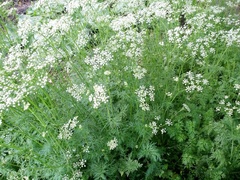 Cuminum cyminum
 Anethum foeniculumt0
- Treatment
- fertilizerse0
- Outcome
- yielde0
- Direction
- did not influencee0
Not reportedComparator
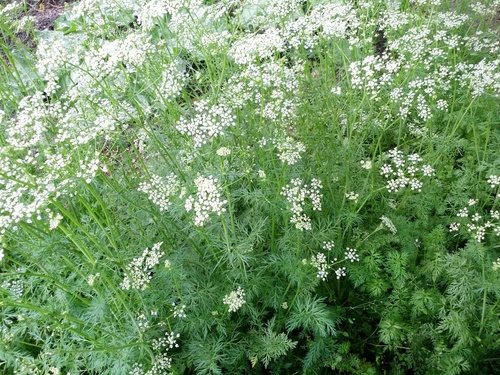
Organisms pictured · Representative pictures of the matched species, not figures from the paper.

Verbatim
e0“in general, fertilizers did not influence yield of first and second year crops”
t0“fennel and cumin plants”
Claim · model-written summary
Organic fertilizers increased third year cumin yield by 126–306.6% versus control.
- Taxon
- C. cyminumCuminum cyminume0
- Treatment
- organic fertilizerse0
- Outcome
- third year cropse0
- Direction
- increasee0
- Value
- 126–306.6%e0
- Comparator
- controle0
Organisms pictured · Representative pictures of the matched species, not figures from the paper.
Verbatim
e0“The significant (P ≤ 0.05) positive influences of organic fertilizers were observed for third year crops and were of higher magnitude for C. cyminum than F. vulgare (126–306.6% increase for C. cyminum and 24.5–48.4% increase for F. vulgare than control).”
Claim · model-written summary
Organic fertilizers increased third year fennel yield by 24.5–48.4% versus control.
- Taxon
- F. vulgareAnethum foeniculume0
- Treatment
- organic fertilizerse0
- Outcome
- third year cropse0
- Direction
- increasee0
- Value
- 24.5–48.4%e0
- Comparator
- controle0
Organisms pictured · Representative pictures of the matched species, not figures from the paper.
Verbatim
e0“The significant (P ≤ 0.05) positive influences of organic fertilizers were observed for third year crops and were of higher magnitude for C. cyminum than F. vulgare (126–306.6% increase for C. cyminum and 24.5–48.4% increase for F. vulgare than control).”
Claim · model-written summary
Compared with sheep and goat manure at 6.64 t ha−1, its wood-biochar co-amendment reduced fennel seed phosphorus.
- Taxon
- F. vulgareAnethum foeniculume1
- Treatment
- co-amendment with wood-derived biochare0
- Outcome
- P in seedse0
- Direction
- reducede0
- Comparator
- S/G applied at 6.64 t ha−1 ratee0
Organisms pictured · Representative pictures of the matched species, not figures from the paper.
Verbatim
e0“As compared to S/G applied at 6.64 t ha−1 rate, its co-amendment with wood-derived biochar at all application rates significantly reduced P in seeds”
e1“stover of F. vulgare (Table 3”
Claim · model-written summary
Co-amendment with either biochar reduced phosphorus in fennel stover.
- Taxon
- F. vulgareAnethum foeniculume0
- Treatment
- co-amendment with both biochar typese0
- Outcome
- P in the stovere0
- Direction
- reducede0
Not reportedComparator
Organisms pictured · Representative pictures of the matched species, not figures from the paper.
Verbatim
e0“its co-amendment with both biochar types and at all application rates significantly reduced P in the stover of F. vulgare”
Claim · model-written summary
Cumin stover phosphorus concentration did not differ among treatments.
- Taxon
- C. cyminumCuminum cyminume0
- Treatment
- treatmentse0
- Outcome
- concentration of P in stovere0
- Direction
- no differencee0
- Comparator
- treatmentse0
Organisms pictured · Representative pictures of the matched species, not figures from the paper.
Verbatim
e0“For the crop C. cyminum, there was no difference between treatments for the concentration of P in stover.”
Claim · model-written summary
Sheep and goat manure improved fennel stover phosphorus use efficiency by 80–108% versus control.
- Taxon
- F. vulgareAnethum foeniculume0
- Treatment
- S/Ge0
- Outcome
- phosphorus use efficiency (PUE) of stovere0
- Direction
- improvede0
- Value
- 80–108%e0
- Comparator
- controle0
Organisms pictured · Representative pictures of the matched species, not figures from the paper.
Verbatim
e0“The phosphorus use efficiency (PUE) of stover of F. vulgare was significantly improved by 80–108% and by 60–79% in response to the application of S/G and its co-amendment with FYMB respectively than control.”
Claim · model-written summary
Manure with FYMB improved fennel stover phosphorus use efficiency by 60–79% versus control.
- Taxon
- F. vulgareAnethum foeniculume0
- Treatment
- co-amendment with FYMBe0
- Outcome
- phosphorus use efficiency (PUE) of stovere0
- Direction
- improvede0
- Value
- 60–79%e0
- Comparator
- controle0
Organisms pictured · Representative pictures of the matched species, not figures from the paper.
Verbatim
e0“The phosphorus use efficiency (PUE) of stover of F. vulgare was significantly improved by 80–108% and by 60–79% in response to the application of S/G and its co-amendment with FYMB respectively than control.”
Claim · model-written summary
High-rate manure and wood-biochar co-amendment increased fennel seed phosphorus use efficiency by 100%.
- Taxon
- F. vulgareAnethum foeniculume0
- Treatment
- co-amendment of manure with wood-derived biochar at high application ratee0
- Outcome
- PUE of seedse0
- Direction
- increasede0
- Value
- 100%e0
- Comparator
- controle0
Organisms pictured · Representative pictures of the matched species, not figures from the paper.
Verbatim
e0“The PUE of seeds of F. vulgare was increased by 100% than control in response to the co-amendment of manure with wood-derived biochar at high application rate (P ≤ 0.05).”
Claim · model-written summary
Most fertilizer treatments improved cumin seed phosphorus use efficiency by 171–561% versus control.
- Taxon
- C. cyminumCuminum cyminume1
- Treatment
- most of the treatmentse0
- Outcome
- PUE of seedse0
- Direction
- improvede0
- Value
- 171 – 561%e0
- Comparator
- controle0
Organisms pictured · Representative pictures of the matched species, not figures from the paper.
Verbatim
e0“most of the treatments improved PUE of seeds by171 – 561% and stover by 196–294% than control with no significant differences between fertilizer treatments”
e1“third year crop of C. cyminum”
Claim · model-written summary
Most fertilizer treatments improved cumin stover phosphorus use efficiency by 196–294% versus control.
- Taxon
- C. cyminumCuminum cyminume1
- Treatment
- most of the treatmentse0
- Outcome
- stovere0
- Direction
- improvede0
- Value
- 196–294%e0
- Comparator
- controle0
Organisms pictured · Representative pictures of the matched species, not figures from the paper.
Verbatim
e0“most of the treatments improved PUE of seeds by171 – 561% and stover by 196–294% than control with no significant differences between fertilizer treatments”
e1“third year crop of C. cyminum”
Claim · model-written summary
Fertilizer treatments generally showed no consistent significant differences for either crop across space and time.
- Taxon
- fennel and cuminCuminum cyminumAnethum foeniculumt0
- Outcome
- differences between fertilizer treatmentse0
- Direction
- non-consistente0
Organisms pictured · Representative pictures of the matched species, not figures from the paper.
Verbatim
e0“non-consistent and in general non-significant differences between fertilizer treatments for both crops”
t0“fennel and cumin plants”
The same questions in other papers
fertilization · yield · Cuminum cyminum (cumin)Positive and negative results
1 paper in the same direction as this paper · 17 in the opposite direction
- positive
- positive
- positive
15 papers more in this group
See all 19 papers →fertilization · yield · Anethum foeniculum (fennel)Positive and negative results
1 paper in the same direction as this paper · 51 in the opposite direction
- positive
- positive
- positive
49 papers more in this group
See all 53 papers →fertilization · nutrient: efficiency · Anethum foeniculum (fennel)Results agree
1 paper in the same direction as this paper
- positive
Claims are grouped by organism, treatment and what was measured or targeted. A paper counts as positive when any of its claims in the group is positive.