Abstract
The potential of different medicinal species as alternative crops for saline conditions needs to be explored. Comparative physiological responses of germinating seeds and mature plants of three genotypes of anise (Pimpinella anisum L.), fennel (Foeniculum vulgare Mill.), and ajwain (Trachyspermum ammi L.) to salt were studied in a 2-year field experiment using 0 and 100 mcM, and a laboratory experiment using 0, 25, 50, 75, 100, and 125 mM NaCl. Catalase and ascorbate peroxidase activities increased in the salt-stricken plants of all genotypes, but only peroxidase activity of the salt-treated plants of anise genotypes and two of the fennel genotypes increased under field conditions. Chlorophyll and K+ concentrations of all genotypes decreased, but proline and Na+ concentrations and Na+/K+ increased under saline conditions. Dry mass, grain yield, and essential oil yield decreased in the salt-exposed plants across all genotypes and species. Germination, root, and shoot length were suppressed upon exposure to saline water. Despite the increasing trend of the proline and polyphenol concentrations and catalase and peroxidase activities, ascorbate peroxidase activity of germinating seeds decreased with an increase in NaCl concentration. Smaller adverse effects of salt on fennel germination attributes, grain, and essential oil yields were evident. Moreover, more significant activities of antioxidative enzymes and maintained Na+ and Na+/K+ of salt-stricken fennel plants were observed. These findings indicate that fennel germinating seeds and mature plants have a greater ability to withstand salinity than the other examined species. Highlights - Differential salt-induced alterations in ionic status of mature plants of anise, ajwain, and fennel. - Boosted antioxidative enzymes activities in the stressed plants of different species. - Greater grain yield and essential oil of stressed fennel plants compared to anise and ajwain. - Fennel and ajwain mature plants benefit from a stronger antoxidative defense to withstand salinity. - Polyphenols and proline accumulated in the germinating seeds of fennel and ajwain contributes to salt tolerance.
Abstract from the paper’s OpenAlex record; open copy licensed cc-by-nc. Read at the source ↗
The text the model read, with the source record’s inline markup (italics, sub- and superscripts) rendered and its character entities decoded; quote offsets refer to the raw text.
Claims 18
Claim · model-written summary
Catalase and ascorbate peroxidase activities increased in salt-exposed plants of all genotypes.
- Taxon
- anise (Pimpinella anisum L.), fennel (Foeniculum vulgare Mill.), and ajwain (Trachyspermum ammi L.)
 Trachyspermum ammi
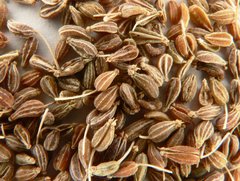 Pimpinella anisum
 Anethum foeniculume1
- Treatment
- salte2
- Outcome
- Catalase and ascorbate peroxidase activitiese2
- Direction
- increasede2
Not reportedComparator
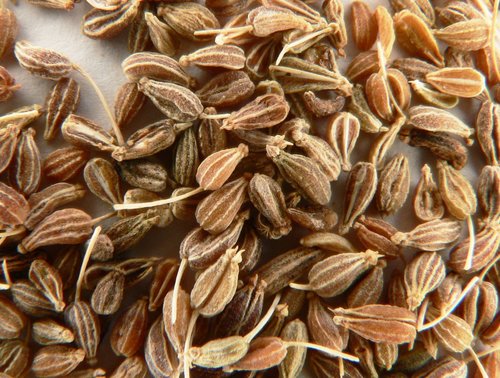
Organisms pictured · Representative pictures of the matched species, not figures from the paper.


Verbatim
e1“Comparative physiological responses of germinating seeds and mature plants of three genotypes of anise (Pimpinella anisum L.), fennel (Foeniculum vulgare Mill.), and ajwain (Trachyspermum ammi L.) to salt were studied in a 2-year field experiment using 0 and 100 mcM, and a laboratory experiment using 0, 25, 50, 75, 100, and 125 mM NaCl”
e2“Catalase and ascorbate peroxidase activities increased in the salt-stricken plants of all genotypes”
Claim · model-written summary
Peroxidase activity increased in salt-treated anise genotypes, only under field conditions.
- Taxon
- anise
 Myrrhis odoratae2
- Treatment
- salte2
- Outcome
- peroxidase activitye2
- Direction
- increasede2
- Qualifier
- onlye2
- Setting
- field conditionse2
Not reportedComparator
Organisms pictured · Representative pictures of the matched species, not figures from the paper.

Verbatim
e2“only peroxidase activity of the salt-treated plants of anise genotypes and two of the fennel genotypes increased under field conditions”
Claim · model-written summary
Peroxidase activity increased in salt-treated fennel, in two of the genotypes, only under field conditions.
- Taxon
- fennelAnethum foeniculume2
- Treatment
- salte2
- Outcome
- peroxidase activitye2
- Direction
- increasede2
- Qualifier
- two of the fennel genotypese2
- Setting
- field conditionse2
Not reportedComparator
Organisms pictured · Representative pictures of the matched species, not figures from the paper.
Verbatim
e2“only peroxidase activity of the salt-treated plants of anise genotypes and two of the fennel genotypes increased under field conditions”
Claim · model-written summary
Chlorophyll and K+ concentrations decreased in all genotypes under saline conditions.
- Taxon
- anise (Pimpinella anisum L.), fennel (Foeniculum vulgare Mill.), and ajwain (Trachyspermum ammi L.)Trachyspermum ammiPimpinella anisumAnethum foeniculume1
- Treatment
- saline conditionse2
- Outcome
- Chlorophyll and K+ concentrationse2
- Direction
- decreasede2
Not reportedComparator
Organisms pictured · Representative pictures of the matched species, not figures from the paper.
Verbatim
e1“Comparative physiological responses of germinating seeds and mature plants of three genotypes of anise (Pimpinella anisum L.), fennel (Foeniculum vulgare Mill.), and ajwain (Trachyspermum ammi L.) to salt were studied in a 2-year field experiment using 0 and 100 mcM, and a laboratory experiment using 0, 25, 50, 75, 100, and 125 mM NaCl”
e2“Chlorophyll and K+ concentrations of all genotypes decreased, but proline and Na+ concentrations and Na+/K+ increased under saline conditions”
Claim · model-written summary
Proline concentration increased under saline conditions.
- Taxon
- anise (Pimpinella anisum L.), fennel (Foeniculum vulgare Mill.), and ajwain (Trachyspermum ammi L.)Trachyspermum ammiPimpinella anisumAnethum foeniculume1
- Treatment
- saline conditionse2
- Outcome
- prolinee2
- Direction
- increasede2
Not reportedComparator
Organisms pictured · Representative pictures of the matched species, not figures from the paper.
Verbatim
e1“Comparative physiological responses of germinating seeds and mature plants of three genotypes of anise (Pimpinella anisum L.), fennel (Foeniculum vulgare Mill.), and ajwain (Trachyspermum ammi L.) to salt were studied in a 2-year field experiment using 0 and 100 mcM, and a laboratory experiment using 0, 25, 50, 75, 100, and 125 mM NaCl”
e2“Chlorophyll and K+ concentrations of all genotypes decreased, but proline and Na+ concentrations and Na+/K+ increased under saline conditions”
Claim · model-written summary
Na+ concentrations and Na+/K+ increased under saline conditions.
- Taxon
- anise (Pimpinella anisum L.), fennel (Foeniculum vulgare Mill.), and ajwain (Trachyspermum ammi L.)Trachyspermum ammiPimpinella anisumAnethum foeniculume1
- Treatment
- saline conditionse2
- Outcome
- Na+ concentrations and Na+/K+e2
- Direction
- increasede2
Not reportedComparator
Organisms pictured · Representative pictures of the matched species, not figures from the paper.
Verbatim
e1“Comparative physiological responses of germinating seeds and mature plants of three genotypes of anise (Pimpinella anisum L.), fennel (Foeniculum vulgare Mill.), and ajwain (Trachyspermum ammi L.) to salt were studied in a 2-year field experiment using 0 and 100 mcM, and a laboratory experiment using 0, 25, 50, 75, 100, and 125 mM NaCl”
e2“Chlorophyll and K+ concentrations of all genotypes decreased, but proline and Na+ concentrations and Na+/K+ increased under saline conditions”
Claim · model-written summary
Dry mass, grain yield and essential oil yield decreased in salt-exposed plants across all genotypes and species.
- Taxon
- anise (Pimpinella anisum L.), fennel (Foeniculum vulgare Mill.), and ajwain (Trachyspermum ammi L.)Trachyspermum ammiPimpinella anisumAnethum foeniculume1
- Treatment
- salte2
- Outcome
- Dry mass, grain yield, and essential oil yielde2
- Direction
- decreasede2
Not reportedComparator
Organisms pictured · Representative pictures of the matched species, not figures from the paper.
Verbatim
e1“Comparative physiological responses of germinating seeds and mature plants of three genotypes of anise (Pimpinella anisum L.), fennel (Foeniculum vulgare Mill.), and ajwain (Trachyspermum ammi L.) to salt were studied in a 2-year field experiment using 0 and 100 mcM, and a laboratory experiment using 0, 25, 50, 75, 100, and 125 mM NaCl”
e2“Dry mass, grain yield, and essential oil yield decreased in the salt-exposed plants across all genotypes and species”
Claim · model-written summary
Germination, root length and shoot length were suppressed by exposure to saline water.
- Taxon
- anise (Pimpinella anisum L.), fennel (Foeniculum vulgare Mill.), and ajwain (Trachyspermum ammi L.)Trachyspermum ammiPimpinella anisumAnethum foeniculume1
- Treatment
- saline watere2
- Outcome
- Germination, root, and shoot lengthe2
- Direction
- suppressede2
Not reportedComparator
Organisms pictured · Representative pictures of the matched species, not figures from the paper.
Verbatim
e1“Comparative physiological responses of germinating seeds and mature plants of three genotypes of anise (Pimpinella anisum L.), fennel (Foeniculum vulgare Mill.), and ajwain (Trachyspermum ammi L.) to salt were studied in a 2-year field experiment using 0 and 100 mcM, and a laboratory experiment using 0, 25, 50, 75, 100, and 125 mM NaCl”
e2“Germination, root, and shoot length were suppressed upon exposure to saline water”
Claim · model-written summary
Ascorbate peroxidase activity of germinating seeds decreased as NaCl concentration increased.
- Taxon
- anise (Pimpinella anisum L.), fennel (Foeniculum vulgare Mill.), and ajwain (Trachyspermum ammi L.)Trachyspermum ammiPimpinella anisumAnethum foeniculume1
- Organ / stage
- germinating seedse2
- Treatment
- NaCl concentratione2
- Outcome
- ascorbate peroxidase activitye2
- Direction
- decreasede2
Organisms pictured · Representative pictures of the matched species, not figures from the paper.
Verbatim
e1“Comparative physiological responses of germinating seeds and mature plants of three genotypes of anise (Pimpinella anisum L.), fennel (Foeniculum vulgare Mill.), and ajwain (Trachyspermum ammi L.) to salt were studied in a 2-year field experiment using 0 and 100 mcM, and a laboratory experiment using 0, 25, 50, 75, 100, and 125 mM NaCl”
e2“Despite the increasing trend of the proline and polyphenol concentrations and catalase and peroxidase activities, ascorbate peroxidase activity of germinating seeds decreased with an increase in NaCl concentration”
Claim · model-written summary
Proline and polyphenol concentrations showed an increasing trend with NaCl.
- Taxon
- anise (Pimpinella anisum L.), fennel (Foeniculum vulgare Mill.), and ajwain (Trachyspermum ammi L.)Trachyspermum ammiPimpinella anisumAnethum foeniculume1
- Treatment
- NaCle2
- Outcome
- proline and polyphenol concentrationse2
- Direction
- increasing trende2
Organisms pictured · Representative pictures of the matched species, not figures from the paper.
Verbatim
e1“Comparative physiological responses of germinating seeds and mature plants of three genotypes of anise (Pimpinella anisum L.), fennel (Foeniculum vulgare Mill.), and ajwain (Trachyspermum ammi L.) to salt were studied in a 2-year field experiment using 0 and 100 mcM, and a laboratory experiment using 0, 25, 50, 75, 100, and 125 mM NaCl”
e2“Despite the increasing trend of the proline and polyphenol concentrations and catalase and peroxidase activities, ascorbate peroxidase activity of germinating seeds decreased with an increase in NaCl concentration”
Claim · model-written summary
Catalase and peroxidase activities showed an increasing trend with NaCl.
- Taxon
- anise (Pimpinella anisum L.), fennel (Foeniculum vulgare Mill.), and ajwain (Trachyspermum ammi L.)Trachyspermum ammiPimpinella anisumAnethum foeniculume1
- Treatment
- NaCle2
- Outcome
- catalase and peroxidase activitiese2
- Direction
- increasing trende2
Organisms pictured · Representative pictures of the matched species, not figures from the paper.
Verbatim
e1“Comparative physiological responses of germinating seeds and mature plants of three genotypes of anise (Pimpinella anisum L.), fennel (Foeniculum vulgare Mill.), and ajwain (Trachyspermum ammi L.) to salt were studied in a 2-year field experiment using 0 and 100 mcM, and a laboratory experiment using 0, 25, 50, 75, 100, and 125 mM NaCl”
e2“Despite the increasing trend of the proline and polyphenol concentrations and catalase and peroxidase activities, ascorbate peroxidase activity of germinating seeds decreased with an increase in NaCl concentration”
Claim · model-written summary
Salt had smaller adverse effects on fennel germination attributes, grain yield and essential oil yield than on the other species.
- Taxon
- fennelAnethum foeniculume2
- Treatment
- salte2
- Outcome
- germination attributes, grain, and essential oil yieldse2
- Direction
- Smallere2
Not reportedComparator
Organisms pictured · Representative pictures of the matched species, not figures from the paper.
Verbatim
e2“Smaller adverse effects of salt on fennel germination attributes, grain, and essential oil yields were evident”
Claim · model-written summary
Antioxidative enzyme activities were more significant in salt-stressed fennel plants.
- Taxon
- fennelAnethum foeniculume2
- Treatment
- salte2
- Outcome
- activities of antioxidative enzymese2
- Direction
- more significante2
Not reportedComparator
Organisms pictured · Representative pictures of the matched species, not figures from the paper.
Verbatim
e2“more significant activities of antioxidative enzymes and maintained Na+ and Na+/K+ of salt-stricken fennel plants were observed”
Claim · model-written summary
Na+ and Na+/K+ were maintained in salt-stressed fennel plants.
- Taxon
- fennelAnethum foeniculume2
- Treatment
- salte2
- Outcome
- Na+ and Na+/K+e2
- Direction
- maintainede2
Not reportedComparator
Organisms pictured · Representative pictures of the matched species, not figures from the paper.
Verbatim
e2“more significant activities of antioxidative enzymes and maintained Na+ and Na+/K+ of salt-stricken fennel plants were observed”
Claim · model-written summary
Fennel has a greater ability to withstand salinity than the other examined species.
- Taxon
- fennelAnethum foeniculume3
- Organ / stage
- germinating seeds and mature plantse3
- Treatment
- salinitye3
- Outcome
- ability to withstand salinitye3
- Direction
- greatere3
- Comparator
- the other examined speciese3
Organisms pictured · Representative pictures of the matched species, not figures from the paper.
Verbatim
e3“These findings indicate that fennel germinating seeds and mature plants have a greater ability to withstand salinity than the other examined species”
Claim · model-written summary
Grain yield and essential oil of stressed fennel plants were greater than those of anise and ajwain.
- Taxon
- fennelAnethum foeniculume4
- Outcome
- grain yield and essential oile4
- Direction
- Greatere4
- Comparator
- anise and ajwaine4
Organisms pictured · Representative pictures of the matched species, not figures from the paper.
Verbatim
e4“Greater grain yield and essential oil of stressed fennel plants compared to anise and ajwain”
Claim · model-written summary
Fennel and ajwain mature plants withstand salinity through a stronger antioxidative defense.
Verbatim
e5“Fennel and ajwain mature plants benefit from a stronger antoxidative defense to withstand salinity”
Claim · model-written summary
Polyphenols and proline accumulated in germinating seeds of fennel and ajwain are proposed to contribute to salt tolerance.
Verbatim
e6“Polyphenols and proline accumulated in the germinating seeds of fennel and ajwain contributes to salt tolerance”
The same questions in other papers
salinity · quality: oil · Trachyspermum ammiPositive and negative results
1 in the opposite direction
- positive
salinity · quality: oil · Anethum foeniculum (fennel)Positive and negative results
1 in the opposite direction
- positive
salinity · physiology: enzyme activity · Anethum foeniculum (fennel)Positive and negative results
1 in the opposite direction
- no effect
salinity · physiology: ion balance · Anethum foeniculum (fennel)Positive and negative results
3 in the opposite direction
- negative
- negative
- negative
salinity · yield · Anethum foeniculum (fennel)Positive and negative results
2 papers in the same direction as this paper · 3 in the opposite direction
- negative
- no effect
- negative
2 papers more in this group
See all 6 papers →salinity · growth · Anethum foeniculum (fennel)Positive and negative results
8 papers in the same direction as this paper · 1 in the opposite direction
- positive
- negative
- negative
6 papers more in this group
See all 10 papers →salinity · physiology: pigments · Anethum foeniculum (fennel)Results agree
1 paper in the same direction as this paper
- negative
Claims are grouped by organism, treatment and what was measured or targeted. A paper counts as positive when any of its claims in the group is positive.