Abstract
The herbal crops parsley (Petroselinum crispum) and basil (Ocimum basilicum) have relatively high concentrations of nutritionally important lutein, zeaxanthin, and -carotene carotenoid phytonutrients However, knowledge of the genetic and environmental influences on carotenoid accumulation in herbal crops is lacking. Therefore, the objectives of these studies were to assess the impact of cultivar choice and environment on carotenoid production in parsley and basil. Genotypic differences for lutein, zeaxanthin, and -carotene content were measured in leaf tissue from eight commercial basil cultivars. The first years evaluation revealed significant differences among cultivars for all carotenoids tested. `Sweet Thai, Genovese, and Cinnamon ranked highest for lutein, zeaxanthin, and -carotene. In a second study, carotenoid production in the leaves of parsley was assessed under varying levels of nitrogen (N) fertility. `Dark Green Italian parsley was greenhousegrown in a nutrient solution with N at 6.0, 13.1, 26.3, 52.5, or 105.0 mgL -1 . Increasing N in the nutrient solution increased plant biomass, lutein-zeaxanthin, -carotene, and chlorophyll pigments. Carotenoid production in leafy herbal crops can be modified through genetic and environmental manipulation. Increasing the concentration of important dietary carotenoids through simple cultural production techniques would be expected to increase the nutritional value of these culinary herbal crops.
Abstract from the paper’s OpenAlex record, shown for indexing and research. Copyright remains with the authors or the publisher. Read at the source ↗
The text the model read, with the source record’s inline markup (italics, sub- and superscripts) rendered and its character entities decoded; quote offsets refer to the raw text.
Claims 5
Claim · model-written summary
Basil cultivars differed significantly in carotenoid content.
- Taxon
- basil
 Ocimum basilicume0
- Material
- commercial basil cultivarse1
- Outcome
- all carotenoids testede2
Not reportedDirection
Organisms pictured · Representative pictures of the matched species, not figures from the paper.

Verbatim
e0“The herbal crops parsley (Petroselinum crispum) and basil (Ocimum basilicum) have relatively high concentrations of nutritionally important lutein, zeaxanthin, and -carotene carotenoid phytonutrients”
e1“Genotypic differences for lutein, zeaxanthin, and -carotene content were measured in leaf tissue from eight commercial basil cultivars”
e2“The first years evaluation revealed significant differences among cultivars for all carotenoids tested”
Claim · model-written summary
Sweet Thai, Genovese and Cinnamon basil ranked highest for lutein, zeaxanthin and beta-carotene.
- Taxon
- basilOcimum basilicume0
- Material
- Sweet Thai, Genovese, and Cinnamone1
- Outcome
- lutein, zeaxanthin, and -carotenee1
- Direction
- ranked higheste1
Organisms pictured · Representative pictures of the matched species, not figures from the paper.
Verbatim
e0“The herbal crops parsley (Petroselinum crispum) and basil (Ocimum basilicum) have relatively high concentrations of nutritionally important lutein, zeaxanthin, and -carotene carotenoid phytonutrients”
e1“Sweet Thai, Genovese, and Cinnamon ranked highest for lutein, zeaxanthin, and -carotene”
Claim · model-written summary
Increasing nitrogen in the nutrient solution increased parsley plant biomass in the greenhouse.
- Taxon
- parsley
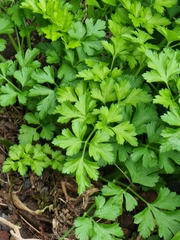 Petroselinum crispume0
- Material
- Dark Green Italian parsleye1
- Treatment
- Increasing N in the nutrient solutione2
- Outcome
- plant biomasse2
- Direction
- increasede2
- Setting
- greenhousee1
Not reportedComparator
Organisms pictured · Representative pictures of the matched species, not figures from the paper.
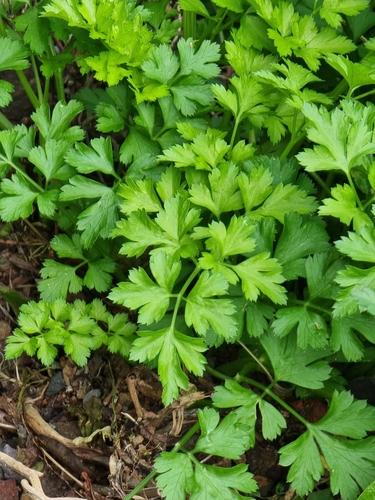
Verbatim
e0“The herbal crops parsley (Petroselinum crispum) and basil (Ocimum basilicum) have relatively high concentrations of nutritionally important lutein, zeaxanthin, and -carotene carotenoid phytonutrients”
e1“Dark Green Italian parsley was greenhousegrown in a nutrient solution with N at 6.0, 13.1, 26.3, 52.5, or 105.0 mgL -1”
e2“Increasing N in the nutrient solution increased plant biomass, lutein-zeaxanthin, -carotene, and chlorophyll pigments”
Claim · model-written summary
Increasing nitrogen in the nutrient solution increased lutein-zeaxanthin, beta-carotene and chlorophyll pigments in parsley.
- Taxon
- parsleyPetroselinum crispume0
- Material
- Dark Green Italian parsleye1
- Treatment
- Increasing N in the nutrient solutione2
- Outcome
- lutein-zeaxanthin, -carotene, and chlorophyll pigmentse2
- Direction
- increasede2
- Setting
- greenhousee1
Not reportedComparator
Organisms pictured · Representative pictures of the matched species, not figures from the paper.
Verbatim
e0“The herbal crops parsley (Petroselinum crispum) and basil (Ocimum basilicum) have relatively high concentrations of nutritionally important lutein, zeaxanthin, and -carotene carotenoid phytonutrients”
e1“Dark Green Italian parsley was greenhousegrown in a nutrient solution with N at 6.0, 13.1, 26.3, 52.5, or 105.0 mgL -1”
e2“Increasing N in the nutrient solution increased plant biomass, lutein-zeaxanthin, -carotene, and chlorophyll pigments”
Claim · model-written summary
Increasing carotenoid concentration through simple cultural production techniques would be expected to increase the nutritional value of culinary herbal crops.
Verbatim
e0“Increasing the concentration of important dietary carotenoids through simple cultural production techniques would be expected to increase the nutritional value of these culinary herbal crops”
The same questions in other papers
fertilization · physiology: pigments · Petroselinum crispum (parsley)Results agree
3 papers in the same direction as this paper
- positive
- positive
- positive
fertilization · growth · Petroselinum crispum (parsley)Results agree
8 papers in the same direction as this paper
- positive
- positive
- positive
5 papers more in this group
See all 9 papers →Claims are grouped by organism, treatment and what was measured or targeted. A paper counts as positive when any of its claims in the group is positive.