Abstract
Vertical farms and plant factories with artificial lighting (PFALs) make it possible to improve the use efficiency of inputs like surface, water, and nutrients and to grow crops without or reduced use of pesticides. Herbs have a high potential to be grown in PFALs. Energy and lighting costs are still high, but light-emitting diodes (LEDs) allow to develop species-specific spectra which optimize yield and qualitative traits. In the present research, the effect of four red and blue light (R:B 0.5, 1, 2, 4) combinations on the growth and nutritional quality of sweet and purple basil (Ocimum basilicum), parsley (Petroselinum crispum), and coriander (Coriandrum sativum) was studied. The R:B ratio of 4 enhanced the plant height of sweet basil, parsley, and coriander. In contrast, the growth of purple basil didn’t differ between the light treatments, but a lower R:B ratio resulted in significantly more anthocyanins. Increasing the red light fraction also enhanced the chlorophyll and total phenolics content in coriander. In parsley, an R:B ratio of 2 was more optimal for the chlorophyll content, but negatively impacted the total phenolics content. The phytochemicals in sweet basil were not influenced by the different R:B ratios.
Abstract from the paper’s OpenAlex record, shown for indexing and research. Copyright remains with the authors or the publisher. Read at the source ↗
The text the model read, with the source record’s inline markup (italics, sub- and superscripts) rendered and its character entities decoded; quote offsets refer to the raw text.
Claims 9
Claim · model-written summary
An R:B ratio of 4 enhanced sweet basil plant height.
- Taxon
- sweet basil
 Ocimum basilicume0
- Treatment
- R:B ratio of 4e0
- Outcome
- plant heighte0
- Direction
- enhancede0
Not reportedComparator
Organisms pictured · Representative pictures of the matched species, not figures from the paper.

Verbatim
e0“The R:B ratio of 4 enhanced the plant height of sweet basil, parsley, and coriander”
Claim · model-written summary
An R:B ratio of 4 enhanced parsley plant height.
- Taxon
- parsley
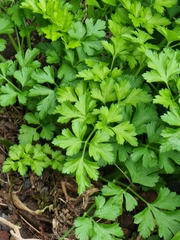 Petroselinum crispume0
- Treatment
- R:B ratio of 4e0
- Outcome
- plant heighte0
- Direction
- enhancede0
Not reportedComparator
Organisms pictured · Representative pictures of the matched species, not figures from the paper.
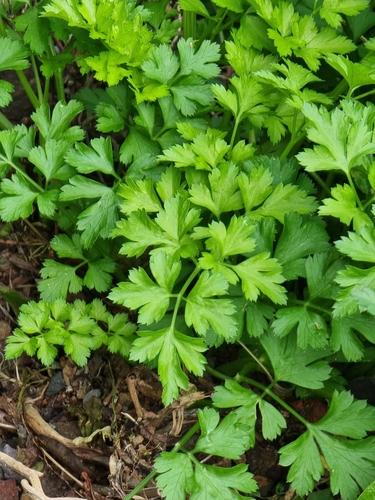
Verbatim
e0“The R:B ratio of 4 enhanced the plant height of sweet basil, parsley, and coriander”
Claim · model-written summary
An R:B ratio of 4 enhanced coriander plant height.
- Taxon
- coriander
 Coriandrum sativume0
- Treatment
- R:B ratio of 4e0
- Outcome
- plant heighte0
- Direction
- enhancede0
Not reportedComparator
Organisms pictured · Representative pictures of the matched species, not figures from the paper.

Verbatim
e0“The R:B ratio of 4 enhanced the plant height of sweet basil, parsley, and coriander”
Claim · model-written summary
Purple basil growth did not differ across light treatments.
Verbatim
e0“the growth of purple basil didn’t differ between the light treatments”
Claim · model-written summary
A lower R:B ratio produced significantly more purple basil anthocyanins.
Not reportedComparator
Verbatim
e0“a lower R:B ratio resulted in significantly more anthocyanins”
e1“the growth of purple basil didn’t differ between the light treatments”
Claim · model-written summary
Increasing red light enhanced coriander chlorophyll and total phenolics content.
- Taxon
- corianderCoriandrum sativume0
- Treatment
- Increasing the red light fractione0
- Outcome
- chlorophyll and total phenolics contente0
- Direction
- enhancede0
Not reportedComparator
Organisms pictured · Representative pictures of the matched species, not figures from the paper.
Verbatim
e0“Increasing the red light fraction also enhanced the chlorophyll and total phenolics content in coriander”
Claim · model-written summary
An R:B ratio of 2 was more optimal for parsley chlorophyll content.
- Taxon
- parsleyPetroselinum crispume0
- Treatment
- R:B ratio of 2e0
- Outcome
- chlorophyll contente0
- Direction
- more optimale0
Not reportedComparator
Organisms pictured · Representative pictures of the matched species, not figures from the paper.
Verbatim
e0“In parsley, an R:B ratio of 2 was more optimal for the chlorophyll content”
Claim · model-written summary
An R:B ratio of 2 negatively affected parsley total phenolics content.
- Taxon
- parsleyPetroselinum crispume0
- Treatment
- R:B ratio of 2e0
- Outcome
- total phenolics contente0
- Direction
- negatively impactede0
Not reportedComparator
Organisms pictured · Representative pictures of the matched species, not figures from the paper.
Verbatim
e0“In parsley, an R:B ratio of 2 was more optimal for the chlorophyll content, but negatively impacted the total phenolics content”
Claim · model-written summary
Different R:B ratios did not influence sweet basil phytochemicals.
- Taxon
- sweet basilOcimum basilicume0
- Treatment
- different R:B ratiose0
- Outcome
- phytochemicalse0
- Direction
- not influencede0
Not reportedComparator
Organisms pictured · Representative pictures of the matched species, not figures from the paper.
Verbatim
e0“The phytochemicals in sweet basil were not influenced by the different R:B ratios”
The same questions in other papers
light · physiology: pigments · Coriandrum sativum (coriander)Results agree
2 papers in the same direction as this paper
- positive
- positive
Claims are grouped by organism, treatment and what was measured or targeted. A paper counts as positive when any of its claims in the group is positive.