Abstract
Plant health is the fundamental of agricultural production, which is threatened by plant pathogens severely. The previous studies exhibited the effects of different pathogen control strategies (physical, chemical, and microbial methods), which resulted from bringing in exogenous additives, on microbial community structures and functions. Nevertheless, few studies focused on the potential inhibitory abilities of native microbial community in the soil, which could be activated or enhanced by different fertilization strategies. In this study, three plant diseases (TMV, TBS, and TBW) of tobacco, fungal community of tobacco rhizosphere soil, and the correlation between them were researched. The results showed that nitrogen-reducing fertilization strategies could significantly decrease the occurrence rate and the disease index of three tobacco diseases. The results of bioinformatics analyses revealed that the fungal communities of different treatments could differentiate the nitrogen-reducing fertilization group and the control group (CK). Furthermore, key genera which were responsible for the variation of fungal community were explored by LEfSe analysis. For instance, Tausonia and Trichocladium increased, while Naganishia and Fusicolla decreased under nitrogen-reducing fertilization conditions. Additionally, the correlation between tobacco diseases and key genera was verified using the Mantel test. Moreover, the causal relationship between key genera and tobacco diseases was deeply explored by PLS–PM analysis. These findings provide a theoretical basis for a nitrogen-reducing fertilization strategy against tobacco diseases without exogenous additives and make contributions to revealing the microbial mechanism of native-valued fungal key taxa against tobacco diseases, which could be stimulated by agricultural fertilization management.
Abstract from the paper’s OpenAlex record; open copy licensed cc-by. Read at the source ↗
The text the model read, with the source record’s inline markup (italics, sub- and superscripts) rendered and its character entities decoded; quote offsets refer to the raw text.
Claims 10
Claim · model-written summary
Reduced nitrogen fertilization significantly lowered occurrence of three tobacco diseases.
- Taxon
- tobacco
 Nicotiana tabacume0
- Treatment
- nitrogen-reducing fertilization strategiese0
- Outcome
- occurrence ratee0
- Direction
- decreasee0
- Qualifier
- three tobacco diseasese0
Not reportedComparator
Organisms pictured · Representative pictures of the matched species, not figures from the paper.

Verbatim
e0“nitrogen-reducing fertilization strategies could significantly decrease the occurrence rate and the disease index of three tobacco diseases.”
Claim · model-written summary
Reduced nitrogen fertilization significantly lowered the disease index of three tobacco diseases.
- Taxon
- tobaccoNicotiana tabacume0
- Treatment
- nitrogen-reducing fertilization strategiese0
- Outcome
- disease indexe0
- Direction
- decreasee0
- Qualifier
- three tobacco diseasese0
Not reportedComparator
Organisms pictured · Representative pictures of the matched species, not figures from the paper.
Verbatim
e0“nitrogen-reducing fertilization strategies could significantly decrease the occurrence rate and the disease index of three tobacco diseases.”
Claim · model-written summary
Fungal communities differentiated reduced nitrogen plots from controls.
- Taxon
- tobaccoNicotiana tabacumt0
- Treatment
- nitrogen-reducing fertilization groupe0
- Outcome
- fungal communitiese0
- Direction
- differentiatee0
- Comparator
- control group (CK)e0
Organisms pictured · Representative pictures of the matched species, not figures from the paper.
Verbatim
e0“the fungal communities of different treatments could differentiate the nitrogen-reducing fertilization group and the control group (CK).”
t0“tobacco rhizosphere soil”
Claim · model-written summary
Tausonia increased under reduced nitrogen fertilization.
- Taxon
- tobaccoNicotiana tabacumt0
- Treatment
- nitrogen-reducing fertilization conditionse0
- Outcome
- Tausoniae0
- Direction
- increasede0
Organisms pictured · Representative pictures of the matched species, not figures from the paper.
Verbatim
e0“Tausonia and Trichocladium increased, while Naganishia and Fusicolla decreased under nitrogen-reducing fertilization conditions.”
t0“tobacco rhizosphere soil”
Claim · model-written summary
Trichocladium increased under reduced nitrogen fertilization.
- Taxon
- tobaccoNicotiana tabacumt0
- Treatment
- nitrogen-reducing fertilization conditionse0
- Interactor
- Trichocladium
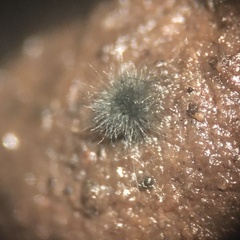 Trichocladiume0symbiont
- Outcome
- Trichocladiume0
- Direction
- increasede0
Organisms pictured · Representative pictures of the matched species, not figures from the paper.

Verbatim
e0“Tausonia and Trichocladium increased, while Naganishia and Fusicolla decreased under nitrogen-reducing fertilization conditions.”
t0“tobacco rhizosphere soil”
Claim · model-written summary
Naganishia decreased under reduced nitrogen fertilization.
- Taxon
- tobaccoNicotiana tabacumt0
- Treatment
- nitrogen-reducing fertilization conditionse0
- Interactor
- NaganishiaNaganishiae0symbiont
- Outcome
- Naganishiae0
- Direction
- decreasede0
Organisms pictured · Representative pictures of the matched species, not figures from the paper.
Verbatim
e0“Tausonia and Trichocladium increased, while Naganishia and Fusicolla decreased under nitrogen-reducing fertilization conditions.”
t0“tobacco rhizosphere soil”
Claim · model-written summary
Fusicolla decreased under reduced nitrogen fertilization.
- Taxon
- tobaccoNicotiana tabacumt0
- Treatment
- nitrogen-reducing fertilization conditionse0
- Outcome
- Fusicollae0
- Direction
- decreasede0
 Fusicolla
Organisms pictured · Representative pictures of the matched species, not figures from the paper.

Verbatim
e0“Tausonia and Trichocladium increased, while Naganishia and Fusicolla decreased under nitrogen-reducing fertilization conditions.”
t0“tobacco rhizosphere soil”
Claim · model-written summary
Key fungal genera correlated with tobacco diseases in a Mantel test.
- Taxon
- tobaccoNicotiana tabacumt0
- Interactor
- key generae0symbiont
- Outcome
- tobacco diseasese0
Not reportedDirection
Organisms pictured · Representative pictures of the matched species, not figures from the paper.
Verbatim
e0“the correlation between tobacco diseases and key genera was verified using the Mantel test.”
t0“tobacco rhizosphere soil”
Claim · model-written summary
PLS–PM analysis explored a causal relationship between key genera and tobacco diseases.
- Taxon
- tobaccoNicotiana tabacumt0
- Interactor
- key generae0symbiont
- Outcome
- tobacco diseasese0
Not reportedDirection
Organisms pictured · Representative pictures of the matched species, not figures from the paper.
Verbatim
e0“the causal relationship between key genera and tobacco diseases was deeply explored by PLS–PM analysis.”
t0“tobacco rhizosphere soil”
Claim · model-written summary
The authors present reduced nitrogen fertilization as a strategy against tobacco diseases without additives.
- Taxon
- tobaccoNicotiana tabacume0
- Outcome
- nitrogen-reducing fertilization strategy against tobacco diseases without exogenous additivese0
Organisms pictured · Representative pictures of the matched species, not figures from the paper.
Verbatim
e0“These findings provide a theoretical basis for a nitrogen-reducing fertilization strategy against tobacco diseases without exogenous additives”
The same questions in other papers
nitrogen · disease · Nicotiana tabacum (tobacco)Positive and negative results
6 papers in the same direction as this paper · 6 in the opposite direction · 1 reporting no difference from an alternative
- negative
- negative
- negative
10 papers more in this group
See all 14 papers →fertilization · disease · Nicotiana tabacum (tobacco)Positive and negative results
30 papers in the same direction as this paper · 2 in the opposite direction
- negative
- negative
- positive
29 papers more in this group
See all 33 papers →Claims are grouped by organism, treatment and what was measured or targeted. A paper counts as positive when any of its claims in the group is positive.