Abstract
Induction of carbohydrate metabolism in relation to leaf blight (Bipolaris sorokiniana) was studied in healthy and infected leaves of barley (Hordeum vulgare). Two genotypes with varying sensitivity to leaf blight viz. PL 426 (susceptible) and BL 4 (resistant) in the absence of or following infection with leaf blight at different stages (0-20 days after infection) were used. Both acid and neutral invertase activities increased in response to leaf blight and might be linked with a defence mechanism against fungal infection. Low activities of sucrose synthase and sucrose phosphate synthase in infected leaves as compared to non infected leaves may be involved in retention of more sugars for utilization by the fungus for its own metabolic processes. The levels of total sugar, non-reducing sugar and starch were less in infected leaves as compared to non infected leaves. Irrespective of cultivar and stage of infection, activity of total amylase marginally increased with concomitant decline in starch content. The lower yield of infected host plants may be linked to reduced photosynthesis due to leaf blight leading to an alteration in the fluxes of carbon. Thus fungal infection represents a costly stress to the plant in terms of carbon production and utilization.
Abstract from the paper’s OpenAlex record, shown for indexing and research. Copyright remains with the authors or the publisher. Read at the source ↗
The text the model read, with the source record’s inline markup (italics, sub- and superscripts) rendered and its character entities decoded; quote offsets refer to the raw text.
Claims 8
Claim · model-written summary
Acid invertase activity increased in barley leaves in response to leaf blight.
- Taxon
- barley (Hordeum vulgare)
 Hordeum vulgaree1
- Treatment
- leaf blighte0
- Interactor
- Bipolaris sorokiniana
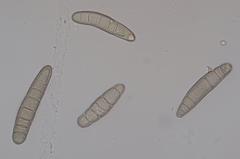 Bipolaris sorokinianae2pathogen
- Gene
- acide0
- Outcome
- acide0
- Direction
- increasede0
Not reportedComparator
Organisms pictured · Representative pictures of the matched species, not figures from the paper.

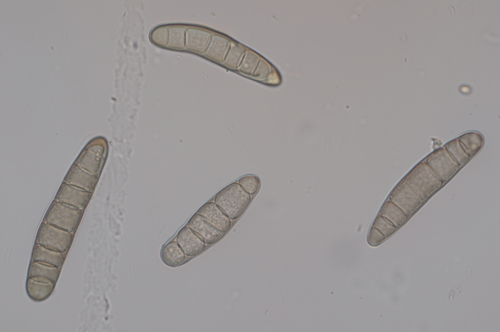
Verbatim
e0“Both acid and neutral invertase activities increased in response to leaf blight”
e1“barley (Hordeum vulgare)”
e2“leaf blight (Bipolaris sorokiniana)”
Claim · model-written summary
Neutral invertase activity increased in barley leaves in response to leaf blight.
- Taxon
- barley (Hordeum vulgare)Hordeum vulgaree1
- Treatment
- leaf blighte0
- Interactor
- Bipolaris sorokinianaBipolaris sorokinianae2pathogen
- Gene
- neutral invertasee0
- Outcome
- neutral invertase activitiese0
- Direction
- increasede0
Not reportedComparator
Organisms pictured · Representative pictures of the matched species, not figures from the paper.
Verbatim
e0“Both acid and neutral invertase activities increased in response to leaf blight”
e1“barley (Hordeum vulgare)”
e2“leaf blight (Bipolaris sorokiniana)”
Claim · model-written summary
Sucrose synthase activity was lower in infected than uninfected barley leaves.
- Taxon
- barley (Hordeum vulgare)Hordeum vulgaree1
- Treatment
- infected leavese0
- Interactor
- Bipolaris sorokinianaBipolaris sorokinianae2pathogen
- Gene
- sucrose synthasee0
- Outcome
- activities of sucrose synthasee0
- Direction
- Lowe0
- Comparator
- non infected leavese0
Organisms pictured · Representative pictures of the matched species, not figures from the paper.
Verbatim
e0“Low activities of sucrose synthase and sucrose phosphate synthase in infected leaves as compared to non infected leaves”
e1“barley (Hordeum vulgare)”
e2“leaf blight (Bipolaris sorokiniana)”
Claim · model-written summary
Sucrose phosphate synthase activity was lower in infected than uninfected barley leaves.
- Taxon
- barley (Hordeum vulgare)Hordeum vulgaree1
- Treatment
- infected leavese0
- Interactor
- Bipolaris sorokinianaBipolaris sorokinianae2pathogen
- Gene
- sucrose phosphate synthasee0
- Outcome
- sucrose phosphate synthasee0
- Direction
- Lowe0
- Comparator
- non infected leavese0
Organisms pictured · Representative pictures of the matched species, not figures from the paper.
Verbatim
e0“Low activities of sucrose synthase and sucrose phosphate synthase in infected leaves as compared to non infected leaves”
e1“barley (Hordeum vulgare)”
e2“leaf blight (Bipolaris sorokiniana)”
Claim · model-written summary
Total sugar, non-reducing sugar, and starch levels were lower in infected than uninfected leaves.
- Taxon
- barley (Hordeum vulgare)Hordeum vulgaree1
- Treatment
- infected leavese0
- Interactor
- Bipolaris sorokinianaBipolaris sorokinianae2pathogen
- Outcome
- total sugar, non-reducing sugar and starche0
- Direction
- lesse0
- Comparator
- non infected leavese0
Organisms pictured · Representative pictures of the matched species, not figures from the paper.
Verbatim
e0“The levels of total sugar, non-reducing sugar and starch were less in infected leaves as compared to non infected leaves”
e1“barley (Hordeum vulgare)”
e2“leaf blight (Bipolaris sorokiniana)”
Claim · model-written summary
Total amylase activity increased marginally regardless of cultivar or infection stage.
- Taxon
- barley (Hordeum vulgare)Hordeum vulgaree1
- Gene
- total amylasee0
- Outcome
- activity of total amylasee0
- Direction
- increasede0
- Qualifier
- Irrespective of cultivar and stage of infectione0
Organisms pictured · Representative pictures of the matched species, not figures from the paper.
Verbatim
e0“Irrespective of cultivar and stage of infection, activity of total amylase marginally increased with concomitant decline in starch content”
e1“barley (Hordeum vulgare)”
Claim · model-written summary
Starch content declined alongside increasing amylase activity.
- Taxon
- barley (Hordeum vulgare)Hordeum vulgaree1
- Gene
- total amylasee0
- Outcome
- starch contente0
- Direction
- declinee0
Organisms pictured · Representative pictures of the matched species, not figures from the paper.
Verbatim
e0“activity of total amylase marginally increased with concomitant decline in starch content”
e1“barley (Hordeum vulgare)”
Claim · model-written summary
The authors link lower infected-plant yield to blight-reduced photosynthesis and altered carbon flux.
- Taxon
- barley (Hordeum vulgare)Hordeum vulgaree1
- Interactor
- Bipolaris sorokinianaBipolaris sorokinianae2pathogen
- Outcome
- lower yielde0
- Qualifier
- reduced photosynthesise0
Organisms pictured · Representative pictures of the matched species, not figures from the paper.
Verbatim
e0“The lower yield of infected host plants may be linked to reduced photosynthesis due to leaf blight leading to an alteration in the fluxes of carbon”
e1“barley (Hordeum vulgare)”
e2“leaf blight (Bipolaris sorokiniana)”
The same questions in other papers
infection · Bipolaris sorokiniana · Hordeum vulgare (barley)Positive and negative results
1 paper in the same direction as this paper · 2 in the opposite direction
- positive
- positive
- negative
Claims are grouped by organism, treatment and what was measured or targeted. A paper counts as positive when any of its claims in the group is positive.