Abstract
Four different Trichoderma species were isolated from the soil rhizosphere of pea field from selected areas of Punjab, Pakistan. Based on morphological and cultural characteristics species were recognized as T. harzianum, T, viridae, T. hamatum and T. koningii. The isolated species were screened for the production of extracellular hydrolytic enzymes. The strains were found positive for chitinase and glucanase activities. Fusarium oxysporum f. sp. pisi was isolated from roots of wilted pea plants. In-vitro biocontrol potential of the isolated Trichoderma species was assayed by dual culture technique against Fusarium oxysporum f. sp pisi. The maximum growth inhibition was observed by T. viridae (76.42%) followed by T. harzianum (74.29%), T. koningii (71.43%) and T. hamatum (69.64%), after 7 days of incubation. All four isolated species of Trichoderma were used in confrontational assay against Fusarium oxysporum pisi (FOP). A competition of Trichoderma sp. v/s FOP was evident, all Trichoderma strains showed strong antagonistic activity that was clearly observed on dual culture agar plates and further confirmed under scanning electron microscopy (SEM). Pot experiments also confirmed a very strong competitive inhibition of FOP evidently due to presence of glucanase and chitinases in Trichoderma spp. The primary screening and basic findings of present work will be helpful to obtain an efficient and novel biocontrol agent for further experimental trials on pea plants and may also enhance the chance of using Trichoderma species in integrated disease management (IDM) programs as an effective biological agent against several phyto-pathogens.
Abstract from the paper’s OpenAlex record; open copy licensed cc-by-nc-nd. Read at the source ↗
The text the model read, with the source record’s inline markup (italics, sub- and superscripts) rendered and its character entities decoded; quote offsets refer to the raw text.
Claims 6
Claim · model-written summary
The four Trichoderma isolates showed chitinase and glucanase activity.
- Taxon
- pea
 Lathyrus oleraceust0
- Interactor
- Trichoderma
 Trichodermat1biocontrol_agent
- Outcome
- chitinase and glucanase activitiese0
Organisms pictured · Representative pictures of the matched species, not figures from the paper.


Verbatim
e0“The strains were found positive for chitinase and glucanase activities”
t0“pea”
t1“Trichoderma”
Claim · model-written summary
T. viridae inhibited Fusarium growth by 76.42%.
- Taxon
- peaLathyrus oleraceust0
- Treatment
- T. viridaee0
- Interactor
- Fusarium oxysporum f. sp. pisi
 Fusarium oxysporum f. sp. pisit1pathogen
- Second interactor
- T. viridaee0biocontrol_agent
- Outcome
- growth inhibitione0
- Direction
- inhibitione0
- Value
- 76.42%e0
Not reportedComparator
Organisms pictured · Representative pictures of the matched species, not figures from the paper.

Verbatim
e0“The maximum growth inhibition was observed by T. viridae (76.42%)”
t0“pea”
t1“Fusarium oxysporum f. sp. pisi”
Claim · model-written summary
T. harzianum inhibited Fusarium growth by 74.29%.
- Taxon
- peaLathyrus oleraceust0
- Treatment
- T. harzianume0
- Interactor
- Fusarium oxysporum f. sp. pisiFusarium oxysporum f. sp. pisit1pathogen
- Second interactor
- T. harzianumTrichoderma harzianume0biocontrol_agent
- Outcome
- growth inhibitione1
- Direction
- inhibitione1
- Value
- 74.29%e0
Not reportedComparator
Organisms pictured · Representative pictures of the matched species, not figures from the paper.
Verbatim
e0“T. harzianum (74.29%)”
t0“pea”
t1“Fusarium oxysporum f. sp. pisi”
e1“growth inhibition”
Claim · model-written summary
T. koningii inhibited Fusarium growth by 71.43%.
- Taxon
- peaLathyrus oleraceust0
- Treatment
- T. koningiie0
- Interactor
- Fusarium oxysporum f. sp. pisiFusarium oxysporum f. sp. pisit1pathogen
- Second interactor
- T. koningiiTrichoderma koningiie0biocontrol_agent
- Outcome
- growth inhibitione1
- Direction
- inhibitione1
- Value
- 71.43%e0
Not reportedComparator
Organisms pictured · Representative pictures of the matched species, not figures from the paper.
Verbatim
e0“T. koningii (71.43%)”
t0“pea”
t1“Fusarium oxysporum f. sp. pisi”
e1“growth inhibition”
Claim · model-written summary
T. hamatum inhibited Fusarium growth by 69.64%.
- Taxon
- peaLathyrus oleraceust0
- Treatment
- T. hamatume0
- Interactor
- Fusarium oxysporum f. sp. pisiFusarium oxysporum f. sp. pisit1pathogen
- Second interactor
- T. hamatum
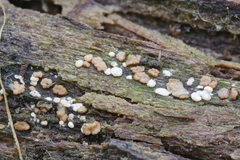 Trichoderma hamatume0biocontrol_agent
- Outcome
- growth inhibitione1
- Direction
- inhibitione1
- Value
- 69.64%e0
Not reportedComparator
Organisms pictured · Representative pictures of the matched species, not figures from the paper.
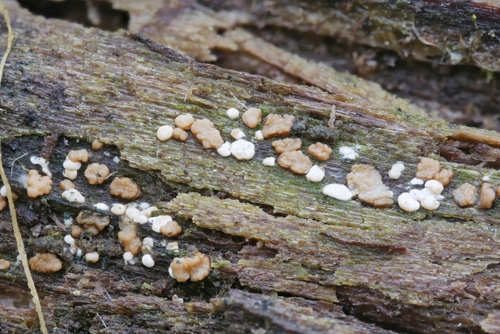
Verbatim
e0“T. hamatum (69.64%)”
t0“pea”
t1“Fusarium oxysporum f. sp. pisi”
e1“growth inhibition”
Claim · model-written summary
Pot experiments confirmed strong competitive inhibition of Fusarium by Trichoderma.
- Taxon
- peaLathyrus oleraceust0
- Treatment
- Trichoderma spp.e0
- Interactor
- FOPe0pathogen
- Second interactor
- Trichoderma spp.Trichodermae0biocontrol_agent
- Outcome
- competitive inhibition of FOPe0
- Direction
- inhibitione0
Not reportedComparator
Organisms pictured · Representative pictures of the matched species, not figures from the paper.
Verbatim
e0“Pot experiments also confirmed a very strong competitive inhibition of FOP evidently due to presence of glucanase and chitinases in Trichoderma spp.”
t0“pea”
The same questions in other papers
Trichoderma harzianum · Fusarium oxysporum f. sp. pisi · Lathyrus oleraceus (pea)Results agree
1 paper in the same direction as this paper
- positive
Trichoderma · disease · Lathyrus oleraceus (pea)Results agree
5 papers in the same direction as this paper
- positive
- positive
- positive
2 papers more in this group
See all 6 papers →Claims are grouped by organism, treatment and what was measured or targeted. A paper counts as positive when any of its claims in the group is positive.