Abstract
Abstract In this study, the fungicidal activities of the fungicides azoxystrobin, difenoconazole + propiconazole, carbendazim, flutriafol, fluopyram + tebuconazole, mancozeb and thiophanate-methyl against rice blast and dirty panicle pathogens were evaluated under laboratory and field conditions. Mancozeb exhibited the highest level of fungicidal activity against the blast pathogen Pyricularia oryzae , with an EC 50 value of 0.25 parts per million (ppm). The combination of two fungicides, fluopyram + tebuconazole, showed the strongest fungicidal effect against Bipolaris oryzae and Curvularia lunata , with EC 50 values of 0.587 ppm and 0.435 ppm , respectively. Meanwhile, carbendazim and flutriafol demonstrated the best level of fungicidal activity against Fusarium incarnatum , with the lowest EC 50 values of 0.211 ppm and 0.214 ppm , respectively. The results showed that the fungicides, triazole and strobilurin, had significant effects against rice blast and dirty panicle diseases. The combination of fluopyram + tebuconazole, when applied twice, was the most effective in reducing dirty panicle disease by up to 60% and increasing rice yield by 29% more than the untreated control. Fluopyram + tebuconazole, difenoconazole + propiconazole, flutriafol and azoxystrobin achieved stronger fungicidal activity against rice blast disease, reducing its severity by 32–33% when applied twice by foliar spraying. However, carbendazim, mancozeb and thiophanate-methyl had low to moderate fungicidal activity against both rice diseases in this study.
Abstract from the paper’s OpenAlex record; open copy licensed cc-by. Read at the source ↗
The text the model read, with the source record’s inline markup (italics, sub- and superscripts) rendered and its character entities decoded; quote offsets refer to the raw text.
Claims 15
Claim · model-written summary
Mancozeb had the strongest activity against Pyricularia oryzae, with EC 50 of 0.25 ppm.
- Taxon
- rice
 Oryza sativat0
- Treatment
- Mancozebe0
- Interactor
- Pyricularia oryzae
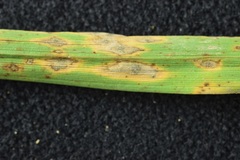 Pyricularia oryzaee0pathogen
- Outcome
- fungicidal activity against the blast pathogen Pyricularia oryzaee0
- Direction
- higheste0
- Value
- 0.25 parts per million (ppm)e0
Not reportedComparator
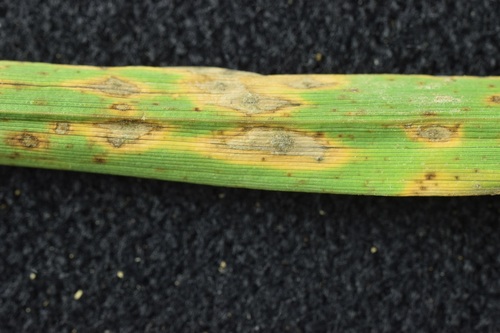
Organisms pictured · Representative pictures of the matched species, not figures from the paper.

Verbatim
t0“rice”
e0“Mancozeb exhibited the highest level of fungicidal activity against the blast pathogen Pyricularia oryzae , with an EC 50 value of 0.25 parts per million (ppm)”
Claim · model-written summary
Fluopyram plus tebuconazole had the strongest effect against Bipolaris oryzae, EC 50 0.587 ppm.
- Taxon
- riceOryza sativat0
- Treatment
- fluopyram + tebuconazolee0
- Interactor
- Bipolaris oryzae
 Bipolaris oryzaee0pathogen
- Outcome
- fungicidal effect against Bipolaris oryzaee0
- Direction
- strongeste0
- Value
- 0.587 ppme0
Not reportedComparator
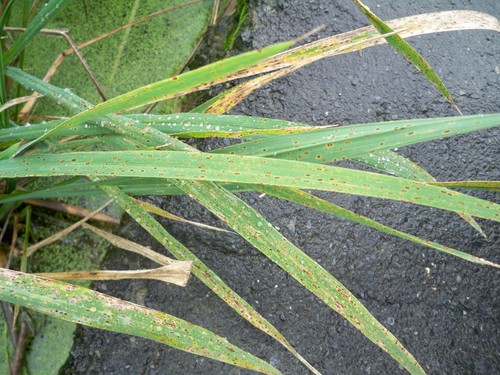
Organisms pictured · Representative pictures of the matched species, not figures from the paper.
Verbatim
t0“rice”
e0“fluopyram + tebuconazole, showed the strongest fungicidal effect against Bipolaris oryzae and Curvularia lunata , with EC 50 values of 0.587 ppm and 0.435 ppm”
Claim · model-written summary
Fluopyram plus tebuconazole had the strongest effect against Curvularia lunata, EC 50 0.435 ppm.
- Taxon
- riceOryza sativat0
- Treatment
- fluopyram + tebuconazolee0
- Interactor
- Curvularia lunata
 Curvularia lunatae0pathogen
- Outcome
- fungicidal effect against Bipolaris oryzae and Curvularia lunatae0
- Direction
- strongeste0
- Value
- 0.435 ppme0
Not reportedComparator
Organisms pictured · Representative pictures of the matched species, not figures from the paper.

Verbatim
t0“rice”
e0“fluopyram + tebuconazole, showed the strongest fungicidal effect against Bipolaris oryzae and Curvularia lunata , with EC 50 values of 0.587 ppm and 0.435 ppm”
Claim · model-written summary
Carbendazim had the lowest EC 50 against Fusarium incarnatum at 0.211 ppm.
- Taxon
- riceOryza sativat0
- Treatment
- carbendazime0
- Interactor
- Fusarium incarnatumFusarium incarnatume0pathogen
- Outcome
- fungicidal activity against Fusarium incarnatume0
- Direction
- loweste0
- Value
- 0.211 ppme0
Not reportedComparator
Organisms pictured · Representative pictures of the matched species, not figures from the paper.
Verbatim
t0“rice”
e0“carbendazim and flutriafol demonstrated the best level of fungicidal activity against Fusarium incarnatum , with the lowest EC 50 values of 0.211 ppm and 0.214 ppm”
Claim · model-written summary
Flutriafol had the lowest EC 50 against Fusarium incarnatum at 0.214 ppm.
- Taxon
- riceOryza sativat0
- Treatment
- flutriafole0
- Interactor
- Fusarium incarnatumFusarium incarnatume0pathogen
- Outcome
- fungicidal activity against Fusarium incarnatume0
- Direction
- loweste0
- Value
- 0.214 ppme0
Not reportedComparator
Organisms pictured · Representative pictures of the matched species, not figures from the paper.
Verbatim
t0“rice”
e0“carbendazim and flutriafol demonstrated the best level of fungicidal activity against Fusarium incarnatum , with the lowest EC 50 values of 0.211 ppm and 0.214 ppm”
Claim · model-written summary
Triazole and strobilurin fungicides significantly affected rice blast and dirty panicle diseases.
- Taxon
- riceOryza sativat0
- Treatment
- triazole and strobilurine0
- Outcome
- rice blast and dirty panicle diseasese0
Not reportedComparatorDirection
Organisms pictured · Representative pictures of the matched species, not figures from the paper.
Verbatim
t0“rice”
e0“the fungicides, triazole and strobilurin, had significant effects against rice blast and dirty panicle diseases”
Claim · model-written summary
Two fluopyram plus tebuconazole applications reduced dirty panicle disease by up to 60% versus untreated control.
- Taxon
- riceOryza sativat0
- Treatment
- fluopyram + tebuconazolee0
- Outcome
- dirty panicle diseasee0
- Direction
- reducinge0
- Value
- 60%e0
- Qualifier
- when applied twicee0
- Comparator
- untreated controle0
Organisms pictured · Representative pictures of the matched species, not figures from the paper.
Verbatim
t0“rice”
e0“fluopyram + tebuconazole, when applied twice, was the most effective in reducing dirty panicle disease by up to 60% and increasing rice yield by 29% more than the untreated control”
Claim · model-written summary
Two fluopyram plus tebuconazole applications increased rice yield by 29% over untreated control.
- Taxon
- riceOryza sativat0
- Treatment
- fluopyram + tebuconazolee0
- Outcome
- rice yielde0
- Direction
- increasinge0
- Value
- 29%e0
- Qualifier
- when applied twicee0
- Comparator
- untreated controle0
Organisms pictured · Representative pictures of the matched species, not figures from the paper.
Verbatim
t0“rice”
e0“fluopyram + tebuconazole, when applied twice, was the most effective in reducing dirty panicle disease by up to 60% and increasing rice yield by 29% more than the untreated control”
Claim · model-written summary
Twice sprayed fluopyram plus tebuconazole reduced rice blast severity by 32–33%.
- Taxon
- riceOryza sativat0
- Treatment
- Fluopyram + tebuconazolee0
- Outcome
- rice blast diseasee0
- Direction
- reducinge0
- Value
- 32–33%e0
Not reportedComparator
Organisms pictured · Representative pictures of the matched species, not figures from the paper.
Verbatim
t0“rice”
e0“Fluopyram + tebuconazole, difenoconazole + propiconazole, flutriafol and azoxystrobin achieved stronger fungicidal activity against rice blast disease, reducing its severity by 32–33% when applied twice by foliar spraying”
Claim · model-written summary
Twice sprayed difenoconazole plus propiconazole reduced rice blast severity by 32–33%.
- Taxon
- riceOryza sativat0
- Treatment
- difenoconazole + propiconazolee0
- Outcome
- rice blast diseasee0
- Direction
- reducinge0
- Value
- 32–33%e0
Not reportedComparator
Organisms pictured · Representative pictures of the matched species, not figures from the paper.
Verbatim
t0“rice”
e0“Fluopyram + tebuconazole, difenoconazole + propiconazole, flutriafol and azoxystrobin achieved stronger fungicidal activity against rice blast disease, reducing its severity by 32–33% when applied twice by foliar spraying”
Claim · model-written summary
Twice sprayed flutriafol reduced rice blast severity by 32–33%.
- Taxon
- riceOryza sativat0
- Treatment
- flutriafole0
- Outcome
- rice blast diseasee0
- Direction
- reducinge0
- Value
- 32–33%e0
Not reportedComparator
Organisms pictured · Representative pictures of the matched species, not figures from the paper.
Verbatim
t0“rice”
e0“Fluopyram + tebuconazole, difenoconazole + propiconazole, flutriafol and azoxystrobin achieved stronger fungicidal activity against rice blast disease, reducing its severity by 32–33% when applied twice by foliar spraying”
Claim · model-written summary
Twice sprayed azoxystrobin reduced rice blast severity by 32–33%.
- Taxon
- riceOryza sativat0
- Treatment
- azoxystrobine0
- Outcome
- rice blast diseasee0
- Direction
- reducinge0
- Value
- 32–33%e0
Not reportedComparator
Organisms pictured · Representative pictures of the matched species, not figures from the paper.
Verbatim
t0“rice”
e0“Fluopyram + tebuconazole, difenoconazole + propiconazole, flutriafol and azoxystrobin achieved stronger fungicidal activity against rice blast disease, reducing its severity by 32–33% when applied twice by foliar spraying”
Claim · model-written summary
Carbendazim had low to moderate activity against both rice diseases.
- Taxon
- riceOryza sativat0
- Treatment
- carbendazime0
- Outcome
- fungicidal activity against both rice diseasese0
- Direction
- low to moderatee0
Not reportedComparator
Organisms pictured · Representative pictures of the matched species, not figures from the paper.
Verbatim
t0“rice”
e0“carbendazim, mancozeb and thiophanate-methyl had low to moderate fungicidal activity against both rice diseases”
Claim · model-written summary
Mancozeb had low to moderate activity against both rice diseases.
- Taxon
- riceOryza sativat0
- Treatment
- mancozebe0
- Outcome
- fungicidal activity against both rice diseasese0
- Direction
- low to moderatee0
Not reportedComparator
Organisms pictured · Representative pictures of the matched species, not figures from the paper.
Verbatim
t0“rice”
e0“carbendazim, mancozeb and thiophanate-methyl had low to moderate fungicidal activity against both rice diseases”
Claim · model-written summary
Thiophanate-methyl had low to moderate activity against both rice diseases.
- Taxon
- riceOryza sativat0
- Treatment
- thiophanate-methyle0
- Outcome
- fungicidal activity against both rice diseasese0
- Direction
- low to moderatee0
Not reportedComparator
Organisms pictured · Representative pictures of the matched species, not figures from the paper.
Verbatim
t0“rice”
e0“carbendazim, mancozeb and thiophanate-methyl had low to moderate fungicidal activity against both rice diseases”
The same questions in other papers
azoxystrobin · disease · Oryza sativa (rice)Positive and negative results
18 papers in the same direction as this paper · 1 in the opposite direction
- positive
- negative
- positive
16 papers more in this group
See all 20 papers →tebuconazole · disease · Oryza sativa (rice)Positive and negative results
24 papers in the same direction as this paper · 1 reporting no difference from an alternative
- positive
- no effect
- positive
22 papers more in this group
See all 26 papers →tebuconazole · Curvularia lunata · Oryza sativa (rice)Results agree
1 paper in the same direction as this paper
- positive
flutriafol · disease · Oryza sativa (rice)Results agree
1 paper in the same direction as this paper
- positive
carbendazim · organism · Oryza sativa (rice)Results agree
1 paper in the same direction as this paper
- negative
triazole · disease · Oryza sativa (rice)Results agree
2 papers in the same direction as this paper
- positive
- positive
tebuconazole · Bipolaris oryzae · Oryza sativa (rice)Results agree
4 papers in the same direction as this paper
- positive
- positive
- positive
1 paper more in this group
See all 5 papers →difenoconazole · disease · Oryza sativa (rice)Results agree
5 papers in the same direction as this paper
- positive
- positive
- positive
2 papers more in this group
See all 6 papers →8 of 10 groups shown: named compounds and organisms first, then groups whose results differ (checked claim by claim), then those with positive and negative results, then the smaller groups.
Claims are grouped by organism, treatment and what was measured or targeted. A paper counts as positive when any of its claims in the group is positive.