Abstract
In this study, the biocontrol ability of bacterial antagonists of fungal pathogens, B. thuringiensis KYC and B. velezensis CE 100 was investigated for the inhibition of root-knot nematode, Meloidogyne incognita, and subsequent growth promotion of tomato. Based on the results of dual-culture assay, both Bacillus strains showed antagonistic activities against six different phytopathogenic fungi. The bacterial culture filtrates (BCF) of two Bacillus strains had a strong toxic effect on egg hatching and second-stage juvenile (J2) survival of M. incognita. With increasing concentration of BCF and incubation period, the hatching rate of the nematode egg was significantly inhibited and J2 mortality was remarkably increased. Moreover, the crude enzymes which were extracted from culture supernatants of two Bacillus strains caused structural damage to nematode eggs and J2 at 1, 3 and 5 days after inoculation. The pot experiment revealed that B. thuringiensis KYC and B. velezensis CE 100 significantly promoted tomato shoot growth compared to fertiliser treatment. However, root fresh weight was significantly increased in fertiliser treatment due to numerous masses in roots. The number of egg masses and root gall index in the treatment group with both Bacillus strains were significantly decreased compared to those in fertiliser treatment. Higher populations of B. thuringiensis KYC and B. velezensis CE 100 (4.12 and 6.52 × 10⁶ CFU g−1of soil) were detected in the tomato rhizosphere. These results demonstrated the potential of B. thuringiensis KYC and B. velezensis CE 100 as biocontrol agents to control plant-pathogenic fungi and root-knot nematode and as biofertilisers to promote plant growth.
Abstract from the paper’s OpenAlex record, shown for indexing and research. Copyright remains with the authors or the publisher. Read at the source ↗
The text the model read, with the source record’s inline markup (italics, sub- and superscripts) rendered and its character entities decoded; quote offsets refer to the raw text.
Claims 10
Claim · model-written summary
Both Bacillus strains showed antagonistic activity against six phytopathogenic fungi in dual-culture assays.
- Interactor
- phytopathogenic fungie0pathogen
- Second interactor
- Bacillus strainse0biocontrol_agent
- Outcome
- antagonistic activities against six different phytopathogenic fungie0
Not reportedTaxon
Verbatim
e0“Based on the results of dual-culture assay, both Bacillus strains showed antagonistic activities against six different phytopathogenic fungi”
Claim · model-written summary
Bacterial culture filtrates of the two Bacillus strains had a strong toxic effect on egg hatching and second-stage juvenile survival of M. incognita.
- Treatment
- bacterial culture filtrates (BCF)e0
- Interactor
- M. incognita
 Meloidogyne incognitae0pest
- Second interactor
- Bacillus strainse0biocontrol_agent
- Outcome
- egg hatching and second-stage juvenile (J2) survivale0
- Direction
- decreaseinferrede0
Not reportedTaxonComparator
Organisms pictured · Representative pictures of the matched species, not figures from the paper.

Verbatim
e0“The bacterial culture filtrates (BCF) of two Bacillus strains had a strong toxic effect on egg hatching and second-stage juvenile (J2) survival of M. incognita”
Claim · model-written summary
With increasing BCF concentration and incubation period, the hatching rate of nematode eggs was significantly inhibited.
- Treatment
- increasing concentration of BCFe0
- Outcome
- hatching rate of the nematode egge0
- Direction
- inhibitede0
Not reportedTaxonComparator
Verbatim
e0“With increasing concentration of BCF and incubation period, the hatching rate of the nematode egg was significantly inhibited”
Claim · model-written summary
With increasing BCF concentration and incubation period, J2 mortality was remarkably increased.
Not reportedTaxonTreatmentComparator
Verbatim
e0“J2 mortality was remarkably increased”
Claim · model-written summary
Crude enzymes from culture supernatants of the two Bacillus strains caused structural damage to nematode eggs and J2.
Not reportedTaxonComparatorDirection
Verbatim
e0“the crude enzymes which were extracted from culture supernatants of two Bacillus strains caused structural damage to nematode eggs and J2 at 1, 3 and 5 days after inoculation”
Claim · model-written summary
B. thuringiensis KYC and B. velezensis CE 100 significantly promoted tomato shoot growth compared with fertiliser treatment in the pot experiment.
- Taxon
- tomato
 Solanum lycopersicume0
- Treatment
- B. thuringiensis KYC and B. velezensis CE 100e0
- Interactor
- B. thuringiensis KYC and B. velezensis CE 100
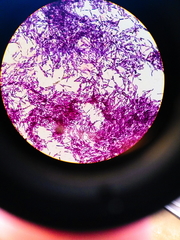 Bacillus thuringiensis
 Bacillus velezensise0other
- Outcome
- shoot growthe0
- Direction
- promotede0
- Comparator
- fertiliser treatmente0
Organisms pictured · Representative pictures of the matched species, not figures from the paper.

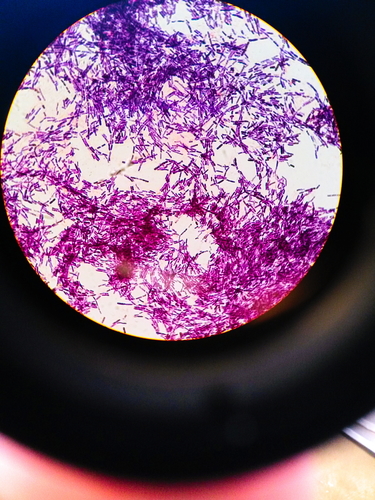

Verbatim
e0“B. thuringiensis KYC and B. velezensis CE 100 significantly promoted tomato shoot growth compared to fertiliser treatment”
Claim · model-written summary
Tomato root fresh weight was significantly increased in the fertiliser treatment, due to numerous egg masses in roots.
- Taxon
- tomatoSolanum lycopersicumt0
- Treatment
- fertiliser treatmente0
- Outcome
- root fresh weighte0
- Direction
- increasede0
Organisms pictured · Representative pictures of the matched species, not figures from the paper.
Verbatim
t0“tomato”
e0“root fresh weight was significantly increased in fertiliser treatment due to numerous masses in roots”
Claim · model-written summary
The number of egg masses and the root gall index were significantly lower in the treatment groups with both Bacillus strains than in the fertiliser treatment.
- Taxon
- tomatoSolanum lycopersicumt0
- Treatment
- both Bacillus strainse0
- Interactor
- Meloidogyne incognitaMeloidogyne incognitat1pest
- Outcome
- number of egg masses and root gall indexe0
- Direction
- decreasede0
- Comparator
- fertiliser treatmente0
Organisms pictured · Representative pictures of the matched species, not figures from the paper.
Verbatim
t0“tomato”
t1“Meloidogyne incognita”
e0“The number of egg masses and root gall index in the treatment group with both Bacillus strains were significantly decreased compared to those in fertiliser treatment”
Claim · model-written summary
B. thuringiensis KYC reached a higher population of 4.12 x 10^6 CFU per g soil in the tomato rhizosphere.
- Taxon
- tomatoSolanum lycopersicume0
- Interactor
- B. thuringiensis KYCBacillus thuringiensise0other
- Outcome
- populations of B. thuringiensis KYCe0
- Direction
- Highere0
- Value
- 4.12e0
- Setting
- tomato rhizospheree0
Organisms pictured · Representative pictures of the matched species, not figures from the paper.
Verbatim
e0“Higher populations of B. thuringiensis KYC and B. velezensis CE 100 (4.12 and 6.52 × 10⁶ CFU g−1of soil) were detected in the tomato rhizosphere”
Claim · model-written summary
B. velezensis CE 100 reached a higher population of 6.52 x 10^6 CFU per g soil in the tomato rhizosphere.
- Taxon
- tomatoSolanum lycopersicume0
- Interactor
- B. velezensis CE 100Bacillus velezensise0other
- Outcome
- populations of B. thuringiensis KYC and B. velezensis CE 100e0
- Direction
- Highere0
- Value
- 6.52 × 10⁶ CFU g−1of soile0
- Setting
- tomato rhizospheree0
Organisms pictured · Representative pictures of the matched species, not figures from the paper.
Verbatim
e0“Higher populations of B. thuringiensis KYC and B. velezensis CE 100 (4.12 and 6.52 × 10⁶ CFU g−1of soil) were detected in the tomato rhizosphere”
The same questions in other papers
Bacillus thuringiensis · growth · Solanum lycopersicum (tomato)Positive and negative results
4 papers in the same direction as this paper · 1 in the opposite direction
- no effect
- positive
- positive
2 papers more in this group
See all 6 papers →Bacillus velezensis · growth · Solanum lycopersicum (tomato)Results agree
12 papers in the same direction as this paper
- positive
- positive
- positive
9 papers more in this group
See all 13 papers →pathogen product · Nematoda · Solanum lycopersicum (tomato)Results agree
4 papers in the same direction as this paper
- positive
- positive
- positive
1 paper more in this group
See all 5 papers →pathogen product · Meloidogyne incognita · Solanum lycopersicum (tomato)Results agree
22 papers in the same direction as this paper
- positive
- positive
- positive
19 papers more in this group
See all 23 papers →Claims are grouped by organism, treatment and what was measured or targeted. A paper counts as positive when any of its claims in the group is positive.