Abstract
The biotrophic fungal pathogen Ustilaginoidea virens causes rice false smut, a newly emerging plant disease that has become epidemic worldwide in recent years. The U. virens genome encodes many putative effector proteins that, based on the study of other pathosystems, could play an essential role in fungal virulence. However, few studies have been reported on virulence functions of individual U. virens effectors. Here, we report our identification and characterization of the secreted cysteine-rich protein SCRE1, which is an essential virulence effector in U. virens. When SCRE1 was heterologously expressed in Magnaporthe oryzae, the protein was secreted and translocated into plant cells during infection. SCRE1 suppresses the immunity-associated hypersensitive response in the nonhost plant Nicotiana benthamiana. Induced expression of SCRE1 in rice also inhibits pattern-triggered immunity and enhances disease susceptibility to rice bacterial and fungal pathogens. The immunosuppressive activity is localized to a small peptide region that contains an important 'cysteine-proline-alanine-arginine-serine' motif. Furthermore, the scre1 knockout mutant generated using the CRISPR/Cas9 system is attenuated in U. virens virulence to rice, which is greatly complemented by the full-length SCRE1 gene. Collectively, this study indicates that the effector SCRE1 is able to inhibit host immunity and is required for full virulence of U. virens.
Abstract from the paper’s OpenAlex record; open copy licensed cc-by-nc. Read at the source ↗
The text the model read, with the source record’s inline markup (italics, sub- and superscripts) rendered and its character entities decoded; quote offsets refer to the raw text.
Claims 8
Claim · model-written summary
SCRE1 was identified as an essential virulence effector of U. virens.
- Taxon
- rice
 Oryza sativat0
- Gene
- SCRE1e0
- Outcome
- essential virulence effectore0
Organisms pictured · Representative pictures of the matched species, not figures from the paper.

Verbatim
e0“the secreted cysteine-rich protein SCRE1, which is an essential virulence effector in U. virens”
t0“rice”
Claim · model-written summary
SCRE1 expressed in Magnaporthe oryzae was secreted and translocated into plant cells during infection.
- Taxon
- riceOryza sativat0
- Interactor
- Magnaporthe oryzae
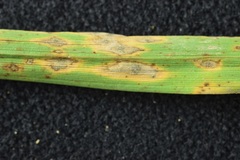 Pyricularia oryzaee0pathogen
- Gene
- SCRE1e0
- Outcome
- secreted and translocated into plant cellse0
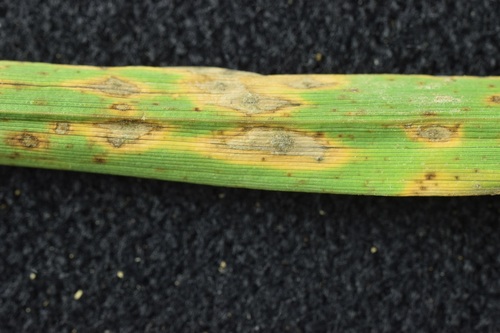
Organisms pictured · Representative pictures of the matched species, not figures from the paper.
Verbatim
e0“When SCRE1 was heterologously expressed in Magnaporthe oryzae, the protein was secreted and translocated into plant cells during infection”
t0“rice”
Claim · model-written summary
SCRE1 suppressed the immunity-associated hypersensitive response in Nicotiana benthamiana.
- Taxon
- Nicotiana benthamiana
 Nicotiana benthamianae0
- Treatment
- SCRE1e0
- Gene
- SCRE1e0
- Outcome
- immunity-associated hypersensitive responsee0
- Direction
- suppressese0
Not reportedComparator
Organisms pictured · Representative pictures of the matched species, not figures from the paper.

Verbatim
e0“SCRE1 suppresses the immunity-associated hypersensitive response in the nonhost plant Nicotiana benthamiana”
Claim · model-written summary
Induced SCRE1 expression inhibited pattern-triggered immunity in rice.
- Taxon
- riceOryza sativae0
- Treatment
- Induced expression of SCRE1e0
- Gene
- SCRE1e0
- Outcome
- pattern-triggered immunitye0
- Direction
- inhibitse0
Not reportedComparator
Organisms pictured · Representative pictures of the matched species, not figures from the paper.
Verbatim
e0“Induced expression of SCRE1 in rice also inhibits pattern-triggered immunity”
Claim · model-written summary
Induced SCRE1 expression enhanced rice susceptibility to bacterial and fungal pathogens.
- Taxon
- riceOryza sativae0
- Treatment
- Induced expression of SCRE1e0
- Interactor
- bacterial and fungal pathogense0pathogen
- Gene
- SCRE1e0
- Outcome
- disease susceptibilitye0
- Direction
- enhancese0
Not reportedComparator
Organisms pictured · Representative pictures of the matched species, not figures from the paper.
Verbatim
e0“Induced expression of SCRE1 in rice also inhibits pattern-triggered immunity and enhances disease susceptibility to rice bacterial and fungal pathogens”
Claim · model-written summary
SCRE1 immunosuppressive activity localized to a small peptide region containing a cysteine-proline-alanine-arginine-serine motif.
- Taxon
- riceOryza sativat0
- Gene
- SCRE1t0
- Outcome
- immunosuppressive activitye0
- Qualifier
- small peptide regione0
Organisms pictured · Representative pictures of the matched species, not figures from the paper.
Verbatim
e0“The immunosuppressive activity is localized to a small peptide region that contains an important 'cysteine-proline-alanine-arginine-serine' motif”
t0“essential effector SCRE1 in Ustilaginoidea virens suppresses rice immunity”
Claim · model-written summary
The scre1 knockout attenuated U. virens virulence to rice.
- Taxon
- riceOryza sativae0
- Treatment
- scre1 knockout mutante0
- Interactor
- U. virens
 Ustilaginoidea virense0pathogen
- Gene
- scre1e0
- Outcome
- U. virens virulence to ricee0
- Direction
- attenuatede0
Not reportedComparator
Organisms pictured · Representative pictures of the matched species, not figures from the paper.

Verbatim
e0“the scre1 knockout mutant generated using the CRISPR/Cas9 system is attenuated in U. virens virulence to rice”
Claim · model-written summary
The full-length SCRE1 gene greatly complemented the virulence defect of the scre1 knockout.
- Taxon
- riceOryza sativae0
- Treatment
- full-length SCRE1 genee0
- Gene
- SCRE1e0
- Outcome
- U. virens virulence to ricee0
- Direction
- greatly complementede0
- Comparator
- scre1 knockout mutante0
Organisms pictured · Representative pictures of the matched species, not figures from the paper.
Verbatim
e0“the scre1 knockout mutant generated using the CRISPR/Cas9 system is attenuated in U. virens virulence to rice, which is greatly complemented by the full-length SCRE1 gene”
The same questions in other papers
transgenic · disease · Oryza sativa (rice)Positive and negative results
7 papers in the same direction as this paper · 32 in the opposite direction
- negative
- positive
- positive
36 papers more in this group
See all 40 papers →Claims are grouped by organism, treatment and what was measured or targeted. A paper counts as positive when any of its claims in the group is positive.