Abstract
In this study, chemical compositions of essential oil extracted from Cuminum cyminum L., Mentha longifolia L. and Allium sativum L. were analysed using GC and GC-MS methods. The herbicidal effects of the essential oils on seed germination, root and shoot growth of Rumex crispus L. and Convolvulus arvensis L. were investigated. Meanwhile their effects regarding the mycelial development in Verticilium dahlia Kleb. and Fusarium oxysporum Schl. were also evaluated. Only the highest three concentrations; 10, 15, 20 g/cm 2 of A. sativum L. were 100% inhibited the seed germination, root and shoot growth of R. crispus L.; C. cyminum L. and M. longifolia L were affected at a rate of 100% by the four concentrations. All the three essential oils showed significant effect (100%) in the parameters examined against C. arvensis L. The essential oils obtained from C. cyminum L., M. longifolia L. and A. sativum L. were found to be 100% effective on V. dahlia Kleb. mycelium growth in all concentrations examined. However, C. cyminum L. and M. longifolia L. essential oils were found to be 30.0-36.6% effective at the concentration of 5 g/cm 2 on mycelium development of F. oxysporum Schl.; and the other 3 concentrations totally inhibited the growth of the fungi. The essential oil of A. sativum L. was the most effective; and 100% inhibition of the mycelial growth of F. oxysporum was detected in all concentrations. The oils used in the study have the potential of being used as herbicides and fungicides.
Abstract from the paper’s OpenAlex record, shown for indexing and research. Copyright remains with the authors or the publisher. Read at the source ↗
The text the model read, with the source record’s inline markup (italics, sub- and superscripts) rendered and its character entities decoded; quote offsets refer to the raw text.
Claims 8
Claim · model-written summary
The highest three concentrations of A. sativum essential oil fully inhibited seed germination, root and shoot growth of Rumex crispus.
- Taxon
- Rumex crispus L.
 Rumex crispuse2
- Treatment
- A. sativum L.e1
- Outcome
- seed germination, root and shoot growthe1
- Direction
- inhibitede1
- Value
- 100%e1
- Qualifier
- Only the highest three concentrationse1
Not reportedComparator
Organisms pictured · Representative pictures of the matched species, not figures from the paper.

Verbatim
e1“Only the highest three concentrations; 10, 15, 20 g/cm 2 of A. sativum L. were 100% inhibited the seed germination, root and shoot growth of R. crispus L.”
e2“Rumex crispus L. and Convolvulus arvensis L.”
Claim · model-written summary
C. cyminum and M. longifolia essential oils reduced seed germination, root and shoot growth of Rumex crispus at 100% across four concentrations.
- Taxon
- Rumex crispus L.Rumex crispuse2
- Treatment
- C. cyminum L. and M. longifolia Le3
- Outcome
- seed germination, root and shoot growthe1
- Direction
- decreaseinferrede3
- Value
- 100%e3
- Qualifier
- by the four concentrationse3
Not reportedComparator
Organisms pictured · Representative pictures of the matched species, not figures from the paper.
Verbatim
e1“Only the highest three concentrations; 10, 15, 20 g/cm 2 of A. sativum L. were 100% inhibited the seed germination, root and shoot growth of R. crispus L.”
e3“C. cyminum L. and M. longifolia L were affected at a rate of 100% by the four concentrations”
e2“Rumex crispus L. and Convolvulus arvensis L.”
Claim · model-written summary
All three essential oils showed a 100% significant effect on the parameters examined for Convolvulus arvensis.
- Taxon
- C. arvensis L.
 Convolvulus arvensise3
- Treatment
- All the three essential oilse3
- Outcome
- parameters examinede3
- Direction
- significant effecte3
- Value
- 100%e3
Not reportedComparator
Organisms pictured · Representative pictures of the matched species, not figures from the paper.

Verbatim
e3“All the three essential oils showed significant effect (100%) in the parameters examined against C. arvensis L.”
Claim · model-written summary
Essential oils of C. cyminum, M. longifolia and A. sativum were 100% effective on the mycelium growth of V. dahlia Kleb. at all concentrations.
- Taxon
- C. cyminum L., M. longifolia L. and A. sativum L.
 Allium sativum
 Mentha longifolia
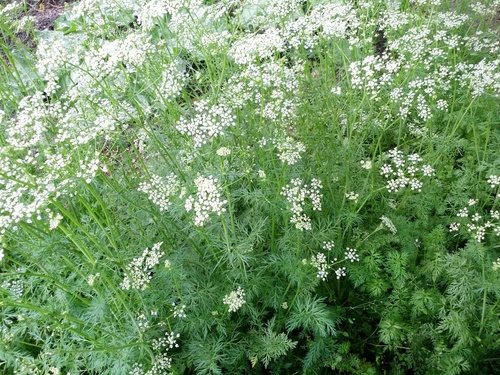
 Cuminum cyminume4
- Treatment
- essential oilse4
- Interactor
- V. dahlia Kleb.e4other
- Outcome
- V. dahlia Kleb. mycelium growthe4
- Direction
- effectivee4
- Value
- 100%e4
- Qualifier
- in all concentrations examinede4
Not reportedComparator
Organisms pictured · Representative pictures of the matched species, not figures from the paper.


Verbatim
e4“The essential oils obtained from C. cyminum L., M. longifolia L. and A. sativum L. were found to be 100% effective on V. dahlia Kleb. mycelium growth in all concentrations examined”
Claim · model-written summary
The essential oil of A. sativum inhibited F. oxysporum mycelial growth by 100% at all concentrations.
- Taxon
- A. sativum L.Allium sativume5
- Treatment
- essential oil of A. sativum L.e5
- Interactor
- F. oxysporum
 Fusarium oxysporume5other
- Outcome
- mycelial growth of F. oxysporume5
- Direction
- inhibitione5
- Value
- 100%e5
- Qualifier
- in all concentrationse5
Not reportedComparator
Organisms pictured · Representative pictures of the matched species, not figures from the paper.

Verbatim
e5“The essential oil of A. sativum L. was the most effective; and 100% inhibition of the mycelial growth of F. oxysporum was detected in all concentrations”
Claim · model-written summary
C. cyminum and M. longifolia essential oils were 30.0-36.6% effective on F. oxysporum mycelium development at 5 g/cm 2.
- Taxon
- C. cyminum L. and M. longifolia LMentha longifoliaCuminum cyminume6
- Treatment
- essential oilse6
- Interactor
- F. oxysporum Schl.Fusarium oxysporume6other
- Outcome
- mycelium development of F. oxysporume6
- Direction
- effectivee6
- Value
- 30.0-36.6%e6
- Qualifier
- at the concentration of 5 g/cm 2e6
Not reportedComparator
Organisms pictured · Representative pictures of the matched species, not figures from the paper.
Verbatim
e6“However, C. cyminum L. and M. longifolia L. essential oils were found to be 30.0-36.6% effective at the concentration of 5 g/cm 2 on mycelium development of F. oxysporum Schl.; and the other 3 concentrations totally inhibited the growth of the fungi”
Claim · model-written summary
The other three concentrations of C. cyminum and M. longifolia essential oils totally inhibited F. oxysporum growth.
- Taxon
- C. cyminum L. and M. longifolia LMentha longifoliaCuminum cyminume6
- Treatment
- the other 3 concentrationse6
- Interactor
- F. oxysporum Schl.Fusarium oxysporume6other
- Outcome
- growth of the fungie6
- Direction
- totally inhibitede6
Not reportedComparator
Organisms pictured · Representative pictures of the matched species, not figures from the paper.
Verbatim
e6“However, C. cyminum L. and M. longifolia L. essential oils were found to be 30.0-36.6% effective at the concentration of 5 g/cm 2 on mycelium development of F. oxysporum Schl.; and the other 3 concentrations totally inhibited the growth of the fungi”
Claim · model-written summary
The authors conclude that the three essential oils have potential as herbicides and fungicides.
- Taxon
- Cuminum cyminum L., Mentha longifolia L. and Allium sativum L.Allium sativumMentha longifoliaCuminum cyminume0
- Outcome
- potential of being used as herbicides and fungicidese7
Organisms pictured · Representative pictures of the matched species, not figures from the paper.
Verbatim
e0“essential oil extracted from Cuminum cyminum L., Mentha longifolia L. and Allium sativum L.”
e7“The oils used in the study have the potential of being used as herbicides and fungicides”
The same questions in other papers
botanical · disease · Allium sativum (garlic)Positive and negative results
12 papers in the same direction as this paper · 1 in the opposite direction
- negative
- positive
- positive
10 papers more in this group
See all 14 papers →botanical · disease · Mentha longifolia (horsemint)Results agree
1 paper in the same direction as this paper
- positive
botanical · Fusarium oxysporum · Allium sativum (garlic)Results agree
1 paper in the same direction as this paper
- positive
botanical · Fusarium oxysporum · Cuminum cyminum (cumin)Results agree
2 papers in the same direction as this paper
- positive
- positive
botanical · disease · Cuminum cyminum (cumin)Results agree
4 papers in the same direction as this paper
- positive
- positive
- positive
1 paper more in this group
See all 5 papers →Claims are grouped by organism, treatment and what was measured or targeted. A paper counts as positive when any of its claims in the group is positive.