Abstract
The Mediterranean Basin is particularly rich in aromatic plants with essential oils whose composition and properties are still to be investigated. The aims of this work were to: investigate the chemical composition of essential oils from three typical Spanish aromatic species: Artemisia herba-alba, Artemisia absinthium and Mentha longifolia; evaluate the antifungal potential of essential oils against seven plant pathogenic and postharvest fungi; analyse the effectiveness of the Mentha longifolia essential oil in extending the blueberry fruit shelf life. The main compounds for the Artemisia herba-alba essential oil were camphor (29.8%), trans-thujone (22%), 1,8-cineole (14.5%) and cis-thujone (10.8%). In the A. absithium essential oil, they were cis-cryshanthemyl acetate (35.4%), cis-β-epoxiocimene (36%) and trans-β-epoxiocimene (10.4%). α-Terpineol acetate (32.6%), pulegone (14.2%) and 8-acetoxy carvotanacetone (10.3%) were the most important molecules in the obtained composition of the Mentha longifolia essential oil. Different bioassays were performed at the 300 μg/mL and 600 μg/mL doses using the distinct essential oils in potato dextrose agar culture medium. The Artemisia herba-alba and Artemisia absinthium essential oils at 300 μg/mL were not very effective. The Mentha longifolia essential oil strongly inhibited mycelial growth at the two tested doses, but it totally inhibited the growth of Curvularia hawaiiensis, Fusarium nygamai and Verticilliun dahliae at 600 μg/mL. The blueberries coated with the Mentha longifolia essential oil solution obtained a statistically higher percentage of healthy fruit than the control. They could be considered an ecofriendly alternative for postharvest treatment, and for maintaining the quality and turgidity of these berries during storage.
Abstract from the paper’s OpenAlex record; open copy licensed cc-by-nc-nd. Read at the source ↗
The text the model read, with the source record’s inline markup (italics, sub- and superscripts) rendered and its character entities decoded; quote offsets refer to the raw text.
Claims 15
Claim · model-written summary
Camphor was the main compound at 29.8% in the Artemisia herba-alba essential oil.
- Taxon
- Artemisia herba-alba
 Artemisia herba-albae1
- Outcome
- camphore1
- Value
- 29.8%e1
Organisms pictured · Representative pictures of the matched species, not figures from the paper.

Verbatim
e1“The main compounds for the Artemisia herba-alba essential oil were camphor (29.8%), trans-thujone (22%), 1,8-cineole (14.5%) and cis-thujone (10.8%)”
Claim · model-written summary
trans-Thujone was 22% of the Artemisia herba-alba essential oil.
- Taxon
- Artemisia herba-albaArtemisia herba-albae1
- Outcome
- trans-thujonee1
- Value
- 22%e1
Organisms pictured · Representative pictures of the matched species, not figures from the paper.
Verbatim
e1“The main compounds for the Artemisia herba-alba essential oil were camphor (29.8%), trans-thujone (22%), 1,8-cineole (14.5%) and cis-thujone (10.8%)”
Claim · model-written summary
1,8-Cineole was 14.5% of the Artemisia herba-alba essential oil.
- Taxon
- Artemisia herba-albaArtemisia herba-albae1
- Outcome
- 1,8-cineolee1
- Value
- 14.5%e1
Organisms pictured · Representative pictures of the matched species, not figures from the paper.
Verbatim
e1“The main compounds for the Artemisia herba-alba essential oil were camphor (29.8%), trans-thujone (22%), 1,8-cineole (14.5%) and cis-thujone (10.8%)”
Claim · model-written summary
cis-Thujone was 10.8% of the Artemisia herba-alba essential oil.
- Taxon
- Artemisia herba-albaArtemisia herba-albae1
- Outcome
- cis-thujonee1
- Value
- 10.8%e1
Organisms pictured · Representative pictures of the matched species, not figures from the paper.
Verbatim
e1“The main compounds for the Artemisia herba-alba essential oil were camphor (29.8%), trans-thujone (22%), 1,8-cineole (14.5%) and cis-thujone (10.8%)”
Claim · model-written summary
cis-Cryshanthemyl acetate was 35.4% of the Artemisia absinthium essential oil.
- Taxon
- Artemisia absinthium
 Artemisia absinthiume0
- Outcome
- cis-cryshanthemyl acetatee2
- Value
- 35.4%e2
Organisms pictured · Representative pictures of the matched species, not figures from the paper.

Verbatim
e0“three typical Spanish aromatic species: Artemisia herba-alba, Artemisia absinthium and Mentha longifolia”
e2“In the A. absithium essential oil, they were cis-cryshanthemyl acetate (35.4%), cis-β-epoxiocimene (36%) and trans-β-epoxiocimene (10.4%)”
Claim · model-written summary
cis-β-Epoxiocimene was 36% of the Artemisia absinthium essential oil.
- Taxon
- Artemisia absinthiumArtemisia absinthiume0
- Outcome
- cis-β-epoxiocimenee2
- Value
- 36%e2
Organisms pictured · Representative pictures of the matched species, not figures from the paper.
Verbatim
e0“three typical Spanish aromatic species: Artemisia herba-alba, Artemisia absinthium and Mentha longifolia”
e2“In the A. absithium essential oil, they were cis-cryshanthemyl acetate (35.4%), cis-β-epoxiocimene (36%) and trans-β-epoxiocimene (10.4%)”
Claim · model-written summary
trans-β-Epoxiocimene was 10.4% of the Artemisia absinthium essential oil.
- Taxon
- Artemisia absinthiumArtemisia absinthiume0
- Outcome
- trans-β-epoxiocimenee2
- Value
- 10.4%e2
Organisms pictured · Representative pictures of the matched species, not figures from the paper.
Verbatim
e0“three typical Spanish aromatic species: Artemisia herba-alba, Artemisia absinthium and Mentha longifolia”
e2“In the A. absithium essential oil, they were cis-cryshanthemyl acetate (35.4%), cis-β-epoxiocimene (36%) and trans-β-epoxiocimene (10.4%)”
Claim · model-written summary
α-Terpineol acetate was 32.6% of the Mentha longifolia essential oil.
- Taxon
- Mentha longifolia
 Mentha longifoliae3
- Outcome
- α-Terpineol acetatee3
- Value
- 32.6%e3
Organisms pictured · Representative pictures of the matched species, not figures from the paper.

Verbatim
e3“α-Terpineol acetate (32.6%), pulegone (14.2%) and 8-acetoxy carvotanacetone (10.3%) were the most important molecules in the obtained composition of the Mentha longifolia essential oil”
Claim · model-written summary
Pulegone was 14.2% of the Mentha longifolia essential oil.
- Taxon
- Mentha longifoliaMentha longifoliae3
- Outcome
- pulegonee3
- Value
- 14.2%e3
Organisms pictured · Representative pictures of the matched species, not figures from the paper.
Verbatim
e3“α-Terpineol acetate (32.6%), pulegone (14.2%) and 8-acetoxy carvotanacetone (10.3%) were the most important molecules in the obtained composition of the Mentha longifolia essential oil”
Claim · model-written summary
8-Acetoxy carvotanacetone was 10.3% of the Mentha longifolia essential oil.
- Taxon
- Mentha longifoliaMentha longifoliae3
- Outcome
- 8-acetoxy carvotanacetonee3
- Value
- 10.3%e3
Organisms pictured · Representative pictures of the matched species, not figures from the paper.
Verbatim
e3“α-Terpineol acetate (32.6%), pulegone (14.2%) and 8-acetoxy carvotanacetone (10.3%) were the most important molecules in the obtained composition of the Mentha longifolia essential oil”
Claim · model-written summary
Essential oils of Artemisia herba-alba and Artemisia absinthium at 300 μg/mL were not very effective against the tested fungi.
- Taxon
- Artemisia herba-alba and Artemisia absinthiumArtemisia herba-albaArtemisia absinthiume4
- Outcome
- not very effectivee4
- Qualifier
- 300 μg/mLe4
Organisms pictured · Representative pictures of the matched species, not figures from the paper.
Verbatim
e4“The Artemisia herba-alba and Artemisia absinthium essential oils at 300 μg/mL were not very effective”
Claim · model-written summary
The Mentha longifolia essential oil inhibited mycelial growth of the tested fungi at both tested doses.
- Taxon
- Mentha longifoliaMentha longifoliae5
- Treatment
- essential oile5
- Outcome
- mycelial growthe5
- Direction
- inhibitede5
- Qualifier
- at the two tested dosese5
Not reportedComparator
Organisms pictured · Representative pictures of the matched species, not figures from the paper.
Verbatim
e5“The Mentha longifolia essential oil strongly inhibited mycelial growth at the two tested doses, but it totally inhibited the growth of Curvularia hawaiiensis, Fusarium nygamai and Verticilliun dahliae at 600 μg/mL”
Claim · model-written summary
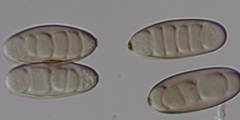
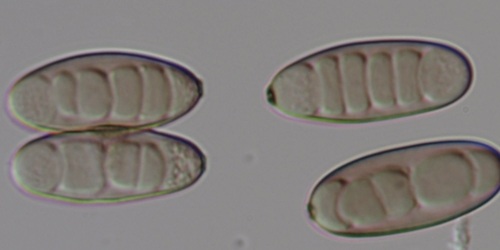
At 600 μg/mL the Mentha longifolia essential oil totally inhibited the growth of Curvularia hawaiiensis, Fusarium nygamai and Verticilliun dahliae.
- Taxon
- Mentha longifoliaMentha longifoliae5
- Treatment
- Mentha longifolia essential oile5
- Interactor
- Curvularia hawaiiensis
 Curvularia hawaiiensise5pathogen
- Second interactor
- Fusarium nygamaiFusarium nygamaie5pathogen
- Outcome
- growth of Curvularia hawaiiensis, Fusarium nygamai and Verticilliun dahliaee5
- Direction
- totally inhibitede5
- Value
- 600 μg/mLe5
- Qualifier
- Verticilliun dahliae at 600 μg/mLe5
Not reportedComparator
Organisms pictured · Representative pictures of the matched species, not figures from the paper.
Verbatim
e5“The Mentha longifolia essential oil strongly inhibited mycelial growth at the two tested doses, but it totally inhibited the growth of Curvularia hawaiiensis, Fusarium nygamai and Verticilliun dahliae at 600 μg/mL”
Claim · model-written summary
Blueberries coated with Mentha longifolia essential oil solution had a statistically higher percentage of healthy fruit than the control.
Verbatim
e6“The blueberries coated with the Mentha longifolia essential oil solution obtained a statistically higher percentage of healthy fruit than the control”
Claim · model-written summary
The authors consider the Mentha longifolia essential oil an ecofriendly alternative for postharvest treatment of blueberries, for maintaining berry quality and turgidity during storage.
Verbatim
t0“improve blueberry shelf life”
e7“They could be considered an ecofriendly alternative for postharvest treatment, and for maintaining the quality and turgidity of these berries during storage”
The same questions in other papers
botanical · disease · Mentha longifolia (horsemint)Results agree
1 paper in the same direction as this paper
- positive
Claims are grouped by organism, treatment and what was measured or targeted. A paper counts as positive when any of its claims in the group is positive.