Abstract
Pomegranate is highly susceptible to dry fruit rot caused by Coniella granati (Sacc.) Petrak and Sydow, and the disease has resulted in substantial losses and is threatening the upcoming pomegranate cultivation in Himachal Pradesh. The disease starts on fruits which are half grown or larger. The rot is characterized by softening of the rind and underneath pulp and seed. Ultimately the entire fruit turns brown to black after complete rotting. An extensive and comprehensive survey of various pomegranate orchards was conducted to record the incidence revealed that incidence of dry fruit rot varied from 0.55 to 22.7% with a mean incidence of 8.38% at various locations in Himachal Pradesh. The incidence was higher in Solan district where the infected fruits were often seen in the form of dark brown to black fruit mummies scattered on the orchard floor. The disease appeared maximum during the first week of August after an extended period of warm and foggy weather. Pre-harvest sprays with Bavistin and Stop among systemic fungicides gave significant control whereas, among non systemics, spray of Indofil M-45 showed some promise. Postharvest efficacy of systemic fungicides was better as protectant (pre-inoculation treatment) rather than eradicant (post-inoculation). Attempts have been made to control fruit rot with eco-friendly methods such as wrappers, fumigants, coatings, antagonists, botanicals which included plant oils and plant extracts. Fumigation with sodium or potassium meta bisulphite was superior in checking the disease. Bavistin wrappers and Nipro Fresh coating exhibited significant protection of pomegranate against dry fruit rot. Fungal antagonists, viz., Trichoderma virens, T. harzianum, T. hamatum and T. polysporium gave maximum inhibition of mycelial growth of C. granati. Antagonist protection was higher when applied at a concentration of 108 spores/ml before inoculation. 100% inhibition of mycelial growth of C. granati was obtained with citronella oil at 1000 ppm. Pre-inoculation treatment with plant extracts of darek (Melia azadirach), dedonia (Dedonia viscosa), lantana (Lantana camara) and pepper mint (Mentha piperita) provided significant control of fruit rot of pomegranate.
Abstract from the paper’s OpenAlex record, shown for indexing and research. Copyright remains with the authors or the publisher. Read at the source ↗
The text the model read, with the source record’s inline markup (italics, sub- and superscripts) rendered and its character entities decoded; quote offsets refer to the raw text.
Claims 20
Claim · model-written summary
Dry fruit rot incidence ranged from 0.55 to 22.7% in Himachal Pradesh.
- Taxon
- POMEGRANATE
 Punica granatumt0
- Outcome
- incidence of dry fruit rote0
- Value
- 0.55 to 22.7%e0
- Setting
- Himachal Pradeshe0
Organisms pictured · Representative pictures of the matched species, not figures from the paper.

Verbatim
t0“POMEGRANATE”
e0“incidence of dry fruit rot varied from 0.55 to 22.7% with a mean incidence of 8.38% at various locations in Himachal Pradesh”
Claim · model-written summary
Mean dry fruit rot incidence was 8.38%.
- Taxon
- POMEGRANATEPunica granatumt0
- Outcome
- mean incidencee0
- Value
- 8.38%e0
- Setting
- Himachal Pradeshe0
Organisms pictured · Representative pictures of the matched species, not figures from the paper.
Verbatim
t0“POMEGRANATE”
e0“incidence of dry fruit rot varied from 0.55 to 22.7% with a mean incidence of 8.38% at various locations in Himachal Pradesh”
Claim · model-written summary
Incidence was higher in Solan district.
- Taxon
- POMEGRANATEPunica granatumt0
- Outcome
- incidencee0
- Direction
- highere0
- Setting
- Solan districte0
Organisms pictured · Representative pictures of the matched species, not figures from the paper.
Verbatim
t0“POMEGRANATE”
e0“The incidence was higher in Solan district”
Claim · model-written summary
Disease occurrence peaked in the first week of August after warm, foggy weather.
- Taxon
- POMEGRANATEPunica granatumt0
- Outcome
- diseasee0
- Direction
- maximume0
- Qualifier
- first week of August after an extended period of warm and foggy weathere0
Organisms pictured · Representative pictures of the matched species, not figures from the paper.
Verbatim
t0“POMEGRANATE”
e0“The disease appeared maximum during the first week of August after an extended period of warm and foggy weather”
Claim · model-written summary
Preharvest Bavistin sprays significantly controlled dry fruit rot.
- Taxon
- POMEGRANATEPunica granatumt0
- Treatment
- Bavistine0
- Outcome
- controle0
- Direction
- controle0
Not reportedComparator
Organisms pictured · Representative pictures of the matched species, not figures from the paper.
Verbatim
t0“POMEGRANATE”
e0“Pre-harvest sprays with Bavistin and Stop among systemic fungicides gave significant control”
Claim · model-written summary
Preharvest Stop sprays significantly controlled dry fruit rot.
- Taxon
- POMEGRANATEPunica granatumt0
- Treatment
- Stope0
- Outcome
- controle0
- Direction
- controle0
Not reportedComparator
Organisms pictured · Representative pictures of the matched species, not figures from the paper.
Verbatim
t0“POMEGRANATE”
e0“Pre-harvest sprays with Bavistin and Stop among systemic fungicides gave significant control”
Claim · model-written summary
Indofil M-45 sprays showed promise for control.
- Taxon
- POMEGRANATEPunica granatumt0
- Treatment
- Indofil M-45e0
- Outcome
- some promisee0
Not reportedComparatorDirection
Organisms pictured · Representative pictures of the matched species, not figures from the paper.
Verbatim
t0“POMEGRANATE”
e0“spray of Indofil M-45 showed some promise”
Claim · model-written summary
Postharvest systemic fungicides performed better as protectants than eradicants.
- Taxon
- POMEGRANATEPunica granatumt0
- Treatment
- protectant (pre-inoculation treatment)e0
- Outcome
- Postharvest efficacye0
- Direction
- bettere0
- Comparator
- eradicant (post-inoculation)e0
Organisms pictured · Representative pictures of the matched species, not figures from the paper.
Verbatim
t0“POMEGRANATE”
e0“Postharvest efficacy of systemic fungicides was better as protectant (pre-inoculation treatment) rather than eradicant (post-inoculation)”
Claim · model-written summary
Sodium meta bisulphite fumigation was superior in checking disease.
- Taxon
- POMEGRANATEPunica granatumt0
- Treatment
- sodiume0
- Outcome
- checking the diseasee0
- Direction
- superiore0
Not reportedComparator
Organisms pictured · Representative pictures of the matched species, not figures from the paper.
Verbatim
t0“POMEGRANATE”
e0“Fumigation with sodium or potassium meta bisulphite was superior in checking the disease”
Claim · model-written summary
Potassium meta bisulphite fumigation was superior in checking disease.
- Taxon
- POMEGRANATEPunica granatumt0
- Treatment
- potassium meta bisulphitee0
- Outcome
- checking the diseasee0
- Direction
- superiore0
Not reportedComparator
Organisms pictured · Representative pictures of the matched species, not figures from the paper.
Verbatim
t0“POMEGRANATE”
e0“Fumigation with sodium or potassium meta bisulphite was superior in checking the disease”
Claim · model-written summary
Bavistin wrappers significantly protected pomegranate from dry fruit rot.
- Taxon
- pomegranatePunica granatume0
- Treatment
- Bavistin wrapperse0
- Outcome
- protection of pomegranate against dry fruit rote0
- Direction
- protectione0
Not reportedComparator
Organisms pictured · Representative pictures of the matched species, not figures from the paper.
Verbatim
e0“Bavistin wrappers and Nipro Fresh coating exhibited significant protection of pomegranate against dry fruit rot”
Claim · model-written summary
Nipro Fresh coating significantly protected pomegranate from dry fruit rot.
- Taxon
- pomegranatePunica granatume0
- Treatment
- Nipro Fresh coatinge0
- Outcome
- protection of pomegranate against dry fruit rote0
- Direction
- protectione0
Not reportedComparator
Organisms pictured · Representative pictures of the matched species, not figures from the paper.
Verbatim
e0“Bavistin wrappers and Nipro Fresh coating exhibited significant protection of pomegranate against dry fruit rot”
Claim · model-written summary
Trichoderma virens maximally inhibited C. granati mycelial growth.
- Taxon
- POMEGRANATEPunica granatumt0
- Treatment
- Trichoderma virense0
- Interactor
- C. granatiConiella granatie0pathogen
- Second interactor
- Trichoderma virensTrichoderma virense0biocontrol_agent
- Outcome
- mycelial growth of C. granatie0
- Direction
- maximum inhibitione0
Not reportedComparator
Organisms pictured · Representative pictures of the matched species, not figures from the paper.
Verbatim
t0“POMEGRANATE”
e0“Trichoderma virens, T. harzianum, T. hamatum and T. polysporium gave maximum inhibition of mycelial growth of C. granati”
Claim · model-written summary
T. harzianum maximally inhibited C. granati mycelial growth.
- Taxon
- POMEGRANATEPunica granatumt0
- Treatment
- T. harzianume0
- Interactor
- C. granatiConiella granatie0pathogen
- Second interactor
- T. harzianum
 Trichoderma harzianume0biocontrol_agent
- Outcome
- mycelial growth of C. granatie0
- Direction
- maximum inhibitione0
Not reportedComparator
Organisms pictured · Representative pictures of the matched species, not figures from the paper.

Verbatim
t0“POMEGRANATE”
e0“Trichoderma virens, T. harzianum, T. hamatum and T. polysporium gave maximum inhibition of mycelial growth of C. granati”
Claim · model-written summary
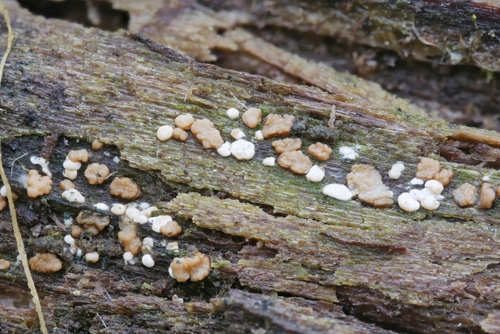
T. hamatum maximally inhibited C. granati mycelial growth.
- Taxon
- POMEGRANATEPunica granatumt0
- Treatment
- T. hamatume0
- Interactor
- C. granatiConiella granatie0pathogen
- Second interactor
- T. hamatum
 Trichoderma hamatume0biocontrol_agent
- Outcome
- mycelial growth of C. granatie0
- Direction
- maximum inhibitione0
Not reportedComparator
Organisms pictured · Representative pictures of the matched species, not figures from the paper.
Verbatim
t0“POMEGRANATE”
e0“Trichoderma virens, T. harzianum, T. hamatum and T. polysporium gave maximum inhibition of mycelial growth of C. granati”
Claim · model-written summary
T. polysporium maximally inhibited C. granati mycelial growth.
- Taxon
- POMEGRANATEPunica granatumt0
- Treatment
- T. polysporiume0
- Interactor
- C. granatiConiella granatie0pathogen
- Second interactor
- T. polysporiume0biocontrol_agent
- Outcome
- mycelial growth of C. granatie0
- Direction
- maximum inhibitione0
Not reportedComparator
Organisms pictured · Representative pictures of the matched species, not figures from the paper.
Verbatim
t0“POMEGRANATE”
e0“Trichoderma virens, T. harzianum, T. hamatum and T. polysporium gave maximum inhibition of mycelial growth of C. granati”
Claim · model-written summary
Antagonist protection was higher when applied before inoculation at 108 spores/ml.
- Taxon
- POMEGRANATEPunica granatumt0
- Treatment
- 108 spores/ml before inoculatione0
- Outcome
- Antagonist protectione0
- Direction
- highere0
Not reportedComparator
Organisms pictured · Representative pictures of the matched species, not figures from the paper.
Verbatim
t0“POMEGRANATE”
e0“Antagonist protection was higher when applied at a concentration of 108 spores/ml before inoculation”
Claim · model-written summary
Citronella oil at 1000 ppm completely inhibited C. granati mycelial growth.
- Taxon
- POMEGRANATEPunica granatumt0
- Treatment
- citronella oil at 1000 ppme0
- Interactor
- C. granatiConiella granatie0pathogen
- Outcome
- mycelial growth of C. granatie0
- Direction
- inhibitione0
- Value
- 100%e0
Not reportedComparator
Organisms pictured · Representative pictures of the matched species, not figures from the paper.
Verbatim
t0“POMEGRANATE”
e0“100% inhibition of mycelial growth of C. granati was obtained with citronella oil at 1000 ppm”
Claim · model-written summary
Preinoculation plant extracts from darek, dedonia, and lantana significantly controlled fruit rot.
- Taxon
- pomegranatePunica granatume0
- Treatment
- plant extracts of darek (Melia azadirach), dedonia (Dedonia viscosa), lantana (Lantana camara)e0
- Outcome
- fruit rot of pomegranatee0
- Direction
- controle0
Not reportedComparator
Organisms pictured · Representative pictures of the matched species, not figures from the paper.
Verbatim
e0“Pre-inoculation treatment with plant extracts of darek (Melia azadirach), dedonia (Dedonia viscosa), lantana (Lantana camara) and pepper mint (Mentha piperita) provided significant control of fruit rot of pomegranate”
Claim · model-written summary
Preinoculation pepper mint extract significantly controlled fruit rot.
- Taxon
- pomegranatePunica granatume0
- Treatment
- pepper mint (Mentha piperita)e0
- Outcome
- fruit rot of pomegranatee0
- Direction
- controle0
Not reportedComparator
Organisms pictured · Representative pictures of the matched species, not figures from the paper.
Verbatim
e0“Pre-inoculation treatment with plant extracts of darek (Melia azadirach), dedonia (Dedonia viscosa), lantana (Lantana camara) and pepper mint (Mentha piperita) provided significant control of fruit rot of pomegranate”
The same questions in other papers
carbendazim · control · Punica granatum (pomegranate)Results agree
1 paper in the same direction as this paper
- positive
storage · disease · Punica granatum (pomegranate)Positive and negative results
15 papers in the same direction as this paper · 1 in the opposite direction
- negative
- positive
- positive
13 papers more in this group
See all 17 papers →botanical · disease · Punica granatum (pomegranate)Results agree
12 papers in the same direction as this paper
- positive
- positive
- positive
9 papers more in this group
See all 13 papers →Claims are grouped by organism, treatment and what was measured or targeted. A paper counts as positive when any of its claims in the group is positive.