Abstract
A B S T R A C T Field studies were undertaken to assess the influence of insecticidal treatments on sucking and chewing insect pests and their natural enemies in cotton crop. Experiments were conducted to find out the effects of monocrotophos 36% SL and endosulfan 35% EC insecticides on the incidence of harmful insects and the beneficial insects. The data on the incidence of sucking pests were recorded on three leaves (top, middle and bottom canopy) per plant by randomly selecting five plants from each replicate. Similarly, observations on the populations of natural enemies were taken from whole plant basis at weekly intervals. The practice implemented for assessing infestation of chewing pests involved estimating of injury due to all kind of bollworms recorded on shoots, squares, flowers and bolls at regular intervals. Study displayed both the tested insecticides at their recommended doses statistically showed better control of the insect pests as compared to the control, and the pest infestations ranged 3.33-7.00 whiteflies, 0.55-1.99 jassids and 3.99-11.33 aphids per leaf; 2.886.22% bollworms damage; and 2845.3-2433.0 kg yield ha-1. The beneficial insects viz., coccinellid beetle (Coccinella septumpunctata [Linnaeus]), common green lacewing (Chrysoperla carnea [Stephens]), hover fly (Eupeodes confrater [Wiedemann]) and bigeyed bug (Geocoris ochropterus [Fieber]) were not so severely affected in the treated and control fields and no statistical differences noted in their densities. Concludingly, decline in abundance of pests and safety of natural enemies by tested pesticides may have important implications for the control of harmful insects in cotton areas and such chemicals can encourage biological control in an agricultural land.
Abstract from the paper’s OpenAlex record, shown for indexing and research. Copyright remains with the authors or the publisher. Read at the source ↗
The text the model read, with the source record’s inline markup (italics, sub- and superscripts) rendered and its character entities decoded; quote offsets refer to the raw text.
Claims 12
Claim · model-written summary
Monocrotophos at its recommended dose controlled cotton insect pests better than the control.
- Taxon
- Cotton
 Gossypium hirsutumt0
- Treatment
- monocrotophos 36% SLe1
- Interactor
- insect pestse0pest
- Outcome
- control of the insect pestse0
- Direction
- bettere0
- Comparator
- controle0
Organisms pictured · Representative pictures of the matched species, not figures from the paper.

Verbatim
t0“Cotton, Gossypium hirsutum L.”
e0“both the tested insecticides at their recommended doses statistically showed better control of the insect pests as compared to the control”
e1“monocrotophos 36% SL”
Claim · model-written summary
Endosulfan at its recommended dose controlled cotton insect pests better than the control.
- Taxon
- CottonGossypium hirsutumt0
- Treatment
- endosulfan 35% ECe1
- Interactor
- insect pestse0pest
- Outcome
- control of the insect pestse0
- Direction
- bettere0
- Comparator
- controle0
Organisms pictured · Representative pictures of the matched species, not figures from the paper.
Verbatim
t0“Cotton, Gossypium hirsutum L.”
e0“both the tested insecticides at their recommended doses statistically showed better control of the insect pests as compared to the control”
e1“endosulfan 35% EC”
Claim · model-written summary
Whitefly infestation under the insecticide treatments ranged from 3.33 to 7.00 per leaf.
- Taxon
- CottonGossypium hirsutumt0
- Interactor
- whitefliesAleyrodoideae0pest
- Outcome
- whitefliese0
- Value
- 3.33-7.00e0
Organisms pictured · Representative pictures of the matched species, not figures from the paper.
Verbatim
t0“Cotton, Gossypium hirsutum L.”
e0“pest infestations ranged 3.33-7.00 whiteflies”
Claim · model-written summary
Jassid infestation under the insecticide treatments ranged from 0.55 to 1.99 per leaf.
- Taxon
- CottonGossypium hirsutumt0
- Interactor
- jassidse0pest
- Outcome
- jassidse0
- Value
- 0.55-1.99e0
Organisms pictured · Representative pictures of the matched species, not figures from the paper.
Verbatim
t0“Cotton, Gossypium hirsutum L.”
e0“0.55-1.99 jassids”
Claim · model-written summary
Aphid infestation under the insecticide treatments ranged from 3.99 to 11.33 per leaf.
- Taxon
- CottonGossypium hirsutumt0
- Interactor
- aphidsAphidomorphae0pest
- Outcome
- aphids per leafe0
- Value
- 3.99-11.33e0
Organisms pictured · Representative pictures of the matched species, not figures from the paper.
Verbatim
t0“Cotton, Gossypium hirsutum L.”
e0“3.99-11.33 aphids per leaf”
Claim · model-written summary
Bollworm damage under the insecticide treatments was reported as 2.886.22%.
- Taxon
- CottonGossypium hirsutumt0
- Interactor
- bollworms
 Helicoverpa zeae0pest
- Outcome
- bollworms damagee0
- Value
- 2.886.22%e0
Organisms pictured · Representative pictures of the matched species, not figures from the paper.

Verbatim
t0“Cotton, Gossypium hirsutum L.”
e0“2.886.22% bollworms damage”
Claim · model-written summary
Cotton yield under the insecticide treatments was reported as 2845.3-2433.0 kg yield ha-1.
- Taxon
- CottonGossypium hirsutumt0
- Outcome
- yielde0
- Value
- 2845.3-2433.0 kg yield ha-1e0
Organisms pictured · Representative pictures of the matched species, not figures from the paper.
Verbatim
t0“Cotton, Gossypium hirsutum L.”
e0“2845.3-2433.0 kg yield ha-1”
Claim · model-written summary
Coccinellid beetle densities did not differ statistically between treated and control cotton fields.
- Taxon
- CottonGossypium hirsutumt0
- Treatment
- treatede0
- Interactor
- Coccinella septumpunctatae0other
- Outcome
- densitiese0
- Direction
- no statistical differencese0
- Comparator
- control fieldse0
Organisms pictured · Representative pictures of the matched species, not figures from the paper.
Verbatim
t0“Cotton, Gossypium hirsutum L.”
e0“coccinellid beetle (Coccinella septumpunctata [Linnaeus]), common green lacewing (Chrysoperla carnea [Stephens]), hover fly (Eupeodes confrater [Wiedemann]) and bigeyed bug (Geocoris ochropterus [Fieber]) were not so severely affected in the treated and control fields and no statistical differences noted in their densities”
Claim · model-written summary
Common green lacewing densities did not differ statistically between treated and control cotton fields.
- Taxon
- CottonGossypium hirsutumt0
- Treatment
- treatede0
- Interactor
- Chrysoperla carnea
 Chrysoperla carneae0other
- Outcome
- densitiese0
- Direction
- no statistical differencese0
- Comparator
- control fieldse0
Organisms pictured · Representative pictures of the matched species, not figures from the paper.

Verbatim
t0“Cotton, Gossypium hirsutum L.”
e0“common green lacewing (Chrysoperla carnea [Stephens]), hover fly (Eupeodes confrater [Wiedemann]) and bigeyed bug (Geocoris ochropterus [Fieber]) were not so severely affected in the treated and control fields and no statistical differences noted in their densities”
Claim · model-written summary
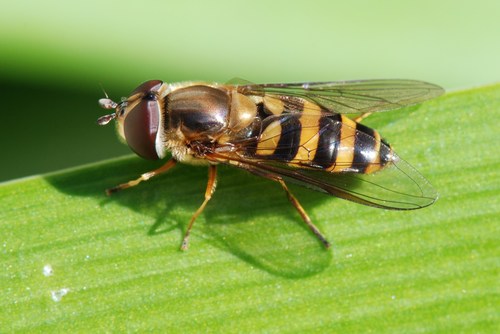
Hover fly densities did not differ statistically between treated and control cotton fields.
- Taxon
- CottonGossypium hirsutumt0
- Treatment
- treatede0
- Interactor
- Eupeodes confrater
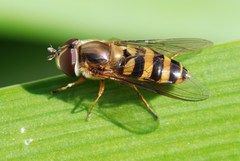 Eupeodes confratere0other
- Outcome
- densitiese0
- Direction
- no statistical differencese0
- Comparator
- control fieldse0
Organisms pictured · Representative pictures of the matched species, not figures from the paper.
Verbatim
t0“Cotton, Gossypium hirsutum L.”
e0“hover fly (Eupeodes confrater [Wiedemann]) and bigeyed bug (Geocoris ochropterus [Fieber]) were not so severely affected in the treated and control fields and no statistical differences noted in their densities”
Claim · model-written summary
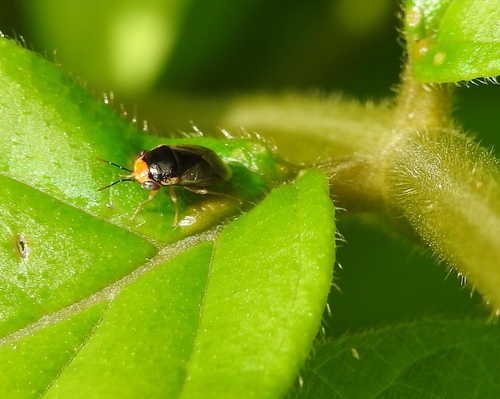
Bigeyed bug densities did not differ statistically between treated and control cotton fields.
- Taxon
- CottonGossypium hirsutumt0
- Treatment
- treatede0
- Interactor
- Geocoris ochropterus
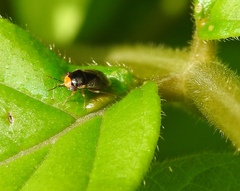 Geocoris ochropteruse0other
- Outcome
- densitiese0
- Direction
- no statistical differencese0
- Comparator
- control fieldse0
Organisms pictured · Representative pictures of the matched species, not figures from the paper.
Verbatim
t0“Cotton, Gossypium hirsutum L.”
e0“bigeyed bug (Geocoris ochropterus [Fieber]) were not so severely affected in the treated and control fields and no statistical differences noted in their densities”
Claim · model-written summary
The authors concluded that the tested insecticides may help control cotton pests while preserving natural enemies.
- Taxon
- CottonGossypium hirsutumt0
- Interactor
- harmful insectse0pest
- Outcome
- control of harmful insectse0
- Qualifier
- may have important implicationse0
Organisms pictured · Representative pictures of the matched species, not figures from the paper.
Verbatim
t0“Cotton, Gossypium hirsutum L.”
e0“decline in abundance of pests and safety of natural enemies by tested pesticides may have important implications for the control of harmful insects in cotton areas and such chemicals can encourage biological control in an agricultural land”
The same questions in other papers
endosulfan · pest · Gossypium hirsutum (cotton)Positive and negative results
4 papers in the same direction as this paper · 1 in the opposite direction
- negative
- positive
- positive
2 papers more in this group
See all 6 papers →monocrotophos · pest · Gossypium hirsutum (cotton)Positive and negative results
7 papers in the same direction as this paper · 2 in the opposite direction
- negative
- negative
- positive
6 papers more in this group
See all 10 papers →Claims are grouped by organism, treatment and what was measured or targeted. A paper counts as positive when any of its claims in the group is positive.